Tag

Body Temperature

All articles tagged with #body temperature

The 150-Year Decline in Human Baseline Temperature
science23 days ago

The 150-Year Decline in Human Baseline Temperature

Average human body temperature has dropped by approximately 0.59 degrees Celsius since the 1860s, challenging the long-standing 37C benchmark established by German physician Carl Wunderlich. While Wunderlich’s massive dataset of over one million readings defined the 19th-century norm, modern data from nearly 190,000 individuals suggests the current average is closer to 36.39C. This decline is not limited to developed nations; indigenous Amazonian communities have also seen a drop from 37C to 36.5C over two decades. Experts attribute this shift to improved public health, reduced chronic infections, and the widespread adoption of climate-controlled environments that reduce the metabolic energy required to maintain thermal stability.


Sleep Experts Weigh In on the Sock-to-Bed Trend: Modest Benefits, Real Risks
health-and-wellness1 month ago

Sleep Experts Weigh In on the Sock-to-Bed Trend: Modest Benefits, Real Risks

Sleep specialists confirm that wearing socks to bed can help lower core body temperature, potentially aiding sleep onset for those with cold feet. However, experts caution that the evidence is modest and not a universal cure. While generally safe for healthy adults, individuals with diabetes, neuropathy, or circulation issues must avoid tight or non-breathable socks to prevent skin irritation and infection. The consensus is that loose, moisture-wicking socks are a low-risk habit, but not a guaranteed solution for insomnia.

Cold Reality: Expert Explains 82.1°F Temperature in Lindsay Clancy Case
science3 months ago

Cold Reality: Expert Explains 82.1°F Temperature in Lindsay Clancy Case

Parade interviewed Dr. James J. Chao, who explains that Lindsay Clancy's reported 82.1°F core temperature is medically plausible in severe trauma with spinal cord injury: loss of heat generation from shivering and blood‑vessel constriction, plus rapid cooling on the cold ground, can drive core temperature down quickly; the timeline can extend during transport and early rewarming (the afterdrop), with management including warm IV fluids, forced‑air warming, and, in some cases, ECMO.

Why Women Feel Colder Than Men
health-and-science2 years ago

Why Women Feel Colder Than Men

Research on whether women feel colder than men is mixed, with recent studies suggesting that temperature perception and regulation depend more on individual physical traits like body fat and surface area rather than sex. While women may have slightly higher core temperatures and colder extremities due to hormonal differences, both sexes generally perceive and respond to temperature changes similarly.

"The Truth About Alcohol: Does It Really Make You Warm?"
health2 years ago

"The Truth About Alcohol: Does It Really Make You Warm?"

While drinking alcohol may make you feel warm by dilating blood vessels and sending warm blood to the skin, it actually lowers your core body temperature, increasing the risk of hypothermia in cold weather. Alcohol disrupts the body's ability to regulate temperature and inhibits the shiver response, potentially making individuals more susceptible to ambient temperatures. It's important to take precautions and not rely on the warm sensation when consuming alcohol in cold environments.

"Body Temperature's Surprising Role in Depression: New Research Findings"
health-research2 years ago

"Body Temperature's Surprising Role in Depression: New Research Findings"

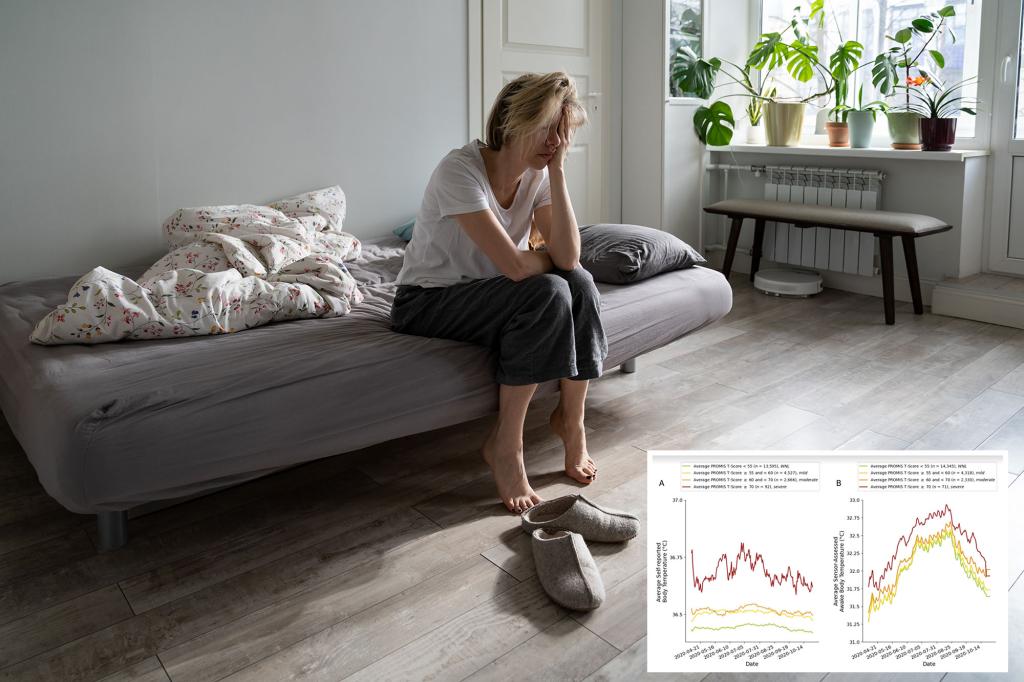
A study published in Scientific Reports has revealed a significant link between depression and higher body temperatures, shedding light on the potential for regulating body temperature as a novel approach to alleviate depressive symptoms. The research, based on data from the TemPredict Study and utilizing the Oura Ring wearable device, found that individuals with more severe depressive symptoms exhibited consistently higher body temperatures, impacting thermoregulation across wakefulness and sleep. While the study does not establish causation, it opens avenues for further exploration of temperature-based interventions for depression and the underlying biological mechanisms of this association.

"Using Fitness Trackers to Identify Depression through Body Temperature: Study"
healthtech2 years ago

"Using Fitness Trackers to Identify Depression through Body Temperature: Study"

The TemPredict Study from the University of California found that Oura Rings, known for detecting early signs of COVID-19, can also pinpoint depressive states by correlating higher body temperatures with self-reported feelings of depression and depressive symptoms, suggesting a potential link between body temperature regulation and mental health.

"Exploring the Connection Between Depression and Body Temperature"
health-and-medicine2 years ago

"Exploring the Connection Between Depression and Body Temperature"

Data from a study involving over 20,000 people using fitness trackers has revealed a link between depression and slightly higher body temperatures. The research raises the possibility of introducing heat-based treatments to mental health care in the future. While it's not clear whether depression raises body temperature or vice versa, the study's lead author is interested in exploring heat-based treatments for depression. With depression affecting an estimated one in five US adults and antidepressant drugs not being effective for everyone, the study offers a potential new avenue for treatment.

"Exploring the Connection Between Body Temperature and Depression"
health2 years ago

"Exploring the Connection Between Body Temperature and Depression"

A large study led by researchers from the University of California San Francisco has found a link between depression and higher body temperatures, suggesting a potential avenue for treatment. The study, involving over 20,000 individuals from 106 countries, revealed that those with depression tend to have higher body temperatures. While the exact relationship between body temperature and depression remains unclear, the findings open up new possibilities for understanding and treating depression, potentially through methods such as cooling therapies.

"Correlation Found Between Depression and Elevated Body Temperature"
health2 years ago

"Correlation Found Between Depression and Elevated Body Temperature"

A new study suggests that people with depression have higher body temperatures, potentially opening up new avenues for managing the disorder. Researchers at UC San Diego and UC San Francisco analyzed data from over 20,000 participants and found a correlation between the severity of depression symptoms and body temperatures. The study raises questions about whether high body temperature is a cause or a result of depression, and it hints at the possibility of using heat-based treatments to alleviate depression symptoms.

"Hot Topic: The Surprising Link Between Body Temperature and Depression"
health-mental-health2 years ago

"Hot Topic: The Surprising Link Between Body Temperature and Depression"

A new study suggests a link between higher body temperature and clinical depression, with data from over 20,000 participants showing a noticeable association. While the exact cause-and-effect relationship is still unclear, researchers are conducting human trials to explore temperature-based interventions, such as sauna therapy, as potential treatments for depression. The findings could lead to unique body-based treatments for depression that don't involve medications or traditional psychotherapy.

"Surprising Link: Depression Linked to Higher Body Temperatures"
health2 years ago

"Surprising Link: Depression Linked to Higher Body Temperatures"

A new study involving over 20,000 participants worldwide suggests a correlation between depression severity and higher body temperatures, potentially opening up a new avenue for treatment. The research, utilizing wearable technology for temperature measurement, hints at the benefits of heat-based treatments like saunas for depression, offering a novel approach to addressing rising depression rates globally. While the causal relationship remains unclear, the study sheds light on how regulating body temperature could be a therapeutic strategy for depression.