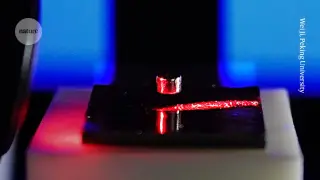
Levitating magnetometer senses ultrafaint brain activity at femtotesla scale
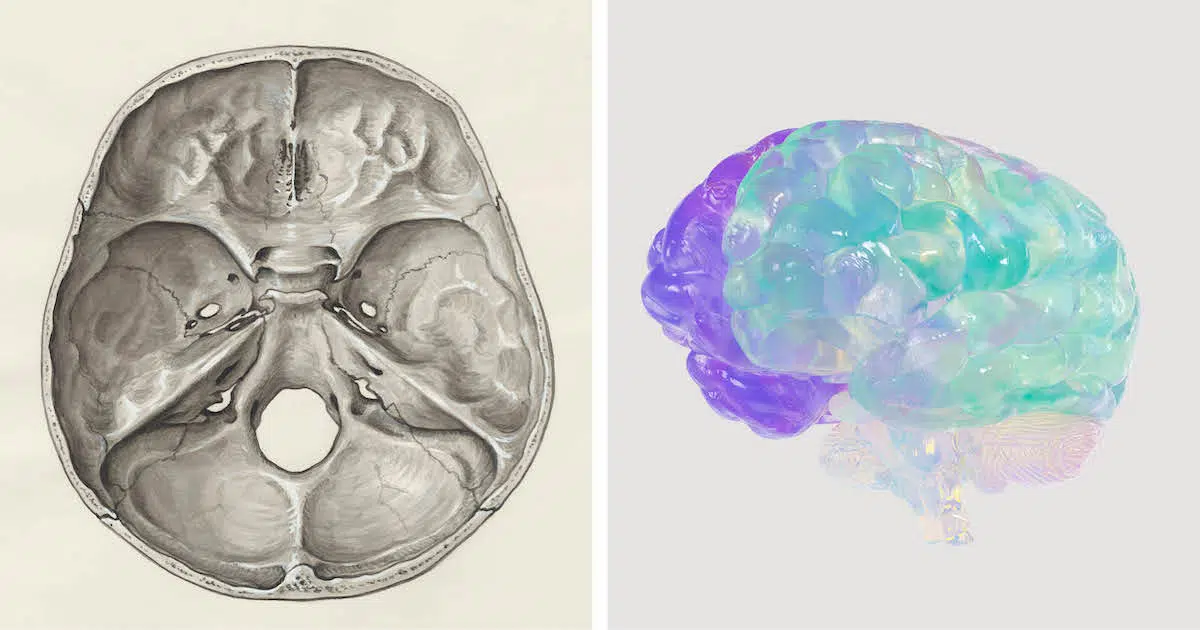
Scientists have built a levitating magnetometer inside a vacuum that can detect the brain’s faint magnetic signals at femtotesla-level strengths, offering a simpler, closer-to-sample alternative to SQUIDs and SERF devices and potentially enabling advances in neuroscience and dark matter searches.