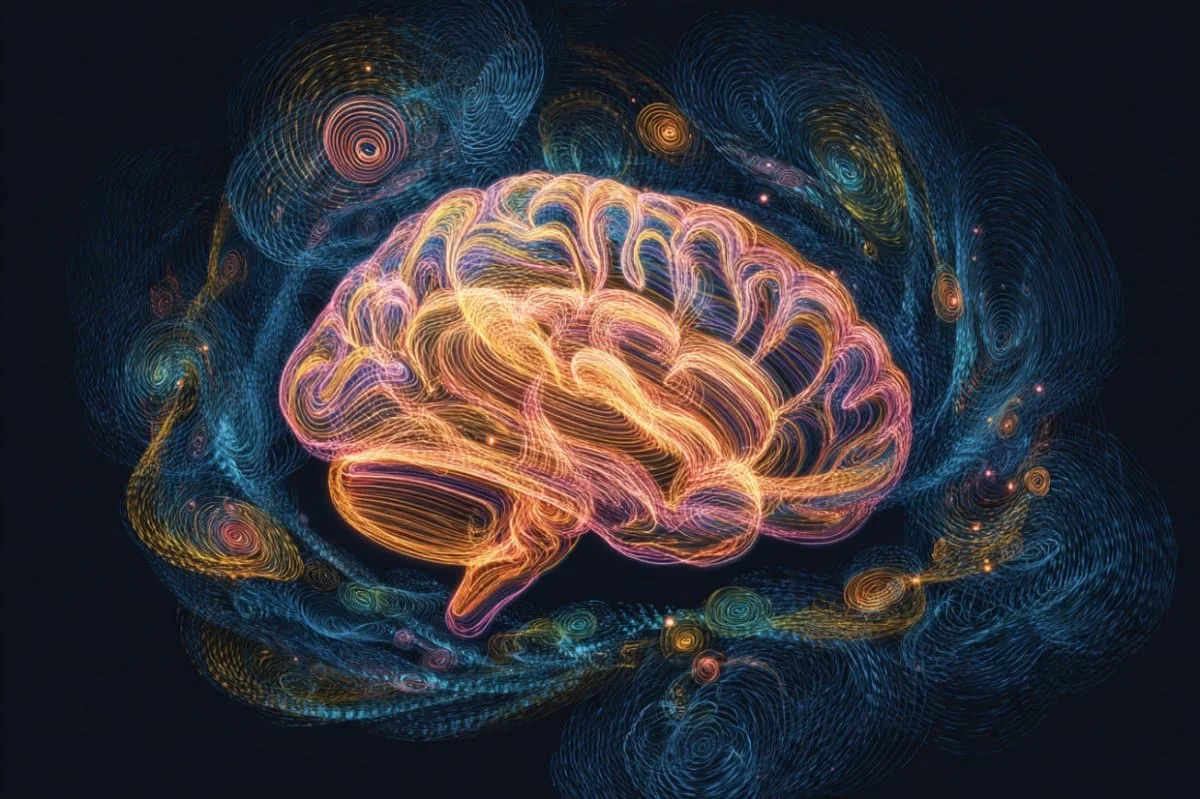
Recent studies indicate that traveling brain waves are complex, dynamic patterns that actively organize neural activity for real-time cognitive tasks, rather than being mere byproducts of firing neurons.
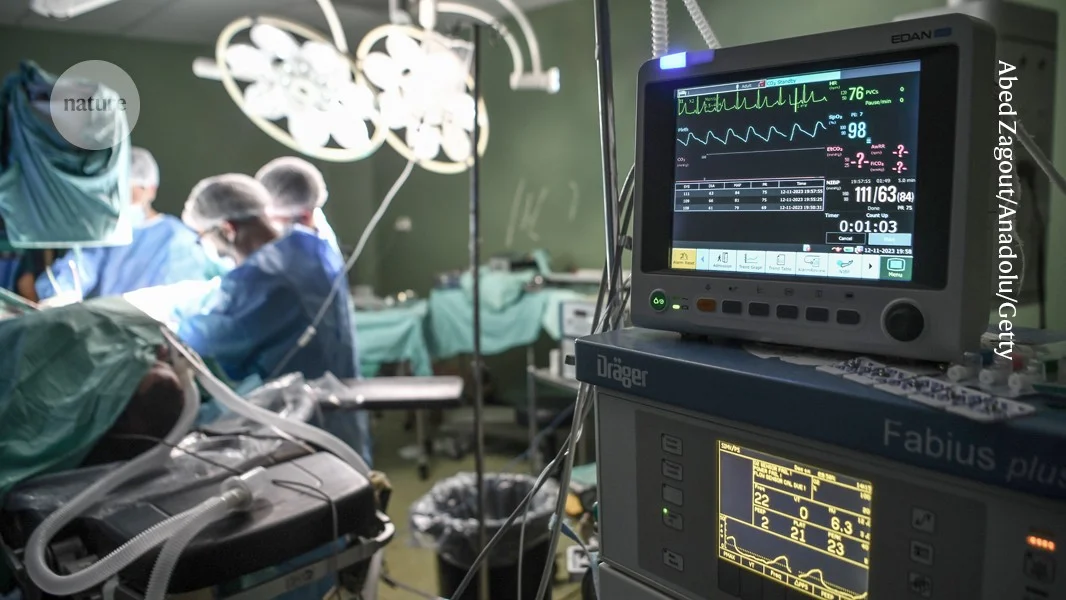
Researchers recorded 900 seconds of brain activity around the moment of death for an 87-year-old man with epilepsy, finding changes in gamma and other oscillations tied to memory and cognition. The findings suggest the dying brain may replay meaningful life events, resonating with near‑death experiences and raising new questions about consciousness at the end of life and implications for organ donation timing.
Researchers at the University of Colorado Boulder found experienced Argentine tango dancers can synchronize their brain activity as they move in time. Using EEG caps and motion sensors with five dancer pairs, the team observed brainwave patterns aligning when partners’ steps were in sync (often within 200 milliseconds), across both fast beta and slow theta waves. They also developed a wrist-worn device that vibrates more when brain signals align, aiming to enhance the sense of connection. The findings suggest shared movement can foster brain-to-brain coupling beyond emotion, with potential applications in sports training, physical rehabilitation, and social coordination.
Deliberately slowing or pacing breathing alters how accurately people recognize emotions in faces: slow exhale reduces accuracy while slow inhale can enhance perceptual sensitivity. MEG data suggest the breathing rhythm can desynchronize brain waves from respiration, changing communication between networks that interpret fearful versus neutral expressions. The study used paced breathing with 31 participants and blended facial images, and notes caveats like fixed breathing rates and other physiological factors. Published in European Journal of Neuroscience by Shen-Mou Hsu and Chih-Hsin Tseng.
A study with 31 participants under propofol anesthesia identifies a distinctive brain-wave pattern and decreasing inter-regional connectivity—especially between the parietal cortex and thalamus and between parietal and occipital areas—that mark loss of consciousness, suggesting an actionable biomarker to refine dosing, though findings are limited to one anesthetic and rely on new methods to infer whole-brain signals from scalp data.
A 2022 study unexpectedly recorded brain activity during a patient's death, revealing that the brain may remain active and exhibit memory-like waves, such as gamma oscillations, suggesting that our lives might indeed flash before our eyes as we die, although findings are preliminary and based on a single case.
New wearable devices that read brain waves using EEG technology are emerging, aiming to improve sleep, boost productivity, and enable brain-controlled devices, with applications ranging from health treatment to gaming, raising privacy concerns about neuro data security.
Neuroscientists discovered that rotating neural waves in the prefrontal cortex help the brain recover focus after distraction, with full rotations correlating with correct task performance and incomplete ones predicting errors, suggesting the brain uses energy-efficient traveling waves for concentration restoration.
Researchers have identified specific brain wave patterns in the basal ganglia that correlate with Parkinson's symptoms, potentially enabling more precise and dynamic deep brain stimulation therapies to improve motor control.
Yale scientists have identified the origin of gamma brain waves as an interaction between the thalamus and cortex, using a new precise measurement method, revealing their role in behavior and potential as early biomarkers for neurodegenerative diseases like Alzheimer's.
New research from MIT shows that theta-frequency brain waves act like radar scans across the cortex, influencing visual working memory and attention by affecting reaction times and accuracy depending on their phase, with potential implications for improving cognitive function in neurological disorders.
Researchers have discovered that ripple-type brain waves in the hippocampus mark the boundaries of memory episodes and coordinate with cortical areas during naturalistic experiences, providing new insights into how memories are structured and opening potential avenues for treating memory impairments.
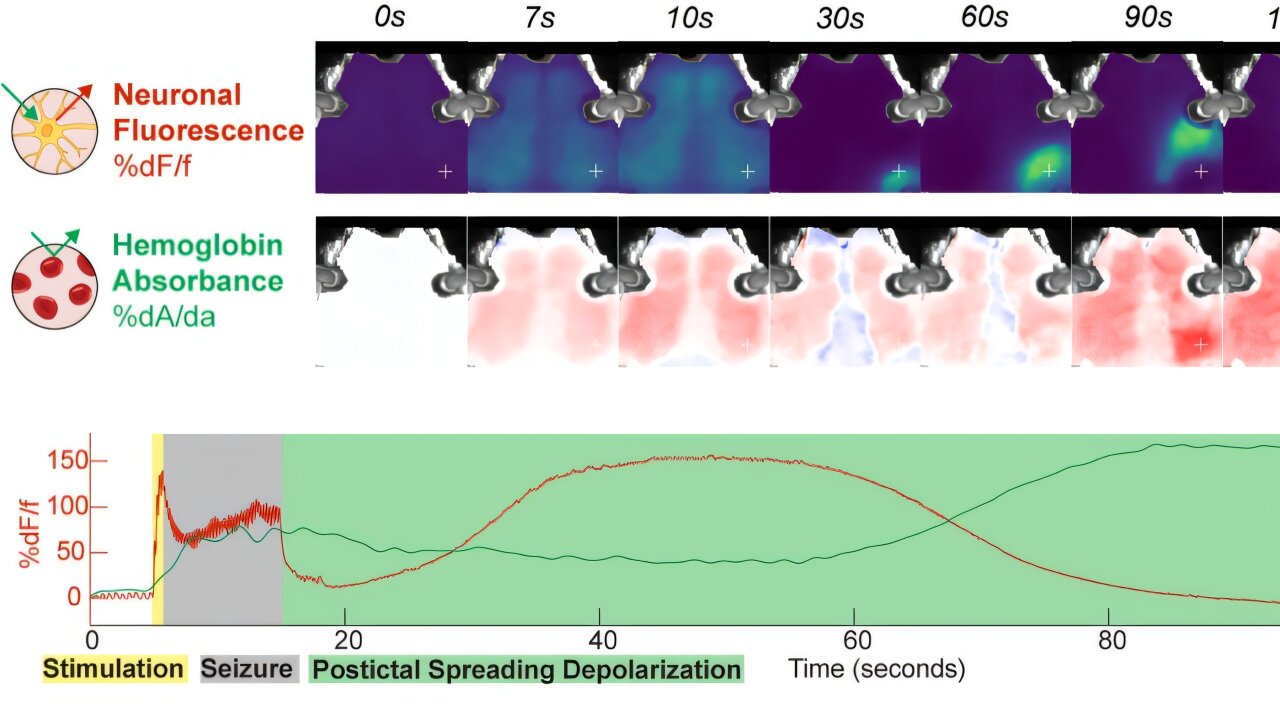
A study led by Zach Rosenthal challenges the long-held belief that the seizure induced by electroconvulsive therapy (ECT) is the primary therapeutic mechanism, revealing that ECT also triggers a brain wave called cortical spreading depolarization (CSD), which may reset neurons and explain its effectiveness. This discovery, made possible by advanced neuroimaging, could lead to more personalized and effective ECT treatments, helping to reduce stigma and improve mental health outcomes.
A study by the Max Planck Institute reveals that brain wave timing influences how we perceive speech, with more probable sounds and words being recognized during less excitable brain wave phases. This finding supports the role of neural timing in language comprehension and has significant implications for predictive coding theories in speech perception.