Tag

Color Perception

All articles tagged with #color perception

Geometry Reframes Color Perception, Solving Schrödinger’s Century-Old Puzzle
science16 days ago

Geometry Reframes Color Perception, Solving Schrödinger’s Century-Old Puzzle

Los Alamos researchers refine Schrödinger’s color-perception theory by defining hue, saturation, and lightness through the color metric’s geometry, including a mathematically defined neutral axis in a non-Riemannian space and using shortest-path concepts to fix perceptual inconsistencies, improving color models for imaging, photography, and data visualization.

Camera Lets Humans See Colors Beyond Our Spectrum
technology23 days ago

Camera Lets Humans See Colors Beyond Our Spectrum

A high-tech camera system, developed by Vera Vasas and the Hanley Color Lab at George Mason University, records four color channels (blue, green, red, and UV) to render real-time videos of how different animals perceive color, translating photoreceptor data into perceptual units with over 92% accuracy versus traditional methods, and making animal-vision visualization practical for scientists and filmmakers using off-the-shelf cameras in a modular, 3D-printed setup.

Geometric fix completes Schrödinger’s color theory after a century
science3 months ago

Geometric fix completes Schrödinger’s color theory after a century

A Los Alamos team mathematically defines the neutral axis and shows hue, saturation and lightness arise from the intrinsic geometry of color, fixing gaps in Schrödinger’s century‑old theory. By using shortest-paths in a non‑Riemannian color space, they correct hue shifts caused by brightness (Bezold–Brücke effect) and strengthen color modeling for visualization and data interpretation.

How Aging Alters Our Perception of Color Over Time
science9 months ago

How Aging Alters Our Perception of Color Over Time

Research shows that as people age, their perception of color can diminish due to changes in the eyes and brain, with older adults often perceiving colors as duller, especially in terms of saturation, which is primarily linked to brain processing rather than eye health. Routine eye exams and surrounding oneself with vibrant colors may help mitigate some effects, but lifestyle changes currently have limited impact on this natural aging process.

Uncovering Rare Cells: Key to Color Perception
neuroscience2 years ago

Uncovering Rare Cells: Key to Color Perception

Researchers at the University of Rochester used adaptive optics to identify rare retinal ganglion cells (RGCs) in the human fovea, challenging existing theories of color perception based on three types of cone photoreceptors. These non-cardinal RGCs may play a role in creating more nuanced color perception, potentially leading to advanced vision restoration techniques and improved retinal prosthetic designs. The study received support from prestigious institutions and could have a significant impact on vision science.

"Maximizing Your Visual Experience: The Best Way to Watch the 2024 Solar Eclipse"
astronomy2 years ago

"Maximizing Your Visual Experience: The Best Way to Watch the 2024 Solar Eclipse"

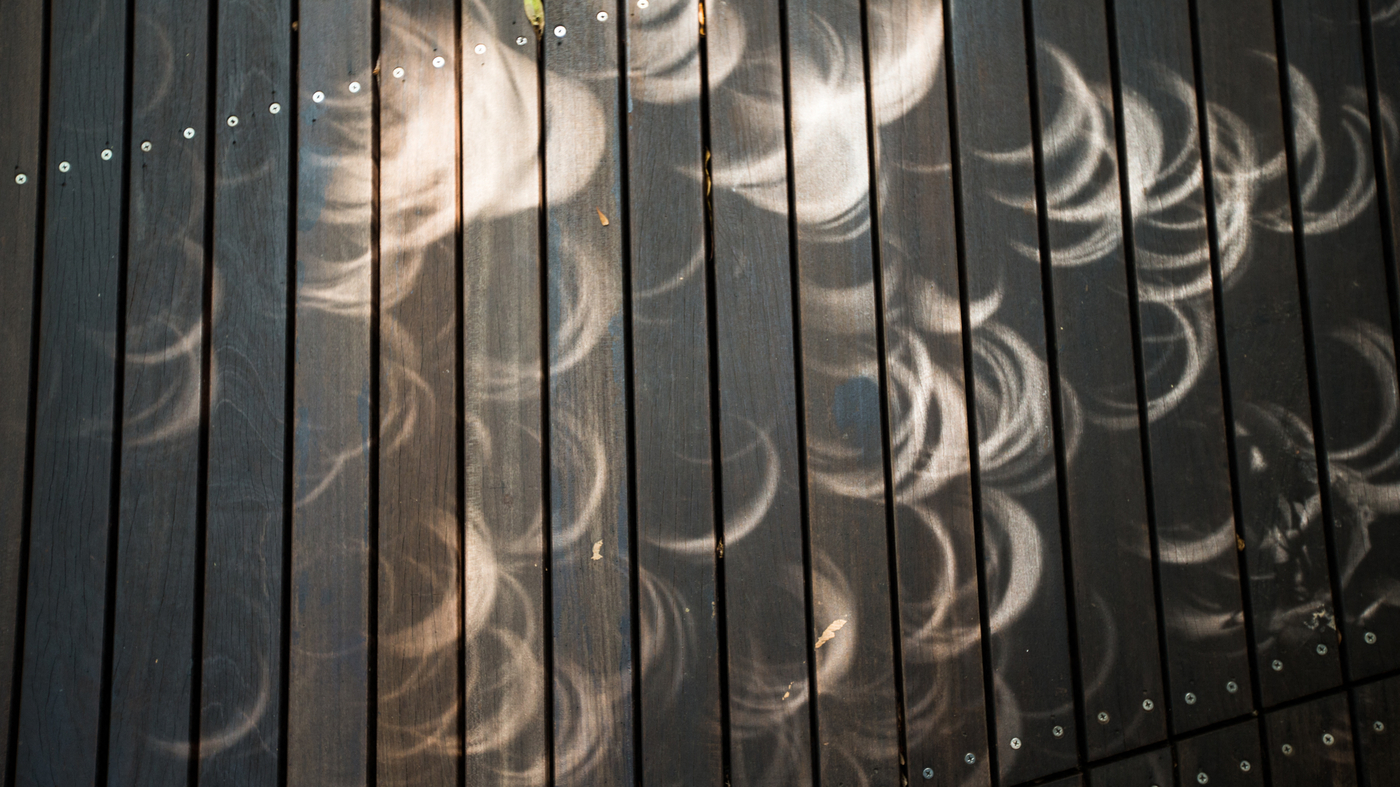
During Monday's solar eclipse, people along the path of totality can expect to see unusual visual effects, including changes in how they perceive colors such as red and green due to the Purkinje effect. As the moon blocks the sun, the dimming light will cause colors with longer wavelengths, like red, to appear darker, while shorter blue-green wavelengths will stand out. Other phenomena to anticipate include sharper shadows, crescent-shaped projections of the sun's image through tree gaps, and shadow bands.

"The Science Behind Red and Green as Eclipse Colors"
science-and-astronomy2 years ago

"The Science Behind Red and Green as Eclipse Colors"

Experts recommend wearing shades of red and green during the upcoming solar eclipse to experience the unique Purkinje effect, which alters color perception during the transition to twilight vision. As our eyes switch from cone to rod cells, warmer colors appear less vibrant while greens and blues become brighter. This phenomenon, occurring 4-5 minutes before totality, creates a real-life science demonstration on clothing. However, the effect won't show up in photographs, as it's a result of how our eyes interpret light.

"Why Colors Change During the April 8 Solar Eclipse"
science2 years ago

"Why Colors Change During the April 8 Solar Eclipse"

During a total solar eclipse, the sudden shift from light to darkness can profoundly change color perception due to the Purkinje effect, causing colors to appear differently. This is because the rapid dimming of sunlight during totality prompts the eyes to enter mesopic vision, where the retina's rods and cones work together, resulting in a shift in color perception. Humans with three types of color-sensing cones experience a heightened vibrancy of greens and blues, while animals like birds with a fourth cone for ultraviolet light may have an even more intense experience. The upcoming April 8 solar eclipse will provide an opportunity to witness this phenomenon, with experts recommending wearing reds and greens to elicit the greatest visual contrast and observing the color shifts with items like colorful Skittles candy.

"Why Wearing Red and Green During a Solar Eclipse Makes a Difference"
science-and-astronomy2 years ago

"Why Wearing Red and Green During a Solar Eclipse Makes a Difference"

Rochester will experience a total solar eclipse on April 8, and wearing red and green clothing can enhance the viewing experience due to the Purkinje effect, which causes reds and yellows to fade while greens and blues appear brighter during the eclipse. Warm colors like red will be less visible, while green will stand out brighter. Experts recommend avoiding neutrals like black, white, or grey. Various events and activities are planned in Rochester for eclipse viewing, including at the Seneca Park Zoo, Genesee Country Village & Museum, Rochester Museum & Science Center, and the Rochester Public Market.

"The Science Behind Wearing Red and Green During an Eclipse"
science-and-astronomy2 years ago

"The Science Behind Wearing Red and Green During an Eclipse"

Scientists suggest wearing red and green during the eclipse due to the Purkinje effect, where the colors appear differently to our eyes during the sudden darkness of totality. This effect is due to the transition from photopic vision to mesopic vision, causing reds to appear darker and greens to appear brighter. However, this is just a physiological effect and cannot be photographed. Safety precautions, such as wearing proper glasses and heeding warnings, should be taken when observing the eclipse.

"Optimizing Your View: Where and How to Watch the 2024 Solar Eclipse for the Best Visual Experience"
science-and-astronomy2 years ago

"Optimizing Your View: Where and How to Watch the 2024 Solar Eclipse for the Best Visual Experience"

The upcoming total solar eclipse on April 8, 2024 will create the Purkinje effect, altering color perception during the event. Red and green clothing will have the greatest impact, with red appearing less visible and green standing out brighter. Wearing these colors is recommended for group viewings, while neutrals like black, white, and grey should be avoided.

"Why Colors Change During the April 8 Solar Eclipse"
science2 years ago

"Why Colors Change During the April 8 Solar Eclipse"

During a total solar eclipse, the sudden shift from light to darkness can profoundly change color perception due to the Purkinje effect, causing colors to appear differently. This is because the rapid dimming of sunlight prompts the eyes to enter mesopic vision, where the retina's rods and cones work together, resulting in a shift in color perception. Humans with three types of color-sensing cones experience a noticeable shift in color vibrancy, while animals with different vision capabilities may also perceive the eclipse differently. Observers are recommended to wear reds and greens to elicit the greatest visual contrast and can expect to witness a fantastic transition from photopic to mesopic to scotopic vision during the eclipse.