Tag

Condensed Matter Physics

All articles tagged with #condensed matter physics

EuSi Identified as First Metallic Platform for p-Wave Magnetism
science4 days ago

EuSi Identified as First Metallic Platform for p-Wave Magnetism

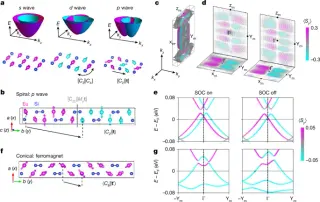
Researchers have identified stoichiometric metallic europium silicide (EuSi) as a new platform for p-wave magnetism, a quantum state long sought in fermionic systems. Using angle-resolved photoemission spectroscopy (ARPES) and neutron diffraction, the study confirms a chiral spiral magnetic phase between 33.4 K and 62 K that breaks inversion symmetry while preserving time-reversal symmetry. This phase exhibits a spin-polarized electronic structure with energy separations exceeding 100 meV, driven by strong 4f-5d exchange coupling. The findings provide the first spin-resolved spectroscopic evidence for odd-parity spin textures in a metallic system, offering a potential route for controlling spin polarization in spintronics and topological matter.
Acoustic Experiments Confirm Topology Persists at Quantum Critical Points
science1 month ago

Acoustic Experiments Confirm Topology Persists at Quantum Critical Points

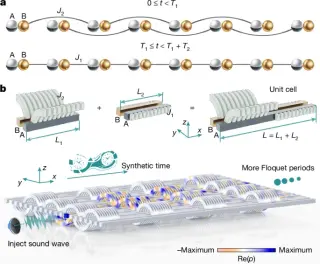
Researchers at Nanyang Technological University and collaborating institutions have experimentally demonstrated 'critical topological phase transitions,' proving that topological invariants remain well-defined at the gapless boundaries between phases. Using acoustic metamaterials, the team observed that topology drives a hierarchical organization of phase transitions, creating multicritical points where distinct critical boundaries intersect. This finding bridges the gap between Landau-Ginzburg continuous transitions and topological transitions, showing that topology is not destroyed at criticality but instead reorganizes critical behavior. The study provides the first experimental evidence for this unifying scenario, challenging the traditional view that these two paradigms are incompatible.

Electric Fields Reverse Phonon Chirality in Barium Titanate
science2 months ago

Electric Fields Reverse Phonon Chirality in Barium Titanate

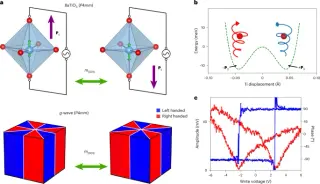
Researchers have demonstrated the first reversible, electric-field control of phonon angular momentum in barium titanate (BaTiO3). Using resonant inelastic X-ray scattering, they showed that switching the ferroelectric polarization of the material also flips the chirality of its lattice vibrations. This establishes a new 'gyroelectric' effect where the handedness of phonons can be deterministically manipulated, offering a potential pathway for phonon-based information processing and energy technologies.

Shanghai Physicists Observe Three-Stage Melting of Classical Spacetime Crystal
science4 months ago

Shanghai Physicists Observe Three-Stage Melting of Classical Spacetime Crystal

Researchers at Shanghai Jiao Tong University have successfully observed the melting process of a classical spacetime crystal for the first time. Using a system of plastic disks on a vibrating plate, they demonstrated that spatial and temporal order can decay independently. The study, published in the Proceedings of the National Academy of Sciences, reveals a three-stage melting process where time symmetry breaks before spatial structure, challenging traditional views of phase transitions.

Emergent Topology Arises in Quantum-Critical CeRu4Sn6
physics10 months ago

Emergent Topology Arises in Quantum-Critical CeRu4Sn6

Researchers at TU Wien report that the quantum material CeRu4Sn6 enters a quantum-critical regime at ultra-low temperatures where electrons lose their particle-like character, yet the system hosts an emergent topological semimetal state. They observed a spontaneous (anomalous) Hall effect without an external magnetic field, linking quantum fluctuations to topology and suggesting that topological properties can arise even when the conventional particle-picture fails. The work also points to a generalized, emergent view of topology and proposes focusing on quantum-critical materials to discover new topological phases.

Quantum Interference and Coherence in Kagome Crystals
condensed-matter-physics1 year ago

Quantum Interference and Coherence in Kagome Crystals

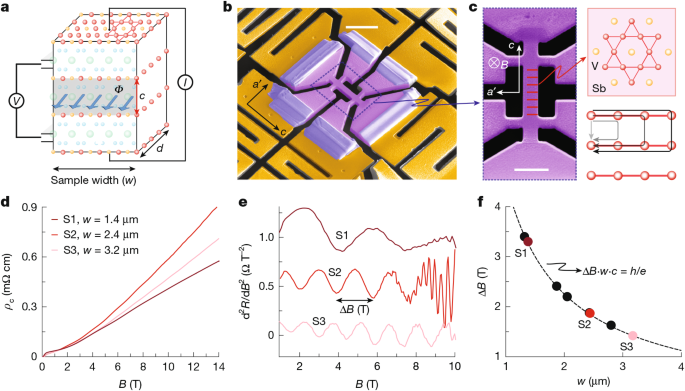
The study presents evidence of a long-range, coherent many-body electronic state in the kagome metal CsV3Sb5, characterized by macroscopic interference effects in magnetoresistance measurements, which persist over micrometers and are sensitive to sample geometry and strain, suggesting a state with similarities to superconductivity but without dissipation.

"Exploring Quantum Spin Liquids with Quantum Electrodynamics"
physics2 years ago

"Exploring Quantum Spin Liquids with Quantum Electrodynamics"

Researchers have found a correspondence between the spectrum of elementary excitations of a quantum spin liquid (QSL) and a quantum field theory, suggesting the possibility of testing particle physics theories with condensed-matter systems. The study focused on a well-studied QSL model, the Heisenberg J1 − J2 triangular antiferromagnet, and found a one-to-one correspondence with quantum electrodynamics in two spatial dimensions plus time (QED3). This discovery opens the prospect of detecting hypothetical elementary particles, such as magnetic monopoles, in a real QSL, and further research is needed to understand how QED3 excitations manifest in the physical response of the frustrated antiferromagnet and its stability to physical perturbations.

"Discovery of Six-Flux Composite Fermions Unveils New Quantum State"
physics2 years ago

"Discovery of Six-Flux Composite Fermions Unveils New Quantum State"

Physicists at Purdue University have discovered a new type of emergent particle, the six-flux composite fermion, in the fractional quantum Hall regime, expanding the understanding of quantum states. This groundbreaking finding, published in Nature Communications, challenges previous ideas and theories, and is a rare and significant discovery in condensed matter physics. The unique properties of the six-flux composite fermion provide new insights into the ordering of fractional quantum Hall states and contribute to ongoing research in topological electron physics.

"Breakthrough: Unveiling a Novel 'Magic' Magnet Type"
science-and-technology2 years ago

"Breakthrough: Unveiling a Novel 'Magic' Magnet Type"

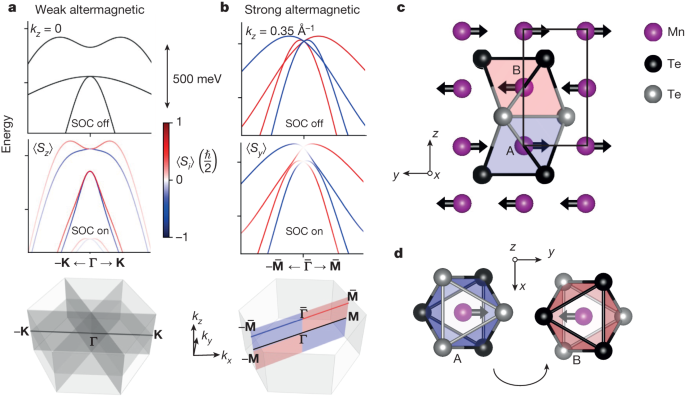
Scientists have discovered a new type of magnet called altermagnetism, which could revolutionize next-generation computers and electronics. This discovery, proven at the Swiss Light Source, opens up possibilities for more efficient electronic devices and a better understanding of condensed-matter physics. Altermagnetism, previously thought to be impossible, has the potential to impact various fields, including spintronics, and was detailed in a study published in the scientific journal Nature.

"Unveiling Altermagnetism: A Breakthrough in Magnetism Research"
physics2 years ago

"Unveiling Altermagnetism: A Breakthrough in Magnetism Research"

A new spin-group-symmetry classification has identified an unconventional magnetic phase called altermagnetic, which allows for lifted Kramers spin degeneracy (LKSD) without net magnetization and inversion-symmetry breaking. This altermagnetic LKSD has been confirmed in centrosymmetric MnTe using photoemission spectroscopy and ab initio calculations, revealing two distinct unconventional mechanisms of LKSD. The discovery of altermagnetic LKSD could have broad implications in fields such as spintronics, ultrafast magnetism, and topological matter, and may lead to the exploration of unconventional magnetic phases in various materials.

"Chiral Properties in Quantum Materials: Exploring a New State of Matter"
physics2 years ago

"Chiral Properties in Quantum Materials: Exploring a New State of Matter"

An international research group has discovered a new state of matter characterized by the existence of a quantum phenomenon called chiral current, which is generated on an atomic scale by a cooperative movement of electrons. This discovery significantly enriches our knowledge of quantum materials and may lead to the development of new electronics employing chiral currents as information carriers, as well as new chiral optoelectronic devices with implications for quantum technologies, sensors, biomedical, and renewable energy fields. The study verified the existence of this quantum state for the first time, paving the way for the development of new ultra-thin electronic devices and revolutionizing quantum physics and technology development.

"Surface Spin-Orbital Chirality: Uncovering Unique Signatures"
physics2 years ago

"Surface Spin-Orbital Chirality: Uncovering Unique Signatures"

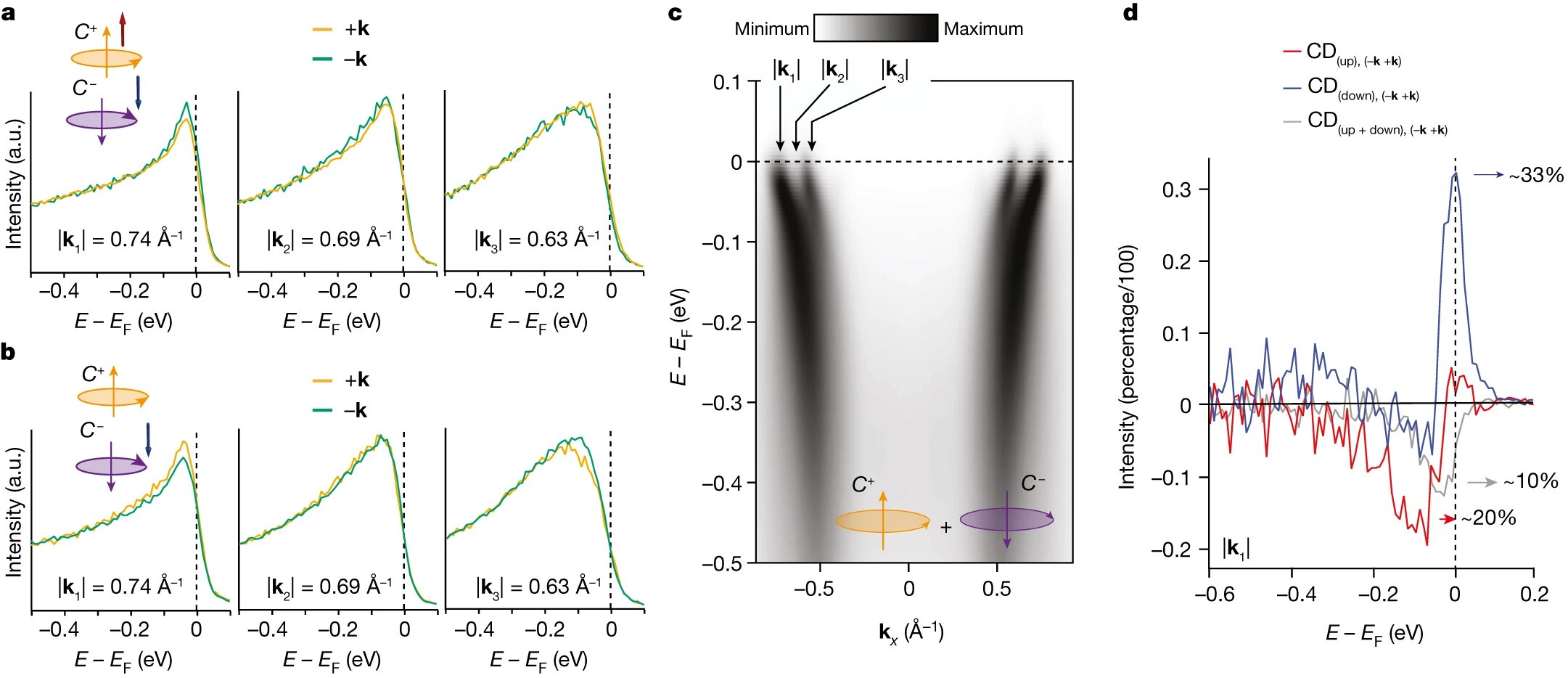
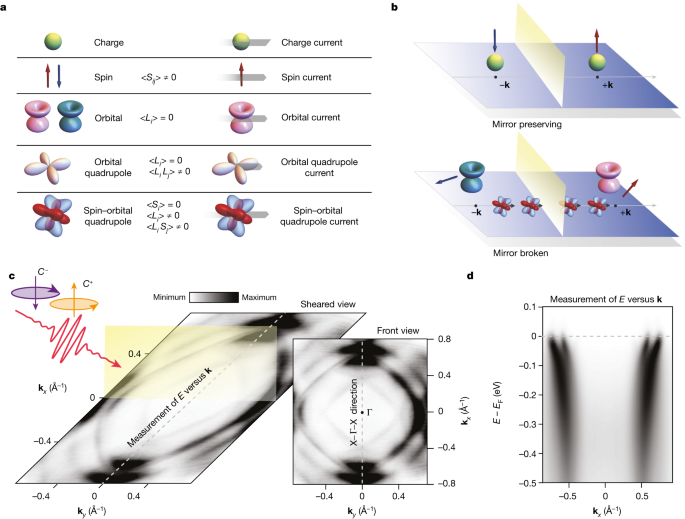
Researchers have discovered a new form of unconventional magnetism, known as chiral electronic ordering, which arises from charge currents at the atomic scale and is associated with a hidden magnetic order. By studying the archetypal quantum material Sr2RuO4, they have revealed signatures of a broken symmetry phase compatible with the formation of spin-orbital quadrupole currents at the material's surface. This discovery was made possible through circularly polarized, spin-selective, angular-resolved photoelectron spectroscopy, providing a methodology to probe otherwise undetectable symmetry-broken chiral electronic states. The study sheds light on the relationship between spin-orbital textures of electronic states and the occurrence of chiral electronic ordering, offering insights into a new phase of matter with potential implications for condensed-matter physics.

"Unveiling Noble Gas Clusters in Graphene: A Groundbreaking Imaging Achievement"
science-and-technology2 years ago

"Unveiling Noble Gas Clusters in Graphene: A Groundbreaking Imaging Achievement"

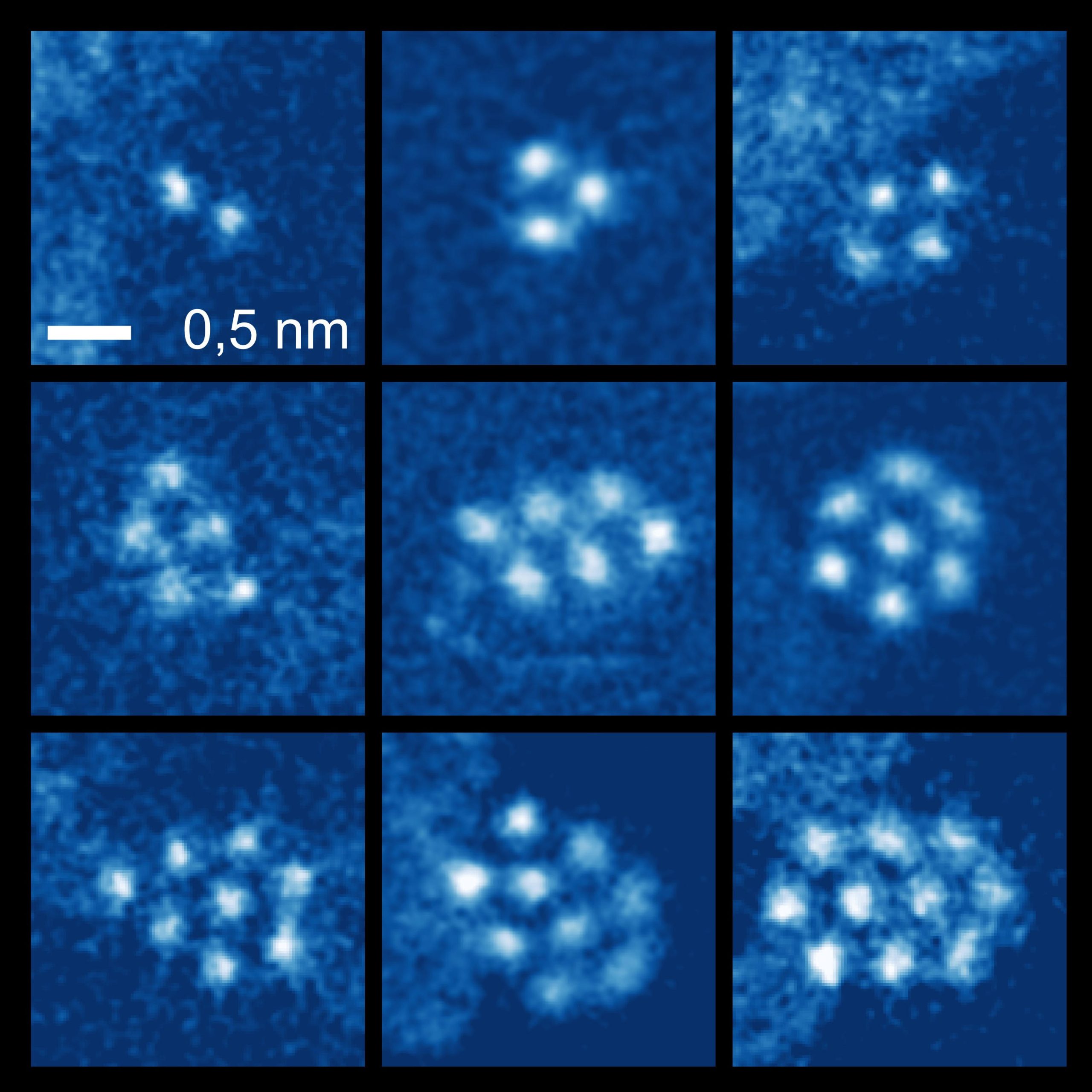
Researchers have achieved a breakthrough by stabilizing and directly imaging small clusters of noble gas atoms, such as krypton and xenon, between two layers of graphene at room temperature. This discovery opens up new possibilities for research in condensed matter physics and potential applications in quantum information technology. The method involves trapping noble gas atoms between graphene layers, allowing for the observation of their behavior using scanning transmission electron microscopy. This development may lead to further studies on the properties of clusters with different noble gases and their potential applications in quantum technology.

"Surprising Demise of Quantum Fluctuations Challenges Superconductivity Theories"
physics2 years ago

"Surprising Demise of Quantum Fluctuations Challenges Superconductivity Theories"

Princeton physicists have discovered a new quantum phase transition in superconductivity, challenging established theories. By experimenting with a three-atom-thin insulator that can be switched into a superconductor, they found evidence of a sudden cessation of quantum fluctuations, defying standard theoretical descriptions. This groundbreaking research promises to enhance our understanding of quantum physics in solids and propel the study of superconductivity in new directions, highlighting the need for a new theory to explain the observed phenomena.

"Challenging Superconductivity Theories: Quantum Fluctuations' Sudden Death"
physics2 years ago

"Challenging Superconductivity Theories: Quantum Fluctuations' Sudden Death"

Princeton physicists have observed an unexpected quantum behavior in a three-atom-thin insulator that can be switched into a superconductor, challenging current theories of superconductivity. The abrupt cessation of quantum fluctuations near the transition point exhibits unique properties that defy established theories. This discovery promises to advance our understanding of quantum physics in solids and open new directions for the study of quantum condensed matter physics and superconductivity.