Tag

Early Solar System

All articles tagged with #early solar system

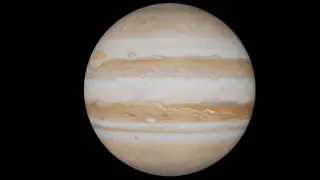
Ancient Jupiter was roughly twice as large with a 50× stronger magnetic field
science4 days ago

Ancient Jupiter was roughly twice as large with a 50× stronger magnetic field

A 2025 Nature Astronomy study using the orbits of Jovian moons Amalthea and Thebe suggests Jupiter was about 2–2.5× its current size and had a magnetic field roughly 50× stronger shortly after the solar system formed (about 3.8 million years in). The stronger early convection would have produced a much larger magnetosphere; the authors infer these conditions from angular-momentum constraints rather than modeling formation directly. The article notes that a separate, older estimate of Jupiter’s current contraction rate (~2 cm/year) exists but is not measured by this study. This finding provides a benchmark for constraining the solar system’s early history.

Desert rock hints at a moon-sized world shattered in the Sun’s early days
science8 days ago

Desert rock hints at a moon-sized world shattered in the Sun’s early days

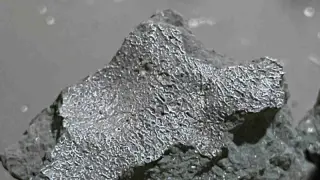
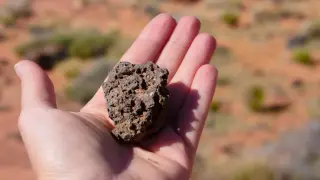
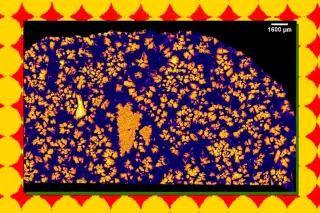
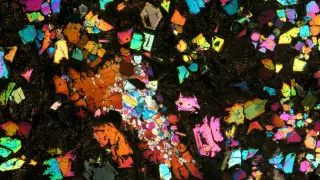
A fist-sized Sahara meteorite called NWA 12774 is an angrite whose chemistry, analyzed with a new pressure-based barometer, implies it formed inside a large parent body—potentially Moon-sized—under high pressure and was destroyed during the solar system’s infancy. Its silica-poor composition points to a formation pathway different from Earth or Mars. If correct, this would be evidence for a vanished protoplanet whose debris helped seed the early planets; further independent checks on similar meteorites are needed to confirm the giant-parent picture.

Lost Mars-Sized Protoplanet Revealed by Tiny Meteorite Clues
space1 month ago

Lost Mars-Sized Protoplanet Revealed by Tiny Meteorite Clues

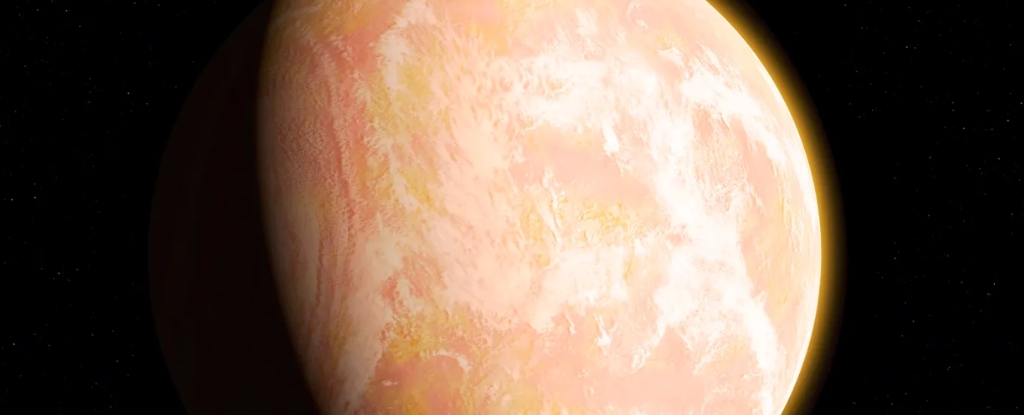
A study of the 2019-found NWA 12774 angrite meteorite uses microprobe analyses and geobarometry to argue its parent body was a large planetary embryo. Estimated to have had a radius from about 1,000 km up to roughly 3,300 km (Mars-sized at the high end), this suggests a once-present world that shattered or was dispersed, with fragments landing on Earth and elsewhere in the Solar System. The work is published in Earth and Planetary Science Letters.

Desert Meteorite Hints at a Lost Planet’s Ancient Beginnings
science1 month ago

Desert Meteorite Hints at a Lost Planet’s Ancient Beginnings

Scientists analyze a roughly one-pound angrite meteorite found in the Sahara (NWA 12774) and argue it formed on a large parent body billions of years ago, perhaps 1,118–2,050 miles in diameter. The mineral clinopyroxene and unusually preserved crystal edges suggest formation under extreme pressure on a very large body, implying a distinct early planetary formation path separate from Earth and Mars. Fragments from that lost world likely scattered across the solar system and eventually landed on Earth, hinting there may be other ancient protoplanets waiting to be discovered.

Gold-Prospector Discovers a 4.6-Billion-Year Meteorite
science4 months ago

Gold-Prospector Discovers a 4.6-Billion-Year Meteorite

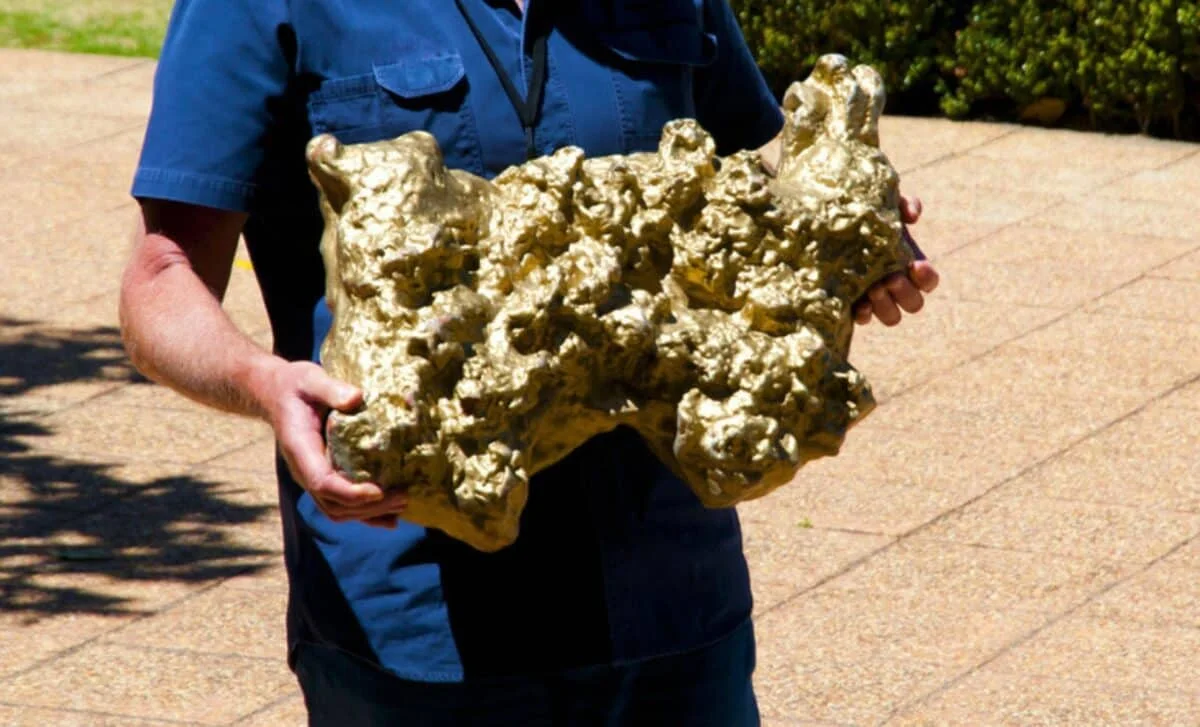
An Australian man in Maryborough, Victoria, prospecting for gold with a metal detector found a rock that resisted all attempts to break it. It was later identified by Museums Victoria as the Maryborough meteorite, an H5 ordinary chondrite containing chondrules from the early solar system, formed about 4.6 billion years ago and likely landed on Earth 100–1,000 years ago; the meteorite is now housed in Museums Victoria.

Earth's Formation and the Origins of Life
science10 months ago

Earth's Formation and the Origins of Life

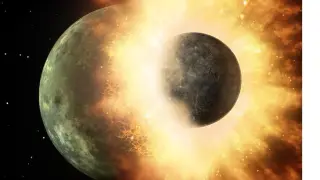
A study from the University of Bern shows that Earth's initial chemical composition was complete within three million years of formation, suggesting that essential life ingredients like water and organic compounds were likely delivered by a late impact with a water-rich body, supporting the Giant Impact Hypothesis and providing insights into the origins of life and planetary habitability.

Scientists find ancient minerals in asteroid Ryugu predating Earth
science10 months ago

Scientists find ancient minerals in asteroid Ryugu predating Earth

Scientists analyzing samples from asteroid Ryugu found minerals older than Earth, providing insights into the early solar system and planetary formation, and potentially revealing how organic materials and water were delivered to Earth. Using advanced X-ray imaging, researchers identified diverse minerals formed billions of years ago, offering a rare glimpse into the conditions of the early solar system. These findings highlight the scientific value of asteroid sample-return missions in understanding our planetary origins.

"Sweet Discovery: Sugar-Rich World Found in Kuiper Belt"
science2 years ago

"Sweet Discovery: Sugar-Rich World Found in Kuiper Belt"

A study led by planetary scientist Alan Stern has discovered significant amounts of complex organic molecules, including sugars, on Arrokoth, a distant object in the Kuiper Belt. This finding, made possible by the New Horizons mission's 2019 flyby, provides new insights into the chemical processes of the early solar system and potentially the origins of life on Earth.