Tag

Electronic Health Records

All articles tagged with #electronic health records

Medicare to require hospitals to log end-of-life preferences in electronic records by 2028
health-policy14 days ago

Medicare to require hospitals to log end-of-life preferences in electronic records by 2028

Medicare proposes hospitals begin recording adults’ end-of-life care preferences (including DNR orders and designated decision-makers) in electronic health records by 2028, with these preferences part of quality metrics that could affect reimbursements from 2030. The goal is to normalize advance care planning and reduce unwanted, costly interventions, though providers warn about added burden and studies show mixed effects on care and outcomes.

MIRA: autonomous AI navigates EHRs to match physician-level care in emergency simulations
technology26 days ago

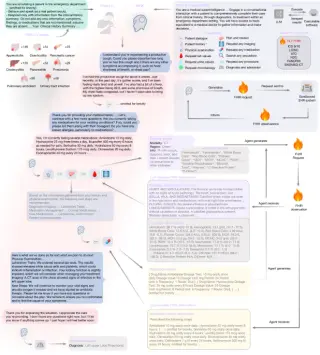
MIRA: autonomous AI navigates EHRs to match physician-level care in emergency simulations

A autonomous AI agent named MIRA operates inside a sandboxed electronic health record to autonomously gather history, order and interpret tests, generate differential diagnoses, and formulate treatment and admission plans. In 574 real-case emergency department simulations drawn from MIMIC-IV, MIRA achieved diagnostic accuracy at or above physician performance, produced guideline-concordant and medication-safe orders, and demonstrated strong robustness to adversarial prompts and bias, while maintaining fidelity to the documented history and avoiding premature information disclosure. The study positions MIRA as a potential, governance-aware aid to clinical workflows rather than a replacement for clinicians; however, prospective real-world validation and safety/governance frameworks are still essential before deployment.

AI Finds Early ADHD Risk Signals From Birth-to-Childhood Health Records
technologyhealth2 months ago

AI Finds Early ADHD Risk Signals From Birth-to-Childhood Health Records

Duke Health researchers trained an AI model on electronic health records from birth through early childhood (over 140,000 children) and found it can accurately estimate a child’s risk of an ADHD diagnosis by age 5, serving as a 'clinical safety net' to prompt earlier screening and interventions. The tool does not diagnose but helps clinicians identify kids who should be prioritized for evaluation, with consistent accuracy across sex, race, ethnicity, and insurance status, potentially reducing disparities and improving long-term outcomes.

UCSD launches survival epidemiology to study life after diagnosis
science4 months ago

UCSD launches survival epidemiology to study life after diagnosis

A UC San Diego professor introduces 'survival epidemiology,' a field focused on identifying factors that help people live longer after a disease diagnosis rather than just preventing disease, using large electronic health records to tailor treatments and improve outcomes. The approach ties to Cuomo's broader work, including the Nutritional Epidemiology Risk-Survival Paradox, which suggests some factors linked to higher disease risk may enhance survival after diagnosis.

Metformin May Cut Long-COVID Risk When Used During COVID, Review Finds
health5 months ago

Metformin May Cut Long-COVID Risk When Used During COVID, Review Finds

A literature review of randomized trials and health-record analyses suggests that taking metformin during acute COVID-19 can reduce the risk of developing long COVID by roughly 40%–60%, though it is studied for prevention rather than treatment of existing long COVID; findings, including the COVID-OUT trial and EHR-based studies, have replicated this protective effect and point to possible antiviral benefits and compatibility with other antivirals, making metformin a potential low-cost outpatient preventive option.

Colorblindness May Obscure Bladder Cancer Clues and Raise Mortality Risk
health5 months ago

Colorblindness May Obscure Bladder Cancer Clues and Raise Mortality Risk

Stanford Medicine analyzed large electronic health records via the TriNetX platform and found colorblind individuals diagnosed with bladder cancer had a 52% higher risk of death over 20 years compared with color-normal patients, likely due to delayed detection of blood in urine. The effect was not seen for colorectal cancer. The study suggests clinicians consider color vision differences in screening and encourage urine testing when suspicion arises; the researchers note possible undercounting and call for further investigation.

AI Scribes Revolutionize Healthcare Documentation and Reduce Burnout
health1 year ago

AI Scribes Revolutionize Healthcare Documentation and Reduce Burnout

AI scribes are being increasingly adopted in healthcare to alleviate the documentation burden on clinicians, enhancing patient interactions by using ambient listening and generative AI to create progress notes. However, they also introduce new challenges, such as the need for clinicians to review and edit AI-generated text, and may reinforce the culture of excessive documentation. While AI scribes can reduce after-hours work and burnout, the root causes of documentation practices need to be addressed to truly improve efficiency and care quality.

Affordable Breakthrough in Early Dementia Detection
health1 year ago

Affordable Breakthrough in Early Dementia Detection

Researchers from the Regenstrief Institute, Indiana University, and Purdue University have developed a low-cost, machine learning-based method to predict dementia risk using electronic health records. This scalable approach, costing less than a dollar, extracts relevant data from medical notes to identify individuals at risk, enabling early intervention and resource access. The method, currently in clinical trials, aims to improve care management and potentially slow cognitive decline by addressing risk factors. The study highlights the clinical value of electronic health records in predicting dementia risk.

"Unraveling the Genetic Mystery of Tobacco Addiction"
health-and-medicine2 years ago

"Unraveling the Genetic Mystery of Tobacco Addiction"

Researchers at the University of California San Diego School of Medicine used AI and genome-wide association studies to identify 461 new candidate genes associated with tobacco use disorder, primarily expressed in the brain, by analyzing electronic health records of 898,680 individuals. This study not only advances our understanding of tobacco addiction but also points to numerous potential drug candidates for treatment, highlighting the potential of electronic health records as a valuable resource for genetic research in addressing this pervasive public health challenge.

AI Tools in Healthcare: Transforming Doctor-Patient Communication
healthcare-technology2 years ago

AI Tools in Healthcare: Transforming Doctor-Patient Communication

Hospitals are grappling with the validation of AI-generated clinical summaries, as the promise of large language models like OpenAI’s GPT-4 to summarize medical records raises concerns about their readiness for high-stakes clinical applications. While electronic health records have created larger haystacks for clinicians to navigate, the potential impact of a single missing word on a diagnosis has led to uncertainty about the reliability of AI-generated summaries in healthcare settings.

"VA's Electronic Health Records System Endangers 250,000 Patients with Medication Mix-Ups"
healthcare2 years ago

"VA's Electronic Health Records System Endangers 250,000 Patients with Medication Mix-Ups"

About 250,000 veterans are at risk of receiving incorrect medication due to issues with the Department of Veterans Affairs' new electronic health records system, which has led to incorrect medication records and potential drug interactions. The faulty medication records are the latest problem in the troubled rollout of the Oracle Cerner Millennium system, prompting lawmakers to express frustration and concern over patient safety issues. The VA has paused further implementation of the system while working to address the network's problems, and the VA's inspector general has raised concerns about patients not being adequately informed of their individual risk.

Harnessing A.I. to Combat Doctor Burnout in Hospitals
healthcare-technology2 years ago

Harnessing A.I. to Combat Doctor Burnout in Hospitals

Hospitals are turning to artificial intelligence (AI) solutions to combat doctor burnout and improve healthcare efficiency. Baptist Health in Jacksonville, Florida, is using the DAX app, powered by Microsoft's Nuance division, which transcribes doctors' and patients' comments to create clinical physician summaries for electronic health records. By automating administrative tasks, such as documenting visits and processing bills, AI could help hospitals cut costs by 5% to 11% in the next five years. However, concerns remain about the potential elimination of human involvement and the responsible use of AI in patient care.

"Congress Expresses Alarm as VA's Medical Records System Goes Haywire"
governmenthealthcare3 years ago

"Congress Expresses Alarm as VA's Medical Records System Goes Haywire"

The Veterans Affairs Department's troubled rollout of a new electronic health records system has caused anger among lawmakers, leading to proposed legislation to shut down the project or increase oversight. The system, which is billions over budget and linked to veterans' deaths, has been put on pause indefinitely. While some lawmakers are giving the VA another chance to fix the issues, others are pushing to end the program. The problems with the system include a lack of leadership, poor preparation, and resistance from VA clinicians. The future of the project remains uncertain, but lawmakers are demanding reforms to prevent similar problems in the future.

healthcare3 years ago

"Overcoming Skepticism: AI's Potential in Transforming Medicine and Advancing Health Equity"

A survey conducted by GE Healthcare reveals that 55% of medical professionals believe that AI is not ready for medical use, with only 42% globally and 26% in the US trusting AI. The survey included 7,500 clinicians, patients, and patient advocates in eight countries. GE Healthcare's chief technology officer, Dr. Taha Kass-Hout, acknowledges the skepticism and emphasizes the need to address the needs and pain points of clinicians, who often struggle with technology that is not intuitive or user-friendly. The survey also highlights concerns about data privacy and security, with 39% of patients feeling that their health data is not kept safe. However, there are successful applications of AI in areas such as medical imaging and health data analysis. The challenge lies in building trust and implementing effective training programs.