Tag

Organic Molecules

All articles tagged with #organic molecules

Ancient Martian Clay Reveals Long-Lived Organic Chemistry
space3 days ago

Ancient Martian Clay Reveals Long-Lived Organic Chemistry

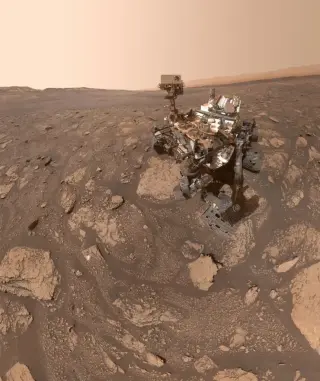
In a 3.5-billion-year-old clay-rich rock from Gale Crater, Curiosity detected 21 carbon-based molecules, including a nitrogen-containing ring linked to prebiotic chemistry, demonstrating ancient Martian sediments can preserve complex organics for billions of years. Using the SAM instrument with a TMAH wet-chemistry method, seven molecules were confirmed as new detections on Mars, suggesting these organics may be fragments from larger material and highlighting preservation as a key story for future missions.

Martian organics, two-liquid water and all-female Homo naledi headline this week’s science news
science14 days ago

Martian organics, two-liquid water and all-female Homo naledi headline this week’s science news

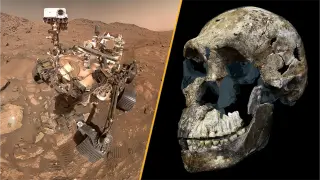
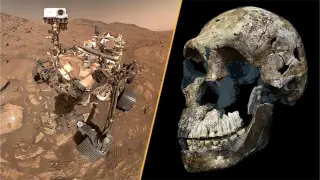
NASA’s Perseverance rover has found the highest concentration of complex organic molecules to date in Jezero crater, hinting at past microbial life on Mars; JWST observations show early galaxies forming and dying quickly, a newborn star was seen in Orion, and Euclid produced the Milky Way’s most detailed image yet. In paleoanthropology, nearly two dozen Homo naledi skeletons from Rising Star cave are all female. Closer to home, AI-assisted research adds support to the idea that water may consist of two interconverting liquids.

Mars organics, female Homo naledi, and water’s two-faced nature: this week's science roundup
science14 days ago

Mars organics, female Homo naledi, and water’s two-faced nature: this week's science roundup

NASA’s Perseverance has found the highest concentration of organic molecules yet in Jezero crater’s mudstones, hinting at fossilized microbes on Mars; archaeologists report that all Homo naledi remains from the Rising Star cave system in South Africa are female; new AI-assisted research suggests water may consist of two interchanging liquids, challenging a single-liquid view of the substance; JWST observations illuminate how early galaxies formed and evolved (dying young), and Euclid has produced the most detailed image of the Milky Way yet, with a separate note of a newly forming star in Orion.

Mars Clay Preserves Diverse Organic Molecules, Hinting at Ancient Habitability
science2 months ago

Mars Clay Preserves Diverse Organic Molecules, Hinting at Ancient Habitability

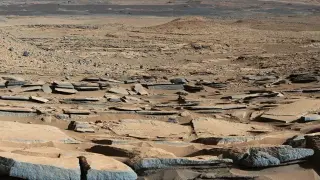
NASA's Curiosity rover, using the SAM instrument and a TMAH-based process, detected more than 20 organic molecules in the Glen Torridon clay-bearing unit of Gale Crater, including a nitrogen-containing compound similar to DNA components and benzothiophene. The findings suggest ancient organics could be preserved for about 3.5 billion years, signaling past habitability, but they do not prove life; confirming such a possibility would require returning Martian rocks to Earth. The study was published in Nature Communications.

New Martian Organics Deepen the Case for Ancient Life on Mars
science2 months ago

New Martian Organics Deepen the Case for Ancient Life on Mars

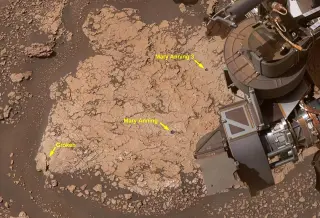
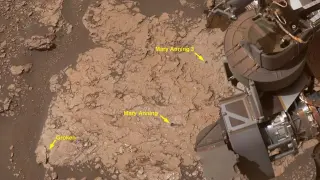
NASA’s Curiosity rover drilled the Mary Anning 3 rock on Mount Sharp and, using the SAM instrument with tetramethylammonium hydroxide, detected seven organic molecules — including nitrogen heterocycles and benzothiophene — the greatest diversity of organics found on Mars to date. The find reinforces the idea that ancient Mars had water and carbon-based chemistry capable of supporting life, though it does not prove life existed. Researchers also note that deeper chemical layers may remain undiscovered, with future missions like ESA’s Rosalind Franklin rover and NASA’s Dragonfly to Titan expected to continue probing Mars’ past chemistry.

Mars in Two Ages: Curiosity and Perseverance Spotlight Different Eras in 360 Panoramas
science2 months ago

Mars in Two Ages: Curiosity and Perseverance Spotlight Different Eras in 360 Panoramas

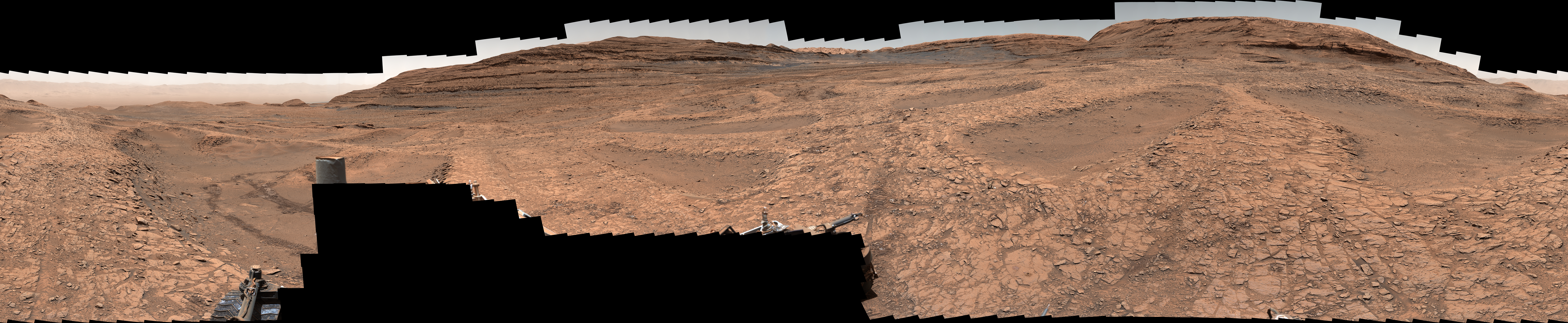
NASA's Curiosity and Perseverance released separate 360-degree panoramas showing Mars' long history: Curiosity's view over boxwork ridges in Gale Crater reveals groundwater-formed rock as it climbs Mount Sharp, while Perseverance's Lac de Charmes panorama around Jezero Crater captures ancient rocks in one of the oldest landscapes on the planet. Both rovers continue collecting data and samples to unravel Mars' past habitability and potential for life, with Curiosity probing mineral evidence and Perseverance storing and studying samples for eventual Earth-based analysis.

Curiosity Discovers Seven New Organic Molecules in Martian Rock, Hinting at Past Habitability
space2 months ago

Curiosity Discovers Seven New Organic Molecules in Martian Rock, Hinting at Past Habitability

NASA's Curiosity rover analyzed the Mary Anning 3 rock and found 21 carbon-containing molecules, including seven never seen before on Mars, using the Sample Analysis at Mars (SAM) instrument with tetramethylammonium hydroxide (TMAH); the diverse organics support the idea that ancient Mars hosted life-friendly chemistry and environments capable of preserving organics for billions of years.

Ancient Mars likely hosted a vast ocean as Curiosity uncovers new organics
science2 months ago

Ancient Mars likely hosted a vast ocean as Curiosity uncovers new organics

Scientists say Mars once hosted a giant ocean covering about a third of the planet, based on orbital mapping of a continental-shelf-like feature, while NASA's Curiosity rover found seven previously unseen organic molecules in a rock sample. The findings don’t prove past life, but they show Mars had the right chemistry for it and bolster the push to explore the planet further, including NASA’s plans for a future nuclear-powered mission.

Curiosity detects diverse organics on Mars, hinting at ancient habitability
science-space2 months ago

Curiosity detects diverse organics on Mars, hinting at ancient habitability

NASA’s Curiosity rover, via a wet-chemistry experiment on a Mary Anning rock at Gale Crater, uncovered 21 carbon-containing molecules, including seven not previously detected on Mars. The organics could be preserved for about 3.5 billion years, reinforcing the idea that ancient Mars was habitable, though the findings do not prove life. Researchers say definitive answers require returning samples to Earth, and future missions with similar chemistry experiments (e.g., ExoMars Rosalind Franklin, Dragonfly) will continue probing Mars’ organic past.

Mars Rock Reveals Building-Block Molecules Suggesting Ancient Life-Friendly Chemistry
science2 months ago

Mars Rock Reveals Building-Block Molecules Suggesting Ancient Life-Friendly Chemistry

NASA reports that seven of 21 carbon-containing organic molecules identified in a rock sample drilled by the Curiosity rover in 2020 at Mount Sharp were detected on Mars for the first time, including a nitrogen heterocycle that could be a precursor to DNA and RNA. While scientists can’t tell if the molecules arose from biological or geological processes, the find strengthens the case that ancient Mars had the right chemistry to support life.

Mars' Ancient Ocean Revealed, Organics Hint at Possible Life
science2 months ago

Mars' Ancient Ocean Revealed, Organics Hint at Possible Life

New Martian findings point to an ancient ocean in Mars’ northern hemisphere and reveal seven previously undetected organic molecules in a Curiosity rock sample, a sign Mars once had habitable chemistry. While neither discovery proves past life, they strengthen the case that Mars could have supported life and build on earlier organics/biosignature hints. NASA notes these results amid ongoing exploration and upcoming missions, including plans for nuclear-powered technology to help future Mars research.

Curiosity Uncovers Martian Building Blocks for Life in Landmark Experiment
science2 months ago

Curiosity Uncovers Martian Building Blocks for Life in Landmark Experiment

NASA's Curiosity rover, in a 2020 experiment using a TMAH chemical probe on the Mary Anning 3 rock in Gale crater, detected more than 20 organic molecules—including benzothiophene—showing preserved prebiotic chemistry on Mars. While not proof of past life, the findings suggest Mars had conditions favorable to life's building blocks billions of years ago. Scientists also note that returning Martian rocks to Earth could help confirm any signs of life, though the Mars Sample Return mission has been effectively canceled; future missions, including ESA's Rosalind Franklin rover planned for a late-2028 launch, will continue to drill deeper and search for organics on the red planet.

Curiosity Discovers Rich Suite of Organics in Ancient Martian Rocks
science2 months ago

Curiosity Discovers Rich Suite of Organics in Ancient Martian Rocks

NASA’s Curiosity rover, using a new wet-chemistry method with tetramethylammonium hydroxide, detected more than 20 organic molecules in clay-filled rocks from Glen Torridon in Gale Crater—a record of complex organics (including naphthalene and benzothiophene) dating to about 3.5 billion years ago, reinforcing the idea that ancient Mars could have harbored habitable conditions and chemical precursors to life.

Curiosity uncovers complex organics in ancient Martian sandstone
space2 months ago

Curiosity uncovers complex organics in ancient Martian sandstone

NASA's Curiosity rover, using a first-of-its-kind off-Earth chemical test with tetramethylammonium hydroxide (TMAH), detected more than 20 organic molecules in 3.5‑billion‑year‑old sandstone from Gale Crater, including naphthalene and benzothiophene, with possible nitrogen-containing heterocycles—evidence of ancient Martian chemistry that could be a building block for life and that will guide future TMAH experiments on Mars rovers and future missions.

Curiosity Uncovers 3.5-Billion-Year Organic Clues on Mars
space2 months ago

Curiosity Uncovers 3.5-Billion-Year Organic Clues on Mars

Curiosity's analysis of Gale crater clay found 20+ organic molecules, including a nitrogen-bearing compound akin to DNA precursors and a benzothiophene, suggesting ancient organics were preserved on Mars for ~3.5 billion years and that the planet once offered habitable conditions; Earth-based experiments with a meteorite and landing simulations aided interpretation, while ESA plans a 2028 Rosalind Franklin rover to continue the search.