Tag

Fusion

All articles tagged with #fusion

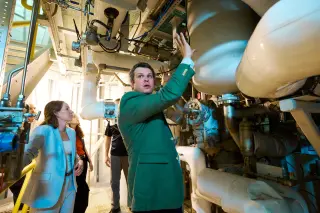
Chlorine-Caused Cracks Force Major Rework of ITER Heat Shield
technology26 days ago

Chlorine-Caused Cracks Force Major Rework of ITER Heat Shield

Chlorine trapped in a cleaning bath caused stress corrosion cracking in cooling pipes attached to ITER’s vacuum vessel thermal shield in southern France, prompting the removal of 2,205 pounds of silver and cutting out 6.8 miles of pipe to be replaced; the three-year repair program, performed by INOX-CVA, wrapped up in July, while other ITER sectors advance with magnet testing and assembly.


Two clocks in the Sun: neutrinos escape in seconds while photons diffuse for 170,000 years
science1 month ago

Two clocks in the Sun: neutrinos escape in seconds while photons diffuse for 170,000 years

Fusion in the Sun produces neutrinos and photons that travel on very different timescales: neutrinos, interacting only weakly with matter, exit the core in about 2 seconds and reach Earth with only the minutes-long light travel delay, while photons undergo a long, random-walk diffusion through the dense radiative zone—being absorbed and re-emitted countless times—taking roughly 170,000 years before the energy reaches the photosphere. The photons reaching us are not the same particles from the core; energy is redistributed and carried outward, with convection taking over in the outer layers. This dual-timeline view underpins solar physics and helped resolve the solar neutrino problem via neutrino oscillations.

Alfvén-Driven Flows Quiet Turbulence, Boosting Tokamak Fusion Prospects
science1 month ago

Alfvén-Driven Flows Quiet Turbulence, Boosting Tokamak Fusion Prospects

Experiments on the DIII-D tokamak show that Alfvén eigenmodes can drive shear flows that suppress plasma turbulence, improving heat confinement and potentially boosting fusion performance. Using the Motional Stark Effect diagnostic, researchers observed AE-driven changes in magnetic structure consistent with self-regulating currents, suggesting a pathway to more efficient confinement—though practical application remains years away; study published in Physical Review Letters.

Basement Fusion: A 14-year-old’s reactor rewrote the bounds of possibility
science1 month ago

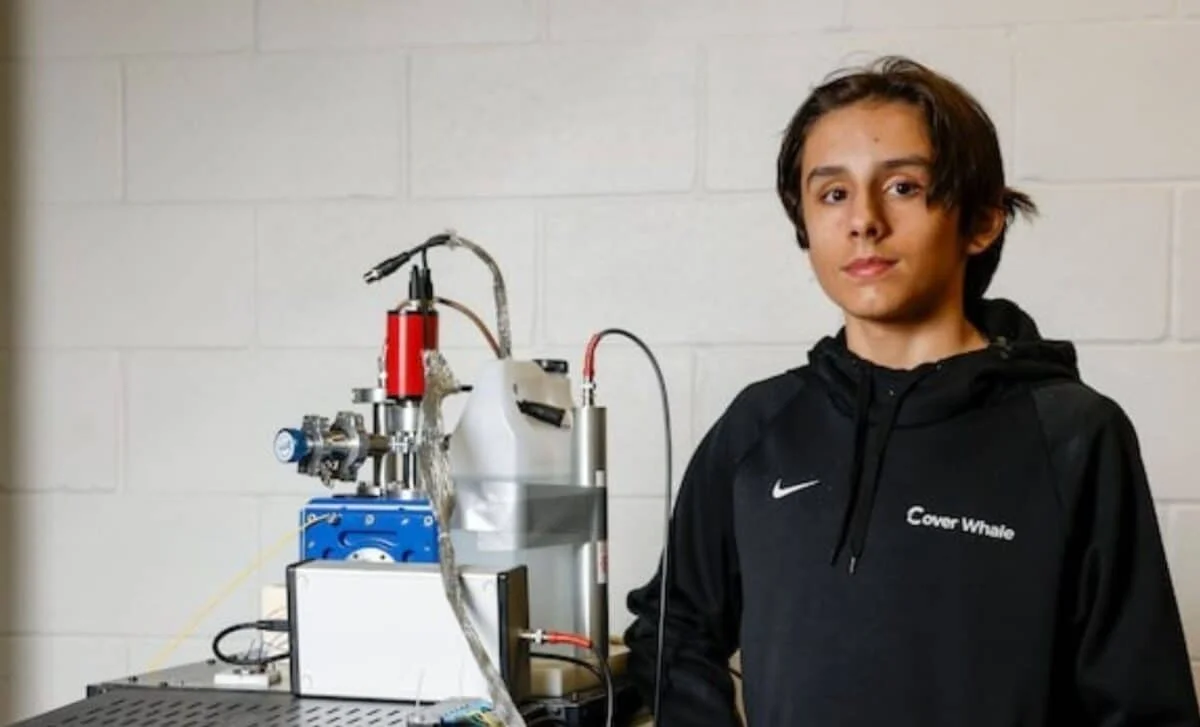
Basement Fusion: A 14-year-old’s reactor rewrote the bounds of possibility

Taylor Wilson, at 14, convinced a university physics department to let him build a Farnsworth fusor in a sub-basement, where he achieved nuclear fusion confirmed by neutron detectors, becoming the youngest person verified to fuse atoms. The feat underscores how supervised mentorship and access to proper safety can channel teenage obsession into real science, influencing his later career in radiation physics and nuclear technology.

Lab Replays Neptune’s Diamond Rain to Sharpen Fusion Power Prospects
science1 month ago

Lab Replays Neptune’s Diamond Rain to Sharpen Fusion Power Prospects

Lawrence Livermore researchers used laser-driven shocks on tiny diamond samples to reproduce the extreme pressures and temperatures found deep in Neptune and Uranus, melting diamond while recording its atomic structure, temperature, density and reflectivity. The work suggests slower initial shocks could improve fuel compressibility and boost energy yield in inertial confinement fusion, offering new atomic-scale benchmarks for modeling ice-giant atmospheres and guiding fusion experiments.

AI’s energy crunch revives a near-forgotten fusion reactor project
technology1 month ago

AI’s energy crunch revives a near-forgotten fusion reactor project

AI-driven demand for power from data centers is reviving a long-dormant nuclear reactor experiment near Lynchburg, Virginia. The 120-foot-tall facility, once a $400 million project that collapsed as energy markets shifted, is being reconsidered with BWXT overseeing its revival, as former SpaceX engineers argue the revived reactor could help meet the power needs of AI-era data centers and push next-generation nuclear tech forward despite past setbacks.

Materials-Driven Fusion: Metals Boost Low-Energy Nuclear Reactions
energy2 months ago

Materials-Driven Fusion: Metals Boost Low-Energy Nuclear Reactions

US researchers at UC Davis and Berkeley Lab found that surrounding host metals can dramatically boost low-energy deuterium fusion, with fusion rates plateauing below 2.5 keV and, in some samples, increasing by up to a quintillion-fold versus vacuum; the effect is attributed to electrons and structural defects in the host metal shielding Coulomb repulsion, opening a new materials-driven approach to fusion and potentially enabling compact neutron generators and new modeling tools like DuctGPT.

The Sun’s Self-Regulating Thermostat: Fusion Keeps the Light On, Gravity Keeps It Going
science3 months ago

The Sun’s Self-Regulating Thermostat: Fusion Keeps the Light On, Gravity Keeps It Going

Fusion barely powers the Sun; its gravity continuously compresses the core, heating it just enough to keep fusion in a self-regulating balance with hydrostatic equilibrium. If fusion stopped, the Kelvin-Helmholtz mechanism would let the Sun slowly shrink and release heat, keeping it shining far longer as a natural thermostat with no moving parts. The Sun actually heats up as it loses energy, and internal changes propagate extremely slowly. Part 3 will trace a photon’s 100,000-year journey out of the Sun.

DOE Unveils Roadmap to Fast-Track Fusion Power by the Mid-2030s
technology4 months ago

DOE Unveils Roadmap to Fast-Track Fusion Power by the Mid-2030s

The U.S. Department of Energy released the finalized Fusion Science and Technology Roadmap to accelerate fusion energy development and commercialization, uniting science, infrastructure, workforce, and public-private partnerships under a Build-Innovate-Grow strategy to support fusion pilot plants and mid-2030s commercial power; progress hinges on future appropriations and partnerships rather than guaranteed funding, with AI/HPC and strong industry collaboration driving the effort.

Fusion startup eyes grid power by the 2030s with a Virginia plant plan
technology5 months ago

Fusion startup eyes grid power by the 2030s with a Virginia plant plan

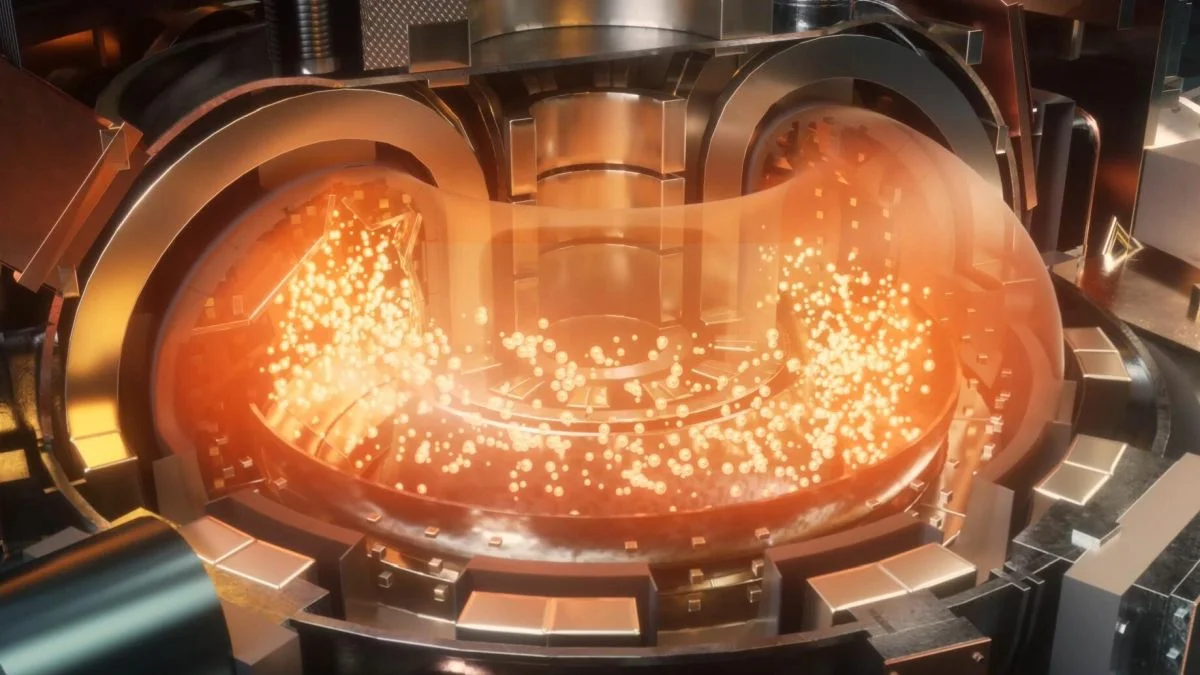
Commonwealth Fusion Systems is advancing its donut-shaped tokamak in Devens, MA, aiming to produce net energy and plug a future 400‑MW fusion plant into PJM’s grid by the 2030s. The demonstration device is about 75% complete and could be operational next year, with the Fall Line Fusion Power Station in Virginia envisioned next. Google and Eni have already secured buyers, and while the grid interconnection process will take years, proponents say fusion could become a grid-ready technology sooner than some expect, despite ongoing challenges in sustaining continuous fusion power.

HTS coil-winding breakthrough nudges fusion toward commercial power
energy8 months ago

HTS coil-winding breakthrough nudges fusion toward commercial power

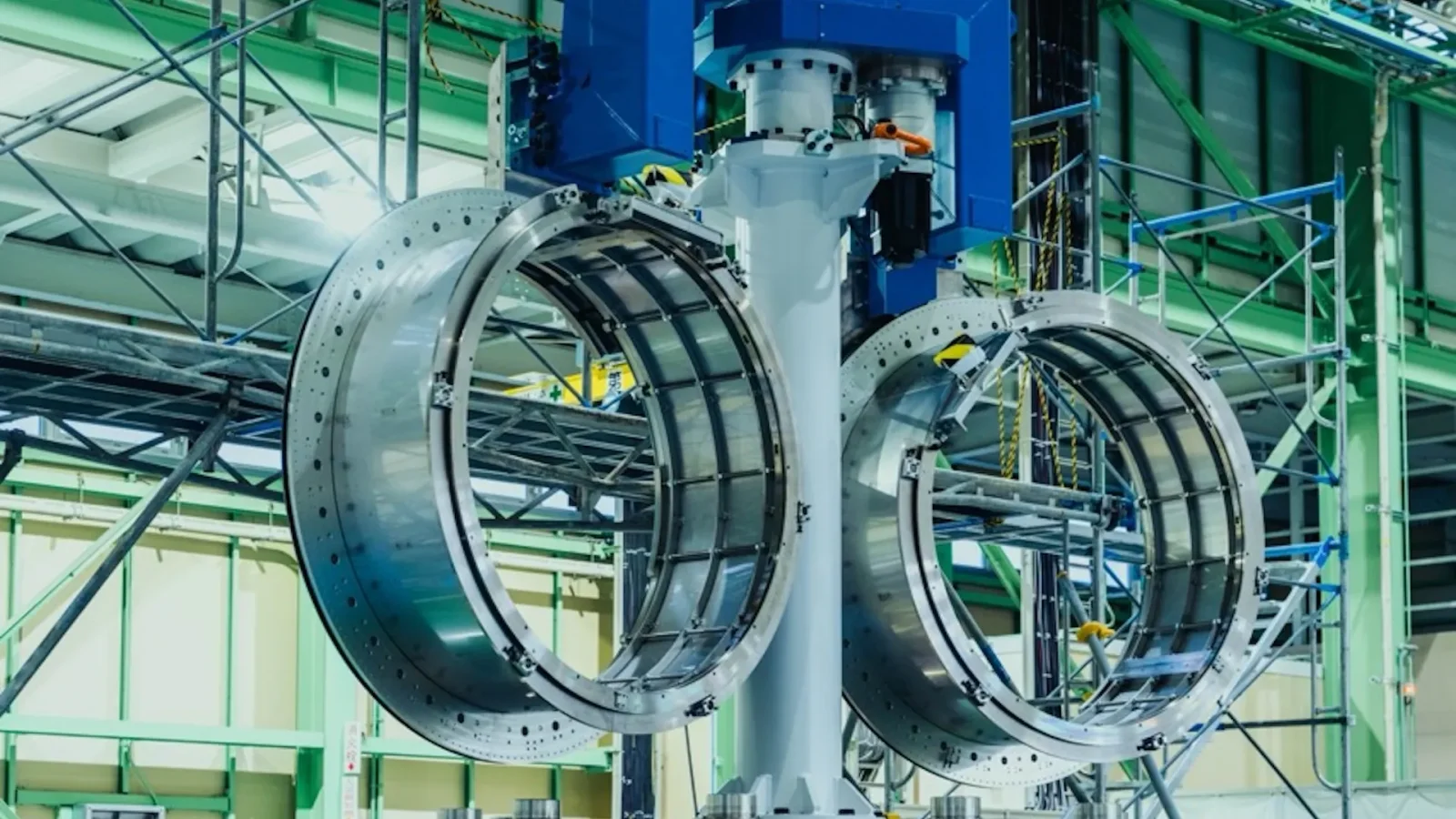
Japan’s Helical Fusion has completed a one-of-a-kind coil manufacturing machine, built with Sugino Machine, to wind high-temperature superconducting cables into spiral coils for the Helix HARUKA reactor. The device targets a key manufacturing bottleneck to enable efficient production of HTS coils, a step toward commercially viable fusion energy by the 2030s, with on-site assembly to begin later this year and demonstrations planned around 2030 to prove net electricity, steady operation, and maintainability.

China’s 'Artificial Sun' Breaks Fusion Density Limit, Advancing Clean Energy
science9 months ago

China’s 'Artificial Sun' Breaks Fusion Density Limit, Advancing Clean Energy

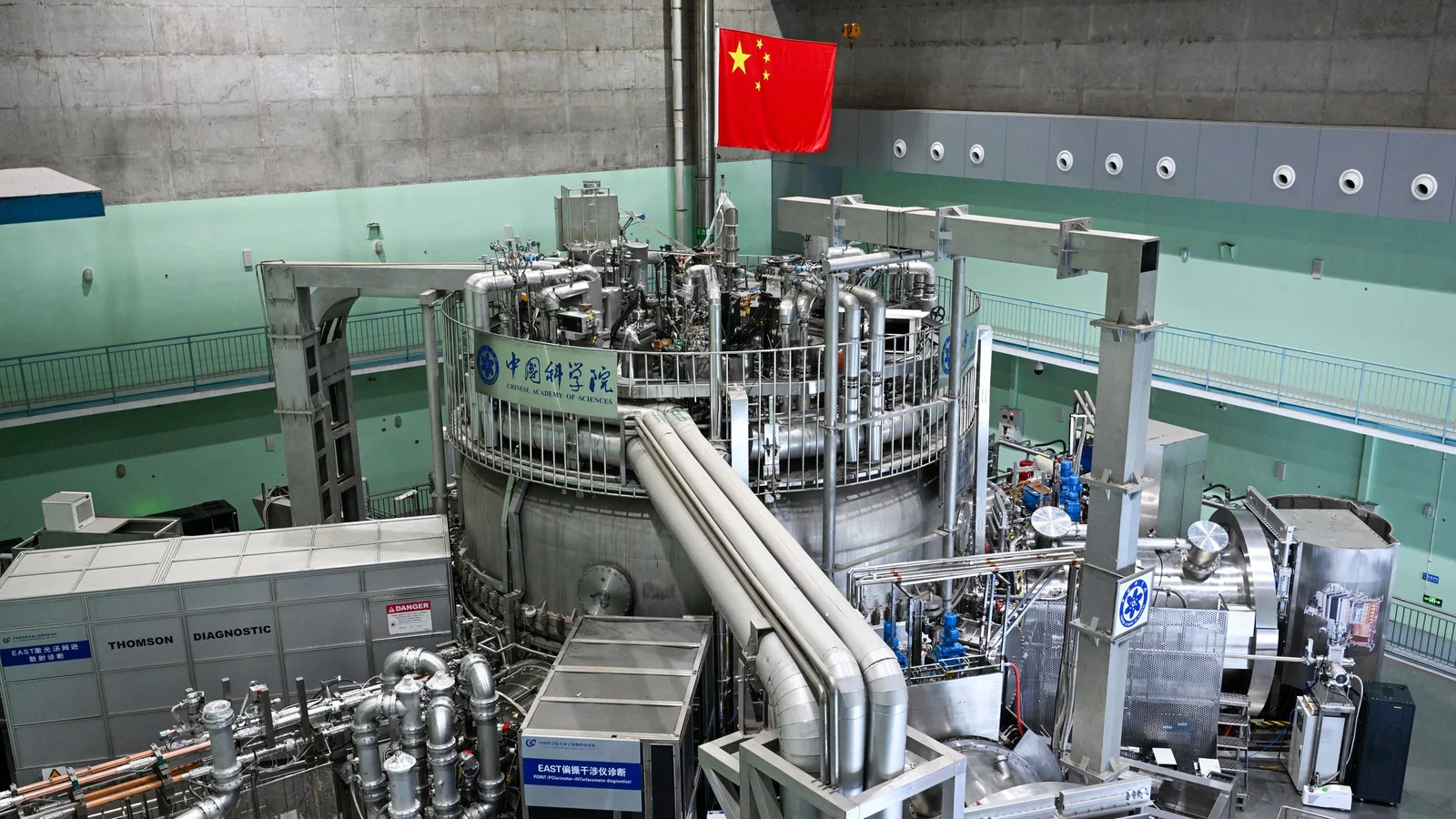
China's 'artificial sun' reactor, EAST, has broken a major fusion limit by maintaining plasma stability at densities 1.3 to 1.65 times beyond the Greenwald Limit, advancing nuclear fusion research and bringing humanity closer to potential clean, limitless energy. This achievement, published in Science Advances, demonstrates progress in overcoming key challenges in fusion technology, which could inform future reactors like ITER.