Tag

Genome Stability

All articles tagged with #genome stability

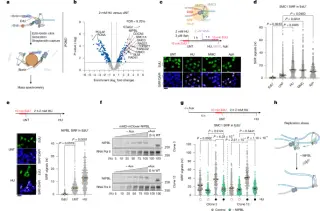
Cohesin loop extrusion drives replication fork reversal to maintain genome stability under stress
biology2 months ago

Cohesin loop extrusion drives replication fork reversal to maintain genome stability under stress

A new study in Nature reveals that the cohesin complex actively reshapes DNA replication forks under stress. By using loop extrusion, cohesin limits sister-fork coupling and promotes inter-replicon contacts, which facilitates fork slowing and reversal. This mechanism prevents the primase PRIMPOL from causing discontinuous DNA synthesis, thereby ensuring genome stability. The findings suggest that cohesin mutations in tumors could impact cancer therapy efficacy.
Bowhead Whales' Longevity: Insights from DNA Repair and CIRBP Protein
science1 year ago

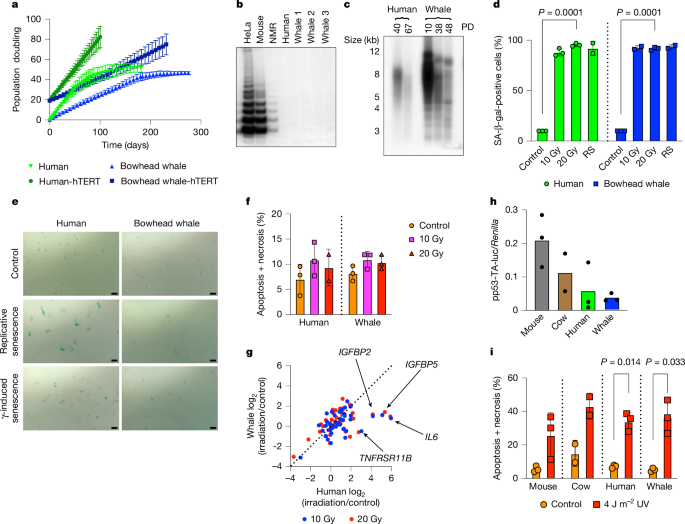
Bowhead Whales' Longevity: Insights from DNA Repair and CIRBP Protein

Research shows that bowhead whales have enhanced DNA repair mechanisms, particularly in double-strand break repair, and high levels of the protein CIRBP, which contribute to their exceptional lifespan and cancer resistance despite their large size and long life. These findings suggest that improved genome maintenance, rather than increased apoptosis, underpins their longevity and resistance to age-related diseases.

Immune System's Role in Cancer Growth Unveiled
health2 years ago

Immune System's Role in Cancer Growth Unveiled

New research from Memorial Sloan Kettering Cancer Center reveals that chronic activation of the innate immune system, particularly due to issues in the Mre11 complex, can lead to genome instability and cancer development. This discovery highlights the dual role of the innate immune system in both defending against pathogens and maintaining genome stability. The findings suggest that targeting the immune pathways involved could offer new therapeutic strategies for cancer treatment.

The Evolutionary Significance of Transposons: Unveiling Their Role in Biological Processes
science3 years ago

The Evolutionary Significance of Transposons: Unveiling Their Role in Biological Processes

New research has revealed that transposons, also known as "selfish genes," play important and unexpected roles in biological processes. These jumping genes, which can move within the genome and generate new copies of themselves, make up over 45% of the human genome. While most transposon copies are inactive, a hundred copies belonging to the LINE family are potentially active and contribute to genetic processes. Studies have shown that transposons are essential for the development of the cerebral cortex, embryonic development, and gene regulation. These findings open up new avenues for research and potential treatments for neurodevelopmental and aging-related disorders.