Gigantic gypsum beams reveal millennia-long crystal growth beneath Mexico’s desert
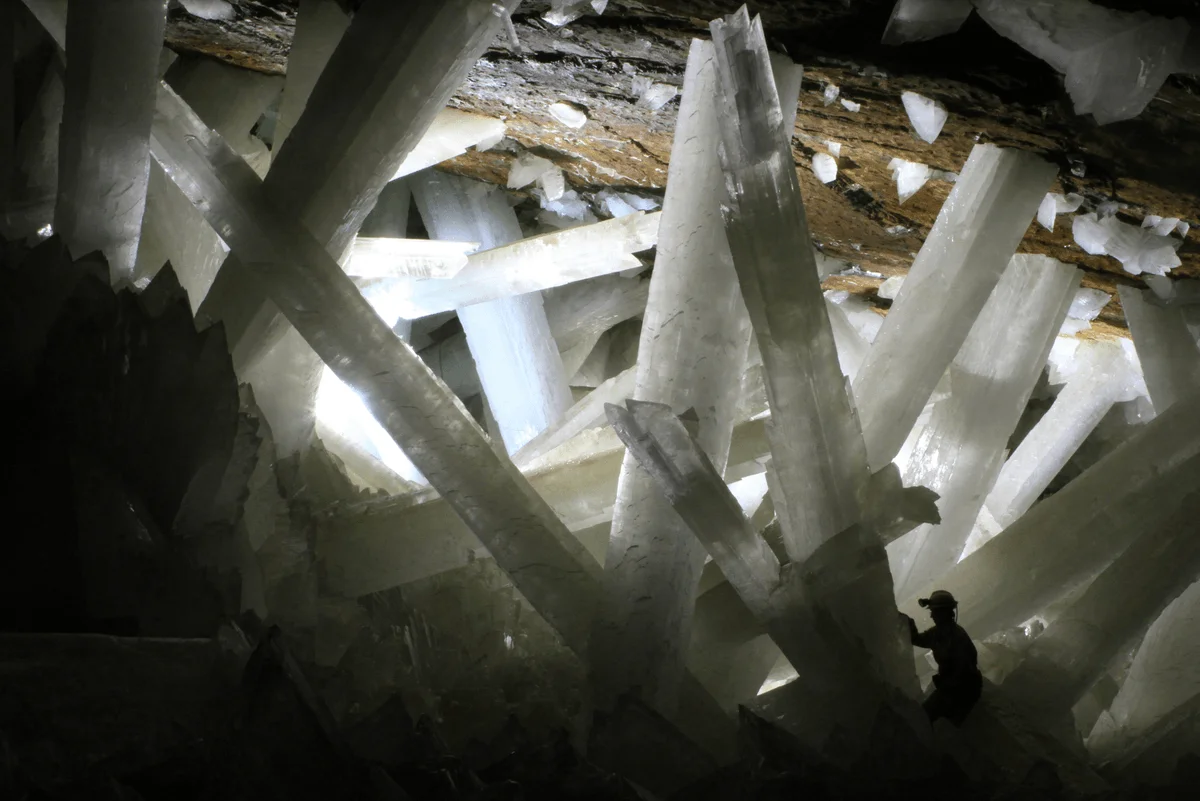
Miners drilling 300 meters underground in the Naica mine beneath the Chihuahuan Desert broke into a chamber filled with giant gypsum crystals, including an 11.4-meter beam—the largest natural crystals documented. The crystals grew over hundreds of thousands of years through a slow, self-feeding process where water chemistry toggled between gypsum and anhydrite near a critical temperature, allowing crystals to gradually thicken at roughly a hair’s width per century. Pumping groundwater drained the chamber by 1975, enabling access in 2000, but subsequent floods and uncertain re-flooding leave the chamber’s fate unresolved. The finding challenges assumptions about crystal formation, hints at what may lie in Earth’s deep aquifers, and raises the possibility of trapped ancient microbes, though such microbial claims remain debated.