Tag

In Situ Resource Utilization

All articles tagged with #in situ resource utilization

Mars City by Asteroid Belt: A Two-Stop Route to Metals
space18 days ago

Mars City by Asteroid Belt: A Two-Stop Route to Metals

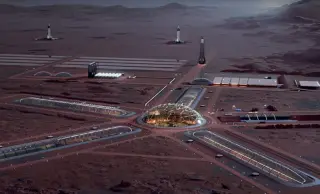
A new arXiv preprint argues a permanent Martian city could be built not from Earth-supplied materials or local Martian ore, but by mining metallic asteroids in the Main Belt and refueling en route to Mars via a two-stop route. A Starship-like craft would first visit an M-type asteroid for metals, then a nearby C-type asteroid for water and propellants (ISPP), before returning to Mars within a 6.4 km/s delta-v capacity, with about 22 asteroid pairs available in a 2040 launch window. The plan could deliver roughly 200 tons of metal over 20 years, but each trip would take about a decade due to orbital timing, and ISPP would fill the 1,100-ton propellant tank at only ~2 kg/day—requiring more than 1,500 years—unless propulsion tech advances. While non-chemical propulsion could change the math, the study concludes asteroid mining is physically feasible yet faces major practical hurdles, ultimately suggesting Mars could host its own space-based industrial backbone rather than a perpetual Earth supply chain.

Martian dust to dinner: microbes unlock soil-free farming on Mars
science2 months ago

Martian dust to dinner: microbes unlock soil-free farming on Mars

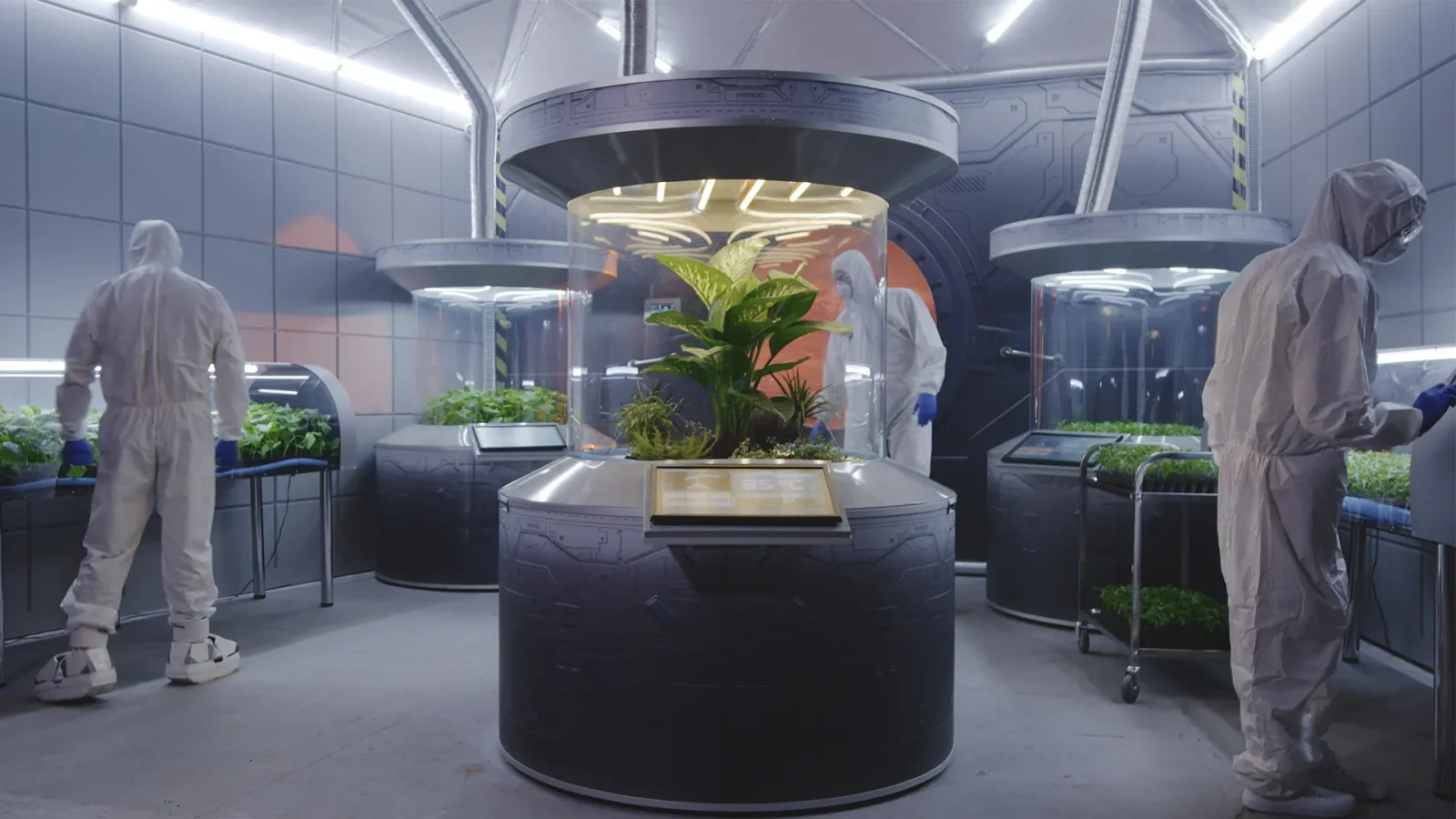
Researchers showed that one gram of dried cyanobacteria grown on Martian-like dust and CO2 can produce enough nutrients to grow about 27 grams of fresh duckweed, via anaerobic fermentation that also yields methane as a potential fuel, signaling a path to closed-loop, self-sustaining farming for Mars—though experiments have been conducted under Earth-like conditions.

Water-Fueled Rockets Spark Mars Refueling Network Vision
technology3 months ago

Water-Fueled Rockets Spark Mars Refueling Network Vision

A startup led by former SpaceX engineer Halen Mattison aims to turn water into rocket fuel via electrolysis to produce hydrogen and oxygen for chemical propulsion, and into plasma for electrical propulsion. The plan envisions a Mars-based refueling network and includes a 1,100-pound satellite test on a SpaceX Falcon 9 in October 2026, with the potential to dramatically reduce mission costs and enable longer, deeper-space journeys.

Water-to-Fuel: A Space Startup's Bold Test of Rocket Propulsion from H2O
technology3 months ago

Water-to-Fuel: A Space Startup's Bold Test of Rocket Propulsion from H2O

Former SpaceX engineer Halen Mattison and General Galactic plan to launch an 1,100‑pound satellite on Falcon 9 to test turning water into rocket fuel: electrolyze water to hydrogen and oxygen for chemical propulsion, and drive oxygen to plasma for electric propulsion. While the approach could aid in-situ resource use and offer rapid thrust bursts, experts warn about potential electronics corrosion from ionized oxygen and the added mass of the electrolysis system; the concept remains controversial, though research into extracting water and oxygen from lunar or Martian regolith continues.

Moon soil reveals naturally formed carbon nanotubes, reshaping space manufacturing
science4 months ago

Moon soil reveals naturally formed carbon nanotubes, reshaping space manufacturing

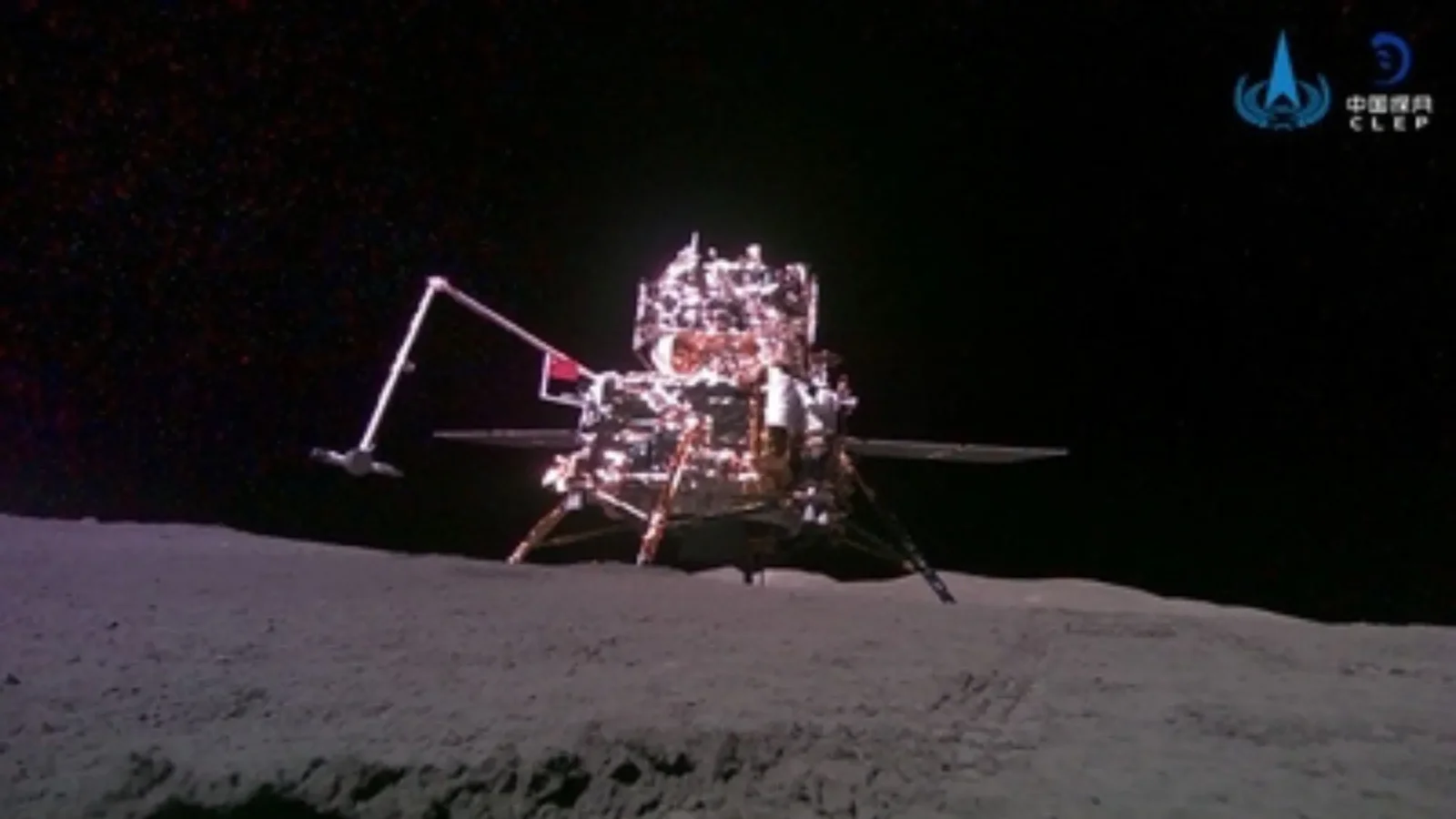
Scientists analyzing lunar samples from China’s Chang’e-6 mission identified single-walled carbon nanotubes formed in situ on the Moon, likely created by micrometeorite impacts and iron‑catalyzed reactions under early volcanic and solar-wind conditions; this provides the first evidence that natural space environments can synthesize such nanostructures and suggests lunar resources could support future electronics manufacturing.

China's Ambitious Lunar Plans: Bricks, Igloos, and Astronauts by 2030
science-and-technology1 year ago

China's Ambitious Lunar Plans: Bricks, Igloos, and Astronauts by 2030

Chinese scientists are developing a method to construct a lunar base using bricks made from lunar soil, aiming to reduce the high costs of transporting materials to the moon. The Tianzhou 8 mission has delivered test bricks made from simulated lunar soil to China's Tiangong space station, where they will be exposed to space conditions for three years. This initiative is part of China's broader plan to establish a moon base, with the Chang'e 8 mission set to test 3D-printing techniques on the lunar surface in 2028.

"NASA's Innovative Quest: Extracting Oxygen from Moon Dust for Artemis Astronauts"
space2 years ago

"NASA's Innovative Quest: Extracting Oxygen from Moon Dust for Artemis Astronauts"

NASA's Space Technology Mission Directorate (STMD) is seeking input on methods to extract oxygen from moon dust as part of its plan for a sustainable human presence on the moon. The agency hopes to use this information to develop a technology demo and showcase it as part of the Lunar Infrastructure Foundational Technologies (LIFT-1) demonstration. Extracting oxygen from lunar soil would reduce the amount of oxygen astronauts need to carry, allowing for longer missions and a more sustainable presence on the moon. This concept of in-situ resource utilization is crucial for future space exploration.

"Paving the Way: Moon's Potential for Paved Roads Explored"
space-technology2 years ago

"Paving the Way: Moon's Potential for Paved Roads Explored"

Researchers with the ESA PAVER project have developed a method to melt lunar regolith with lasers, creating interlocking pavers that could be used to construct paved roads and landing pads on the Moon. The hardened molten regolith is durable enough to withstand the weight of rovers and spacecraft, minimizing dust kickup. This technology could play a significant role in the development of lunar infrastructure and contribute to all phases of lunar exploration. In-situ production of paving materials from available resources on the Moon is preferred to reduce costs and logistical challenges. Further research and testing are needed, including using a lens to concentrate sunlight instead of a laser, but this method shows promise for future lunar missions.

Surprising Lunar Discovery: Chandrayaan-3 Detects Abnormal Sulfur Levels
space2 years ago

Surprising Lunar Discovery: Chandrayaan-3 Detects Abnormal Sulfur Levels

India's Chandrayaan-3 lander has provided scientists with valuable new data from the Moon, including an unexpected discovery of higher levels of sulfur in the lunar soil near the south pole. The presence of sulfur could have implications for future lunar exploration, as it could potentially be used as a resource for building materials and energy production. The measurements also offer insights into the geologic history of the Moon and its formation. Further analysis and calibration of the data are underway, while the lander hibernates through the lunar night.