Tag

Jak Inhibitors

All articles tagged with #jak inhibitors

Rheumatoid arthritis drug shows promise for regrowing hair in alopecia areata
health11 days ago

Rheumatoid arthritis drug shows promise for regrowing hair in alopecia areata

A phase 3 trial found that the JAK inhibitor upadacitinib, used to treat rheumatoid arthritis, regrew hair in about half to just over half of participants with severe alopecia areata within 24 weeks, with 80% scalp coverage achievable at the 30 mg dose. Eyebrows and eyelashes also improved, and participants reported better emotional and social well-being. The drug is approved for severe alopecia areata in Europe and is under FDA review in the U.S.; longer-term safety and durability data are still needed to inform routine use.

Daily Pill Shows Color Return in Vitiligo Patients (Early Trials)
health12 days ago

Daily Pill Shows Color Return in Vitiligo Patients (Early Trials)

In two 48-week, placebo-controlled trials, the daily JAK inhibitor upadacitinib helped some people with generalized vitiligo regain skin color across the face and body. About 23–25% on the drug reached at least 75% facial color (vs 6–7% placebo), 19–21% regained half their color elsewhere, and 14% achieved 90% facial color, with improvements persisting beyond 48 weeks. While promising, most participants did not reach the main facial target and long-term durability and safety remain uncertain. The EU has approved the drug for eligible patients aged 12+, but darker-skinned groups were underrepresented; common side effects included infections, acne, headaches, and shingles. Ongoing follow-up for up to 112 more weeks aims to clarify lasting benefits.

Arthritis drug prompts remarkable hair regrowth in severe alopecia areata, study finds
health15 days ago

Arthritis drug prompts remarkable hair regrowth in severe alopecia areata, study finds

Six-month study shows the arthritis drug upadacitinib (Rinvoq) can trigger dramatic hair regrowth in severe alopecia areata, with 45-55% of patients reaching 80% scalp coverage (more at higher doses) and notable eyebrow/eyelash restoration; the treatment is off-label for alopecia in the US as AbbVie seeks FDA approval, while the EU recently approved it.

2026 Hair-Loss Treatments: proven therapies, new drugs, and promising trials
health7 months ago

2026 Hair-Loss Treatments: proven therapies, new drugs, and promising trials

The Healthline piece surveys current and prospective hair‑loss treatments, highlighting established options finasteride and minoxidil as effective, affordable therapies, noting three FDA‑approved JAK inhibitors (Olumiant, Litfulo, Leqselvi) for alopecia areata with safety warnings, and surveying emerging approaches such as clascoterone, PP405, ET-02, stem-cell therapies, and fatty‑acid treatments. While these newer options show promise, many are still in early trials, and long‑term durability and safety remain uncertain. Experts emphasize early intervention and consulting ABHRS‑certified physicians for accurate diagnosis and personalized treatment planning.

Doctors Warn of Risks from Widely Used Anti-Inflammatory Drugs and Viral Infections
health1 year ago

Doctors Warn of Risks from Widely Used Anti-Inflammatory Drugs and Viral Infections

A study warns that JAK inhibitors, common anti-inflammatory drugs used for conditions like rheumatoid arthritis and alopecia, may weaken the immune response to viruses, increasing the risk of severe infections, especially during outbreaks. Researchers suggest caution in prescribing these drugs and call for further research to optimize their use, particularly for vulnerable populations.

Breakthrough Cure Achieved for Rare Fatal Skin Disease
health1 year ago

Breakthrough Cure Achieved for Rare Fatal Skin Disease

Researchers have successfully treated seven patients with toxic epidermal necrolysis (TEN) and Stevens-Johnson syndrome (SJS) using JAK inhibitors, marking a potential cure for these rare and often fatal skin conditions. The treatment, which targets the JAK/STAT immune pathway, led to rapid recovery without side effects, offering hope for improved care in these life-threatening cases. The study, published in Nature, highlights the potential for clinical trials to further validate this breakthrough.

"Proven Methods to Combat Hair Loss: Backed by Science"
health2 years ago

"Proven Methods to Combat Hair Loss: Backed by Science"

Science-backed methods to combat hair loss include platelet-rich plasma (PRP) injections to wake up dormant hair follicles, low-level laser therapy (LLLT) to stimulate hair growth, topical Minoxidil and oral Finasteride to treat pattern baldness, and JAK inhibitors to target alopecia areata, an autoimmune condition causing sudden hair loss. While a cure for baldness remains elusive, advancements in understanding and treating different forms of hair loss offer hope for those seeking to combat this common issue.

Newer Arthritis Meds and JAK Inhibitors: Promising Treatment for Rheumatoid Arthritis
health2 years ago

Newer Arthritis Meds and JAK Inhibitors: Promising Treatment for Rheumatoid Arthritis

A new study confirms the effectiveness of newer oral medications called JAK inhibitors for rheumatoid arthritis (RA). The study found that most patients with RA who were treated with JAK inhibitors experienced symptom relief or even remission. The findings suggest that JAK inhibitors are effective in real-world settings, even for patients who have not responded well to standard treatments. While JAK inhibitors have been associated with some increased risks, such as heart attack and stroke, the overall risks appear to be low and similar to other RA medications. Long-term effectiveness and safety of JAK inhibitors still need further investigation.

"Breakthrough Drug Offers Hope for HIV Cure"
health3 years ago

"Breakthrough Drug Offers Hope for HIV Cure"

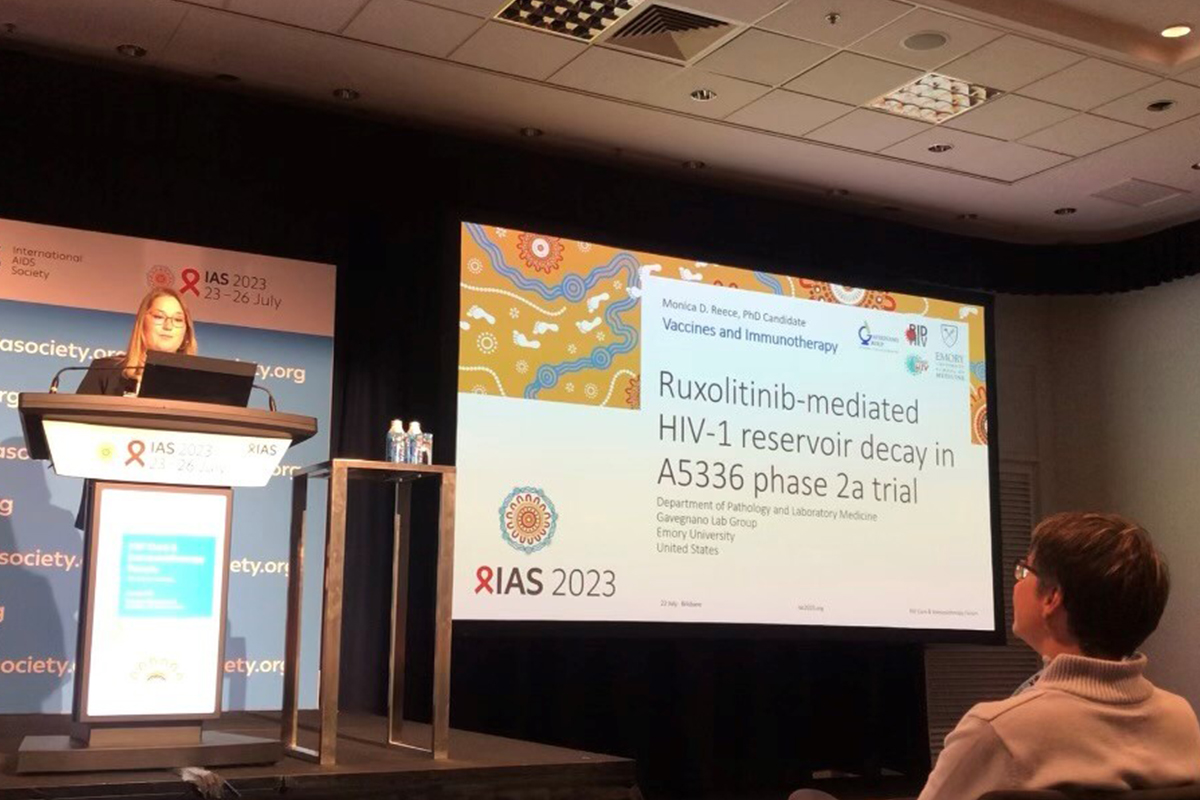
Researchers at Emory University have been testing Jak inhibitors, specifically ruxolitinib, as a potential treatment to eliminate viral reservoirs of HIV in the body. In a study on individuals with a high reservoir viral load, the researchers found that ruxolitinib led to a significant decline in HIV hidden within DNA. The results suggest that Jak inhibitors could reverse immune dysfunction and decay the reservoir, potentially leading to a cure for HIV. Further research is needed to understand the impact on the entire viral reservoir in the body.

Advancements in HIV Cure Research: Gut Health and Kidney Transplants Show Promise
health3 years ago

Advancements in HIV Cure Research: Gut Health and Kidney Transplants Show Promise

Researchers at Emory University have presented exciting findings in the pursuit of an HIV cure. The study demonstrated the potential of Jak inhibitors, specifically ruxolitinib, to significantly decay the viral reservoir in people with HIV, offering a novel pathway toward long-term remission or a cure. The results showed an estimated 99.99% clearance of the peripheral HIV-1 reservoir in less than three years. The study also highlighted the impact of ruxolitinib on immune activation, cell survival, and immune dysregulation. While further research and clinical trials are needed, these findings offer hope for the development of cure-based interventions for HIV.

The Role of Inflammation in Long COVID
health3 years ago

The Role of Inflammation in Long COVID

An overactive inflammatory response might be the key to many long COVID cases. Around two-thirds of the 55 patients with long COVID showed persistently high levels of specific inflammation signals. The inflammation observed in patients with “inflammatory long COVID” mirrors that seen in autoimmune diseases like rheumatoid arthritis, suggesting that JAK inhibitors may be a potential treatment. Distinguishing between patients with inflammatory and non-inflammatory long COVID is critical for treatment as their conditions require different therapeutic approaches. Targeted anti-inflammatory treatments could potentially alleviate symptoms for this group.

Hyperactive Antiviral Immune Response Linked to Down Syndrome Features - Study
health3 years ago

Hyperactive Antiviral Immune Response Linked to Down Syndrome Features - Study

Genes involved in controlling the immune system, specifically interferon receptors, are critical to the development of multiple hallmarks of Down syndrome. People with Down syndrome have three copies of the interferon receptor genes on chromosome 21, which contributes to the overproduction of interferon receptors seen in those with Down syndrome. Researchers found that correcting the number of interferon receptor genes significantly reduced abnormal gene expression patterns across multiple tissue types, both during embryonic development and in adult mice. This suggests that the tripling of interferon receptor genes may cause a number of key traits of Down syndrome. The study findings support further investigation into the effects of interferon hyperactivity on fetal development and the potential of JAK inhibitors and other drugs that modulate the immune system to improve health outcomes in Down syndrome.

Breakthrough Treatment for Rare Genetic Skin Disorder Discovered by NIH Scientists.
health3 years ago

Breakthrough Treatment for Rare Genetic Skin Disorder Discovered by NIH Scientists.

Researchers at the National Institutes of Health have identified genomic variants that cause a rare and severe inflammatory skin disorder, known as disabling pansclerotic morphea, and have found a potential treatment. The study suggests that ruxolitinib, a JAK inhibitor, could be an effective treatment for patients with this disorder. Ruxolitinib is part of a broader class of drugs called JAK inhibitors, which are commonly used to treat arthritis, eczema, ulcerative colitis and other chronic inflammatory diseases.

FDA approves Rinvoq as first JAK inhibitor for Crohn's Disease.
healthcare3 years ago

FDA approves Rinvoq as first JAK inhibitor for Crohn's Disease.

FDA has approved Rinvoq (upadacitinib) as the first oral treatment for adults with moderately to severely active Crohn’s disease who have had an inadequate response or intolerance to one or more tumor necrosis factor blockers. Rinvoq is a Janus kinase (JAK) inhibitor and should not be used in combination with other JAK inhibitors, biological therapies for Crohn’s disease, or with strong immunosuppressants such as azathioprine and cyclosporine. The most common side effects of Rinvoq are upper respiratory tract infections, anemia, fever, acne, herpes zoster, and headache.