Tag

Kataib Hezbollah

All articles tagged with #kataib hezbollah

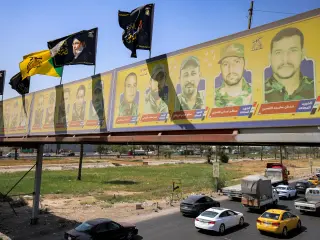
Iraqi forces enter Jurf al-Sakhar in compromise with Kataib Hezbollah over oil smuggling
world4 days ago

Iraqi forces enter Jurf al-Sakhar in compromise with Kataib Hezbollah over oil smuggling

Iraqi security forces deployed to Jurf al-Sakhar on November 20, 2026, following a compromise with the Iran-backed Kataib Hezbollah militia. The move aims to assert state control over the town and secure oil pipelines, which Baghdad alleges the group has been smuggling for hundreds of millions of dollars. While the deployment marks a symbolic victory for Prime Minister Ali al-Zaidi, the militia retains its weapons and participates in the new joint command, raising questions about the long-term effectiveness of the disarmament push.
Qaani Arrives in Iraq to Mediate Standoff Over Kataib Hezbollah’s Oil Smuggling Allegations
geopolitics7 days ago

Qaani Arrives in Iraq to Mediate Standoff Over Kataib Hezbollah’s Oil Smuggling Allegations

Iran’s Quds Force chief Esmail Qaani has arrived in Iraq to negotiate a resolution to tensions over Kataib Hezbollah’s stronghold in Jurf al-Nasr. Prime Minister Ali al-Zaidi ordered troops to deploy near the town, setting a Friday deadline for the militia to withdraw following an investigation into alleged oil smuggling. While Baghdad frames the move as an anti-corruption effort, analysts suggest it aims to cut off financial flows to pro-Iranian armed groups. Kataib Hezbollah denies the allegations, and Coordination Framework leaders oppose military entry without a political agreement. Experts warn that even if the government reclaims the town, Iran’s broader influence in Iraq’s politics and economy may remain intact.

Iraq Sets Friday Deadline for Kataib Hezbollah to Vacate Jurf al-Nasr Amid Oil Smuggling Probe
geopolitics8 days ago

Iraq Sets Friday Deadline for Kataib Hezbollah to Vacate Jurf al-Nasr Amid Oil Smuggling Probe

Iraqi Prime Minister Ali al-Zaidi has ordered military forces to deploy around Jurf al-Nasr, a stronghold of the Iran-backed Kataib Hezbollah, setting a deadline of November 20 for the group to withdraw. This move follows a government investigation into alleged oil smuggling that has cost the state hundreds of millions of dollars since 2021. While the government frames the action as an anti-corruption measure, analysts suggest it is a strategic attempt to sever the financial networks of armed factions resisting integration into the state. The situation has triggered internal political clashes, with Badr Organization leader Hadi al-Amiri publicly opposing the military move, and prompted diplomatic efforts by Iran to defuse the standoff. Although the government has dismissed nine senior officials implicated in the probe, experts question whether the action will significantly reduce Iran’s broader influence in Iraq, given the militias’ deep roots in the political and economic systems.

global-conflict10 days ago

Yemeni Forces Halt Houthi Advance in Lahij as Iraq Probes Militia Oil Smuggling

In Yemen, government-aligned forces, including the Southern Transitional Council, successfully halted a Houthi offensive in southeastern Lahij Governorate, aided by Saudi air strikes. In Iraq, Prime Minister Ali al Zaydi authorized a limited investigation into Kataib Hezbollah’s oil smuggling in Jurf al Sakhr, following a leaked report on illicit revenue. Meanwhile, Iran claimed to have struck US radar infrastructure in Bahrain, though US forces intercepted the drones, while also warning against shipping in the Strait of Hormuz.

Iranian proxy tied to Toronto attacks on US consulate and synagogues
world6 months ago

Iranian proxy tied to Toronto attacks on US consulate and synagogues

A U.S. Justice Department complaint alleges Kataib Hezbollah, a proxy of Iran’s Revolutionary Guards, used operatives to plan and carry out attacks in Canada, including the March 10 shooting at the U.S. consulate in Toronto and a series of synagogue attacks in March; an official named Mohammad Bagher Saad Dawood al-Saadi told an undercover officer that his group’s people were behind the Canadian incidents, and he was arrested for attacks on U.S. interests in Europe and plots against U.S. Jewish sites. Three Toronto-area synagogues were targeted in March (Temple Emanu-El, BAYT, Shaarei Shomayim); an 18-year-old man was charged May 6 in the latter two cases, while police did not immediately confirm Iranian involvement for the consulate attack. The case underscores alleged Iranian proxies’ activity in North America.

Iraq-born operative arrested in US over alleged IRGC-linked global terror plots
world6 months ago

Iraq-born operative arrested in US over alleged IRGC-linked global terror plots

US authorities charged Iraqi national Mohammad Baqer Saad Dawood al-Saadi with six terrorism-related counts for allegedly coordinating or aiding nearly 20 attacks across the US and Europe on behalf of Iran’s IRGC and Kata’ib Hezbollah, including a firebombing at a bank in Amsterdam and planned attacks against Jewish sites in New York and London; prosecutors say he worked with senior IRGC figures and posted propaganda before his Manhattan court appearance.

middle-east1 year ago

Elizabeth Tsurkov Freed After Two Years in Captivity

Kata'ib Hezbollah held Russian-Israeli researcher Elizabeth Tsurkov captive for over 900 days, but she was released following pressure from the US and Iraqi governments, with reports suggesting her captivity was becoming a liability for the group. Her release involved complex arrangements and was achieved without a formal deal, with Tsurkov returning in poor health.

"US Deployed 'Flying Ginsu' Missile to Target Militia Leader in Baghdad"
world-news2 years ago

"US Deployed 'Flying Ginsu' Missile to Target Militia Leader in Baghdad"

The US used a modified Hellfire missile, known as the "flying Ginsu," equipped with six long blades to kill a senior Kataib Hezbollah official in Baghdad. The strike, which targeted the commander of Syrian operations, was in retaliation for a drone attack that killed three US soldiers. The missile's distinctive feature is its lack of collateral damage or burn marks, making it suitable for targeted assassinations in urban settings. The use of the "Ginsu" has fueled calls for a US troop withdrawal from Iraq and has been previously deployed in Afghanistan, Yemen, Libya, Syria, and Somalia.

"US Deployed Multi-Bladed 'Ginsu' Missile to Target Iran-Backed Militia Leader in Iraq"
international-relations2 years ago

"US Deployed Multi-Bladed 'Ginsu' Missile to Target Iran-Backed Militia Leader in Iraq"

The US used a modified hellfire missile, known as the "flying ginsu," to kill Iran-backed Kataib Hezbollah leader Abu Baqr al-Saadi in Iraq in February, as retaliation for attacks against a military base in Jordan. The missile, which does not contain a warhead, utilizes a ring of blades to shred its target, minimizing civilian casualties. This weapon has been used in the past to kill high-profile targets, and the US is carrying out "multitiered" strikes against Iranian-backed militias in the Middle East due to hostilities in the region.

"US Drone Strike Kills Kataib Hezbollah Commander in Baghdad"
international-relations-conflict2 years ago

"US Drone Strike Kills Kataib Hezbollah Commander in Baghdad"

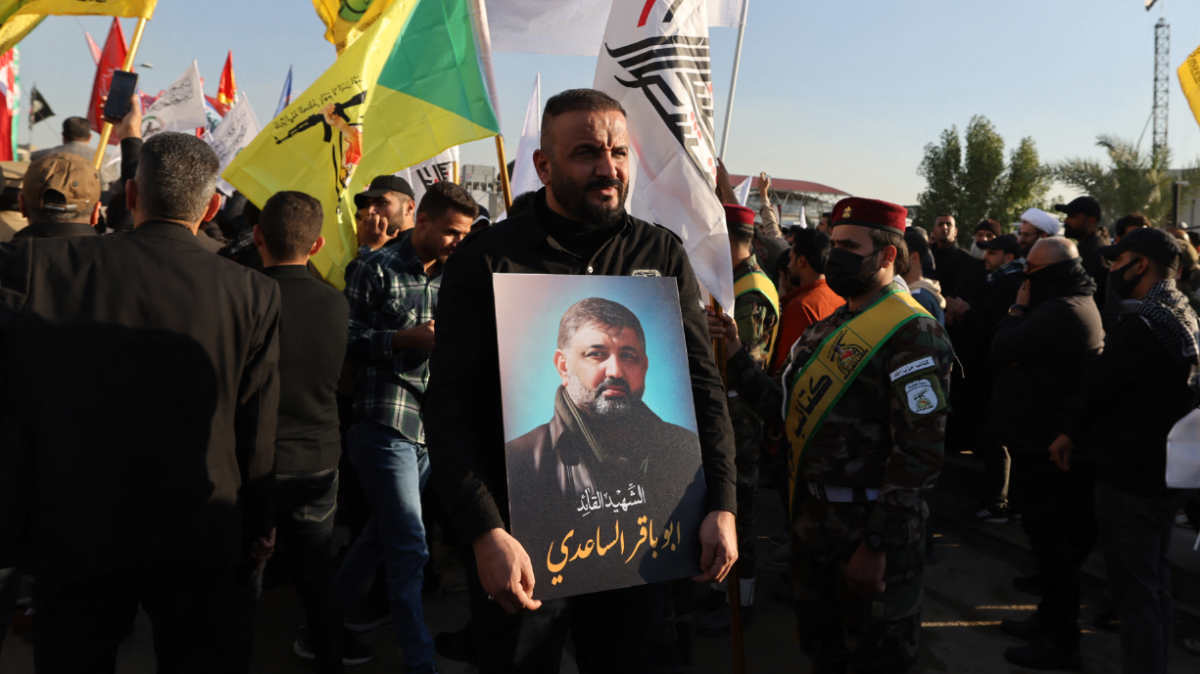
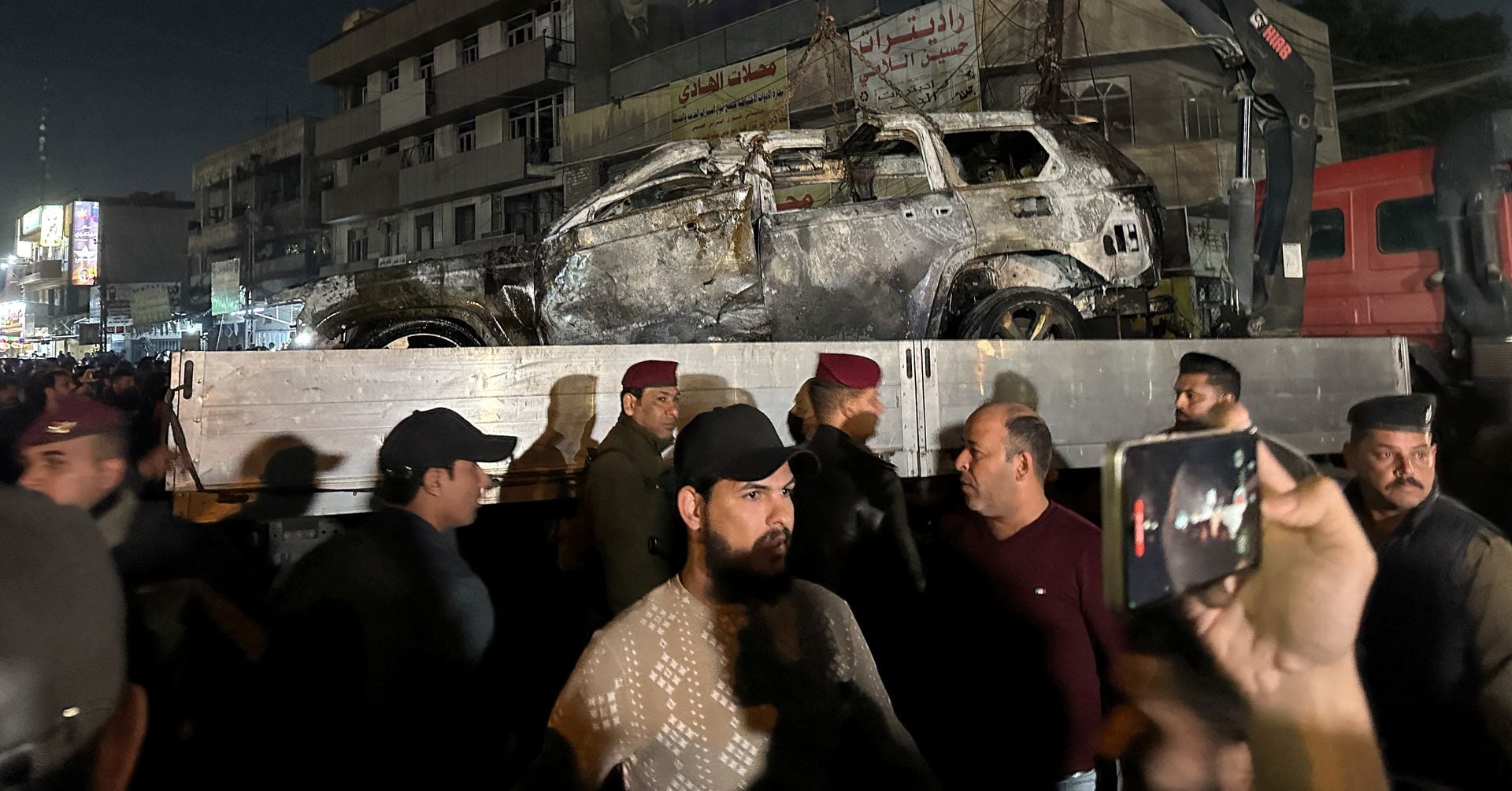
A commander from the Iran-backed armed group Kataib Hezbollah in Iraq was killed in a U.S. strike in Baghdad, with the U.S. military stating that the strike was in response to attacks on U.S. troops. The commander, Abu Baqir al-Saadi, was reportedly killed in a drone strike, and the targeted vehicle was associated with Iraq's Popular Mobilization Forces (PMF), a state security agency with ties to Iran. Tensions between Iran-backed groups and U.S. forces in the region have escalated, with near daily tit-for-tat attacks, and the U.S. recently conducted strikes in Iraq and Syria in response to the killing of three U.S. soldiers.