

Tag

Lhs 3844 B

All articles tagged with #lhs 3844 b

Webb Maps Olivine-Rich Surface of Nearby Airless Super-Earth
space20 days ago

Webb Maps Olivine-Rich Surface of Nearby Airless Super-Earth

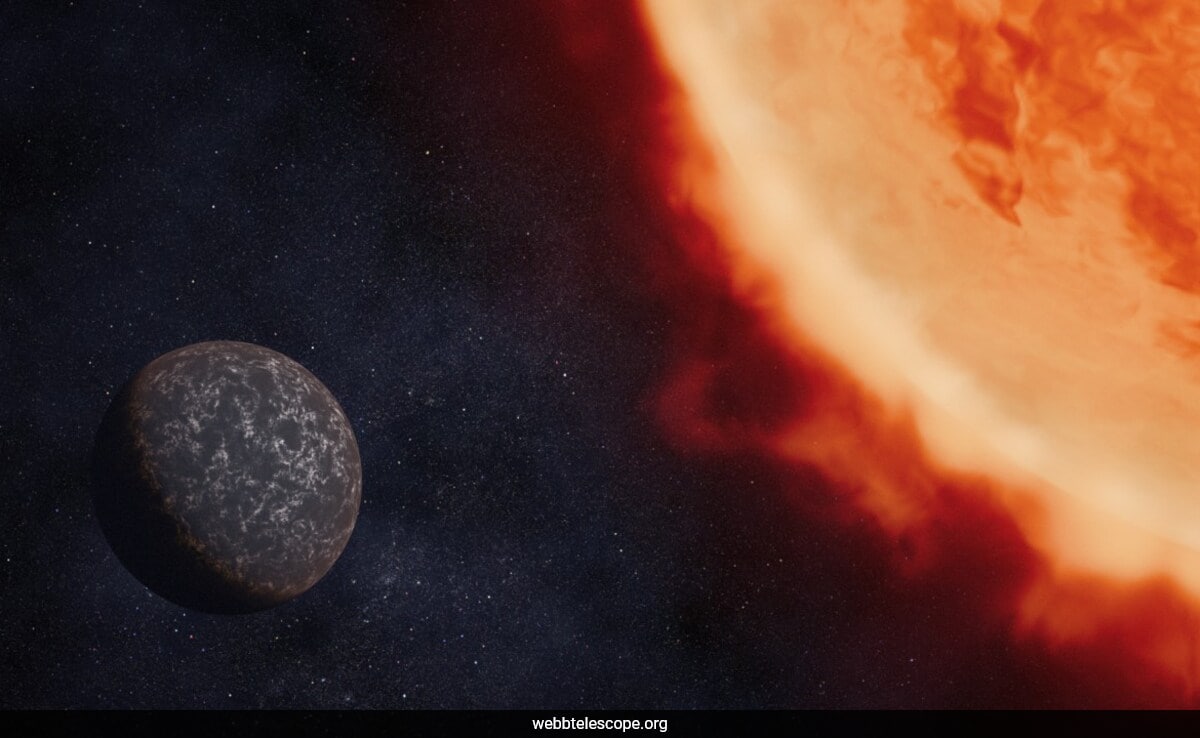
JWST’s mid-infrared spectroscopy reveals LHS 3844 b, a rocky super-Earth about 50 light-years away, has a dark, olivine-rich crust with no detectable CO2 or SO2 and likely no atmosphere. The planet is roughly 30% larger than Earth, orbits its red dwarf in 11 hours, and is tidally locked, resulting in a scorching dayside and a barren surface. This demonstrates JWST’s ability to infer surface texture and geology of distant worlds, opening new possibilities for direct exoplanet terrain characterization via infrared data.
science22 days ago

JWST Reveals Basaltic, Airless Surface on Rocky Exoplanet LHS 3844 b

JWST’s infrared observations of the rocky exoplanet LHS 3844 b reveal a dark, airless basalt-like surface, suggesting it lacks Earth-like crust and significant water. The study proposes two surface scenarios—recent volcanism with a fresh basalt surface or a heavily space-weathered regolith—with current data favoring the latter due to the absence of sulfur dioxide. Further JWST observations will help distinguish surface texture and composition to resolve the ambiguity.

JWST reveals exoplanet LHS 3844 b’s rocky surface as a dark, volcanic world
space-exploration23 days ago

JWST reveals exoplanet LHS 3844 b’s rocky surface as a dark, volcanic world

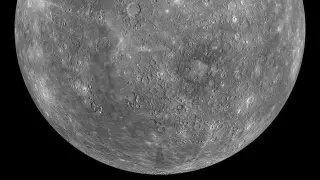
Astronomers using the James Webb Space Telescope directly analyzed the surface of the rocky exoplanet LHS 3844 b, about 50 light-years away, by measuring infrared heat from its dayside. The data indicate a dark, atmosphere-free surface likely dominated by basalt, similar to the Moon or Mercury, with temperatures around 725°C. The planet is tidally locked, and the findings suggest a surface shaped by recent volcanic activity or long-term weathering rather than an Earth-like crust. Follow-up JWST observations are planned to refine its crustal nature.

"Unveiling the Mysteries of Tidally Locked Super-Earths"
astronomy2 years ago

"Unveiling the Mysteries of Tidally Locked Super-Earths"

Astronomers have confirmed the existence of a tidally locked exoplanet, LHS 3844 b, orbiting an M-type star, shedding light on exoplanet mysteries. This discovery, detailed in The Astrophysical Journal, suggests that such phenomena may be common in our galaxy. By studying the planet's temperature using the Spitzer Space Telescope, researchers found evidence that LHS 3844 b is tidally locked, with one side in permanent sunshine and the other in perpetual darkness, similar to the Moon's relationship with Earth.