Tag

Lunar Crater

All articles tagged with #lunar crater

NASA images reveal 60-foot Moon crater from SpaceX Falcon 9 upper-stage crash
space9 days ago

NASA images reveal 60-foot Moon crater from SpaceX Falcon 9 upper-stage crash

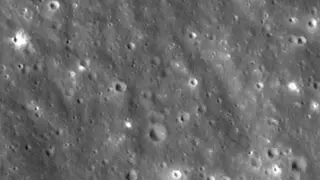
NASA’s Lunar Reconnaissance Orbiter captured images of a roughly 60-foot-wide, 10-foot-deep crater on the Moon left by a SpaceX Falcon 9 upper stage that crashed after an extended, unstable trajectory. The orbiter photographed the site from about 60 miles altitude during Aug. 11–12, after global coordination among scientists and hobbyists to locate the impact, with the images released on Aug. 18.

Moon Crash Sparks Debris Alarm as SpaceX Upper Stage Leaves Fresh Crater
space17 days ago

Moon Crash Sparks Debris Alarm as SpaceX Upper Stage Leaves Fresh Crater

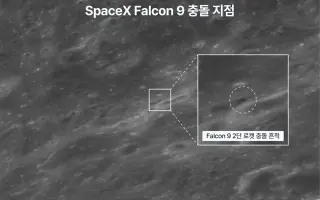
A spent SpaceX Falcon 9 upper stage from a 2025 mission struck the Moon at about 8,700 km/h, punching a new crater and blasting lunar dust into the air. Danuri orbiter images showed a darker patch at the impact site, with scientists estimating a crater roughly 20 meters wide and 5 meters deep. The event wasn’t planned, but it serves as a real-world warning about the growing amount of artificial debris in cislunar space as Moon missions increase.

Fresh Moon crater shown in first images of SpaceX crash
science21 days ago

Fresh Moon crater shown in first images of SpaceX crash

Images captured by South Korea’s Danuri orbiter show a new crater on the Moon formed when SpaceX’s Falcon 9 upper stage crashed into the surface, delivering energy equivalent to about 3 tons of TNT at a speed near 5,400 mph; the collision posed no danger to Earth, and while visible from Earth, amateurs didn’t see the event. The Lunar Reconnaissance Orbiter and Danuri provided the first imagery of the crater.

SpaceX Falcon 9 Debris Impacts Moon, Creating a 60-Foot Crater
science23 days ago

SpaceX Falcon 9 Debris Impacts Moon, Creating a 60-Foot Crater

SpaceX’s Falcon 9 upper stage from the Jan 2025 Blue Ghost mission appears to have crashed into the Moon around Aug 5–6, 2026, likely forming a crater about 60 feet wide and 12 feet deep at speeds near 5,400 mph. A plume of sodium and lithium detected by the VLT in Chile suggests the impact occurred, though observers faced daylight challenges. Lunar orbiters (NASA’s LRO and Korea’s K-PLO) are attempting to image the site, weather permitting, which could take days. SpaceX notes that for high-energy lunar missions, disposal of upper stages may not allow a controlled return to Earth, while NASA says such lunar surface disposal can be a technically accepted method when necessary.

SpaceX Falcon 9 Upper Stage to Strike the Moon, Prompting Astronomical Observations
space1 month ago

SpaceX Falcon 9 Upper Stage to Strike the Moon, Prompting Astronomical Observations

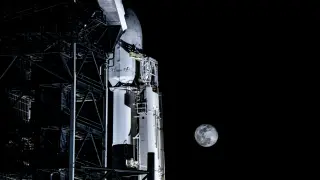
An 8,800-pound Falcon 9 upper stage from SpaceX’s January 2025 lunar mission is on a collision course with the Moon’s near side, expected to hit on Aug. 5 at about 2:34 a.m. ET at roughly 5,400 mph near the Einstein crater. The impact would likely leave a 66–98-foot crater and loft a dust plume that astronomers hope to observe with powerful instruments from Earth, though it poses no danger to our planet. The first stage of the rocket already returned for reuse, and this event adds to a history of spacecraft crashes on the Moon for study.

Fresh 225-Meter Lunar Crater Captured Moments After Formation
science4 months ago

Fresh 225-Meter Lunar Crater Captured Moments After Formation

NASA’s Lunar Reconnaissance Orbiter images confirm a freshly formed 225-meter lunar crater from spring 2024—the largest crater seen during the LRO era—featuring a funnel-shaped rim, 43-meter depth, large ejecta blocks, and glassy rock. The event, inferred to come from a south-southwest impact and documented with rare before-and-after imagery, offers a valuable dataset to refine crater-formation models; such fresh lunar craters are expected roughly once every 139 years on any given patch of surface.

New 22-Meter Moon Crater Highlights Ongoing Lunar Change
space5 months ago

New 22-Meter Moon Crater Highlights Ongoing Lunar Change

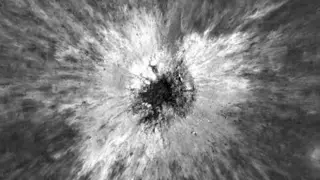
Researchers using imagery from the Lunar Reconnaissance Orbiter identified a fresh 22‑meter crater on the Moon by comparing images from 2009 and 2012, revealing bright ejecta rays that contrast with the dark surface. The rays will gradually darken due to space weathering, showing that the Moon's surface is still being sculpted today. The finding helps refine current impact rates and aids in calibrating age estimates for lunar terrains.

"Proposed: Placing a High-Resolution Telescope in a Moon Crater"
spacetechnology2 years ago

"Proposed: Placing a High-Resolution Telescope in a Moon Crater"

NASA is considering building a large radio telescope in a crater on the far side of the Moon, using a concept called the Lunar Crater Radio Telescope (LCRT). The telescope would be constructed using cooperative rovers to deploy a wire mesh over the crater, creating a dish over 1 km wide. This ambitious project aims to overcome the limitations of Earth-based radio astronomy and could provide valuable insights into the early universe. While still in the research phase, the concept has received significant funding, and NASA continues to explore the feasibility of this lunar telescope.

space3 years ago

Chandrayaan-3's Rover Pragyan Overcomes Lunar Obstacle, Advances in Mission

The Chandrayaan-3 rover, Pragyan, has successfully navigated its first lunar obstacle, a 100mm-deep crater, marking a significant achievement for the Indian Space Research Organisation (Isro). The rover's movements are not fully autonomous, requiring guidance from ground teams to overcome challenges. Each movement operation has a turnaround time of around five hours, taking into account factors such as the sun's rotation and limited data communication capabilities. Isro remains confident in the rover's progress and the potential for successful scientific outcomes.

NASA's Moon Camera Captures Inviting Landing Site in Dark Lunar Crater.
science-and-astronomy3 years ago

NASA's Moon Camera Captures Inviting Landing Site in Dark Lunar Crater.

NASA's ShadowCam, a camera designed to detect reflected light, has captured an image of a portion of the Marvin crater, just 16 miles from the moon's south pole. The camera's sensitivity allows it to reveal very dimly lit permanently shadowed regions, or PSRs, which could provide clues about lunar evolution and water trapped as ice in shadowed regions. The high-resolution images collected by ShadowCam could also assist site selection for crewed Artemis missions. ShadowCam is operating aboard the Korea Aerospace Research Institute's Danuri spacecraft, which entered lunar orbit in December 2022.