
MacBook Neo Drives Apple's Market Share Gains Amid Global PC Crash
Apple's market share rose to 9.8% in Q3 2026 as global PC shipments fell 21%, with the MacBook Neo cited as a key factor in outperforming rivals despite an 11% drop in its own sales.

All articles tagged with #memory prices
Apple's market share rose to 9.8% in Q3 2026 as global PC shipments fell 21%, with the MacBook Neo cited as a key factor in outperforming rivals despite an 11% drop in its own sales.

Global PC shipments fell 21% year-over-year in Q3 2026 to 57 million units, driven by soaring memory and component costs. While Lenovo remains the market leader, Apple and ASUS outperformed rivals due to competitive pricing and product portfolios. Counterpoint forecasts a further 27% decline in Q4 2026, with 2027 volumes expected to remain flat.
Global PC shipments dropped 21% year-over-year in Q3 2026 to 57 million units, driven by soaring memory and component costs. Counterpoint Research forecasts a further 27% decline in Q4 2026, with 2027 volumes expected to remain flat. While consumer demand weakened, commercial sales held up slightly due to Windows migration. Apple and ASUS outperformed rivals, with Apple’s MacBook Neo helping cushion its decline.

Hardware leaker KeplerL2 claims that RAM and NAND storage alone cost Sony over $680 for the PlayStation 6, a figure that exceeds the launch price of the PS5. This drives the estimated total bill of materials to approximately $960, potentially forcing a retail price near $1,000. The cost surge is attributed to AI data center demand draining DRAM and NAND supply. Sony has not confirmed these figures, but rising component costs threaten the traditional console subsidy model.

Dell shares fell 11% after Barclays downgraded the company, along with HPE and NetApp, citing a lack of meaningful enterprise AI adoption. Analysts argue recent revenue gains stem from memory cost inflation rather than AI-driven hardware refreshes. The move triggered a broader sell-off in AI infrastructure stocks, including Oracle and CoreWeave, as investors reassess the durability of the AI buildout.
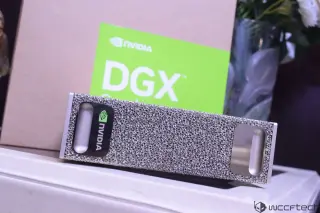
NVIDIA is releasing a new 64GB variant of its DGX Spark AI workstation on October 23, 2026, priced at $4,999. This move follows significant price hikes for the original 128GB model, which now exceeds $6,000 and is reported to reach $6,950. The new configuration retains the GB10 Grace Blackwell Superchip and full software stack but halves the unified memory. While the 64GB unit supports up to 100-billion-parameter models, two clustered units can pool memory to 128GB and support 200-billion-parameter models with a 1.7x performance boost. The launch is a response to rising memory costs, offering a lower entry point for developers while the 128GB version becomes significantly more expensive.

Leaks suggest the upcoming Galaxy S27 series will retain 12GB RAM for most models, with only the Ultra offering 16GB, a decision attributed to rising memory chip costs. The lineup is expected to include four devices with ten total storage variants, mirroring the previous generation's configurations to manage pricing.

Apple's new M5 Ultra Mac Studio offers record-breaking performance for AI and creative tasks but comes with a massive price hike driven by global memory shortages. While the machine is incredibly fast, its premium cost makes it viable only for specialized power users.

CMF, the budget sub-brand of Nothing, achieved low prices for its Phone 2 Pro by using plastic frames, Panda Glass, and midrange processors. However, rising memory costs have forced the cancellation of new CMF phone launches for 2026, leaving the brand without a roadmap for 2027.
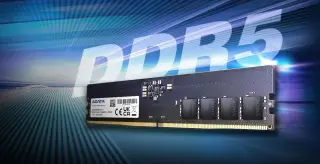
DDR5 memory prices in Germany have surged to nearly five times their July 2025 levels, with 64GB kits exceeding $1,250. This 'RAMpocalypse' is driven by AI demand, making budget PC builds increasingly unaffordable as prices continue to climb into Q4 2026.

TrendForce estimates the bill of materials for the 256GB iPhone 18 Pro will rise by 38% compared to its predecessor, driven by a five- to sevenfold increase in memory prices since early 2025. Memory now accounts for roughly 34% of component costs, up from 10% a year ago, and is projected to exceed 40% by mid-2027. To manage this, Apple is expected to absorb some costs through reduced gross margins, similar to its recent MacBook strategy, while potentially raising prices on older iPhone models. Android vendors in the mid-range and entry-level segments are predicted to face steeper price hikes or product line cuts due to thinner margins. The iPhone 18 Pro and the first foldable iPhone 'Ultra' are expected to launch next month.

Amazon reported Q2 2026 revenue of $200.6 billion, beating estimates, with AWS growth accelerating to 37%. The company raised its full-year capital expenditure forecast to $220 billion, citing rising memory costs, and shares jumped 15% in extended trading.

Gizmodo reports that Microsoft’s Xbox is undergoing a sweeping reset, cutting about 1,600 jobs and four studios, with a plan to trim around 3,200 more by year’s end as it doubles down on a costly next-gen effort called Project Helix. While the console team allegedly stays intact, memory-price pressures and a stagnant Game Pass (roughly 30 million subscribers vs. a 77 million target) push Xbox toward a hardware-first strategy, with potential streaming or PC/mobile angles. Past bets on aggressive pricing and a broad “Everything is an Xbox” strategy failed, and executives warn this could be the most significant hardware crisis in the industry. The question remains whether Helix can justify a premium price and revive growth, or whether this will be Xbox’s last major console push after repeated resets.
Semiconductor equities fell after Samsung beat profits but missed lofty AI demand expectations, dragging memory names and leading chipmakers lower as investors reassess whether AI spending can sustain the recent price run-up.
Micron Technology shares fell about 6% in premarket trading as a broader tech sell-off hit semiconductors; the move came after Samsung’s strong results sparked a sell-the-news reaction, with the longer-term case aided by rising memory prices, though traders may be taking profits after a recent rally.