Tag

Metamaterials

All articles tagged with #metamaterials

Lab Recreates Black-Hole Energy Extraction With Synthetic Rotation
science1 month ago

Lab Recreates Black-Hole Energy Extraction With Synthetic Rotation

Physicists at CUNY ASRC demonstrate a lab analog of Penrose–Zel'dovich energy extraction by using a ring of time-varying resonators to simulate ultrafast rotation, causing electromagnetic waves to extract energy and amplify without any physical spinning parts. The work, published in Nature, creates a versatile platform for studying extreme rotational physics with potential applications in communications and photonics.

Lab recreates Penrose-like energy extraction with synthetic rotation
science1 month ago

Lab recreates Penrose-like energy extraction with synthetic rotation

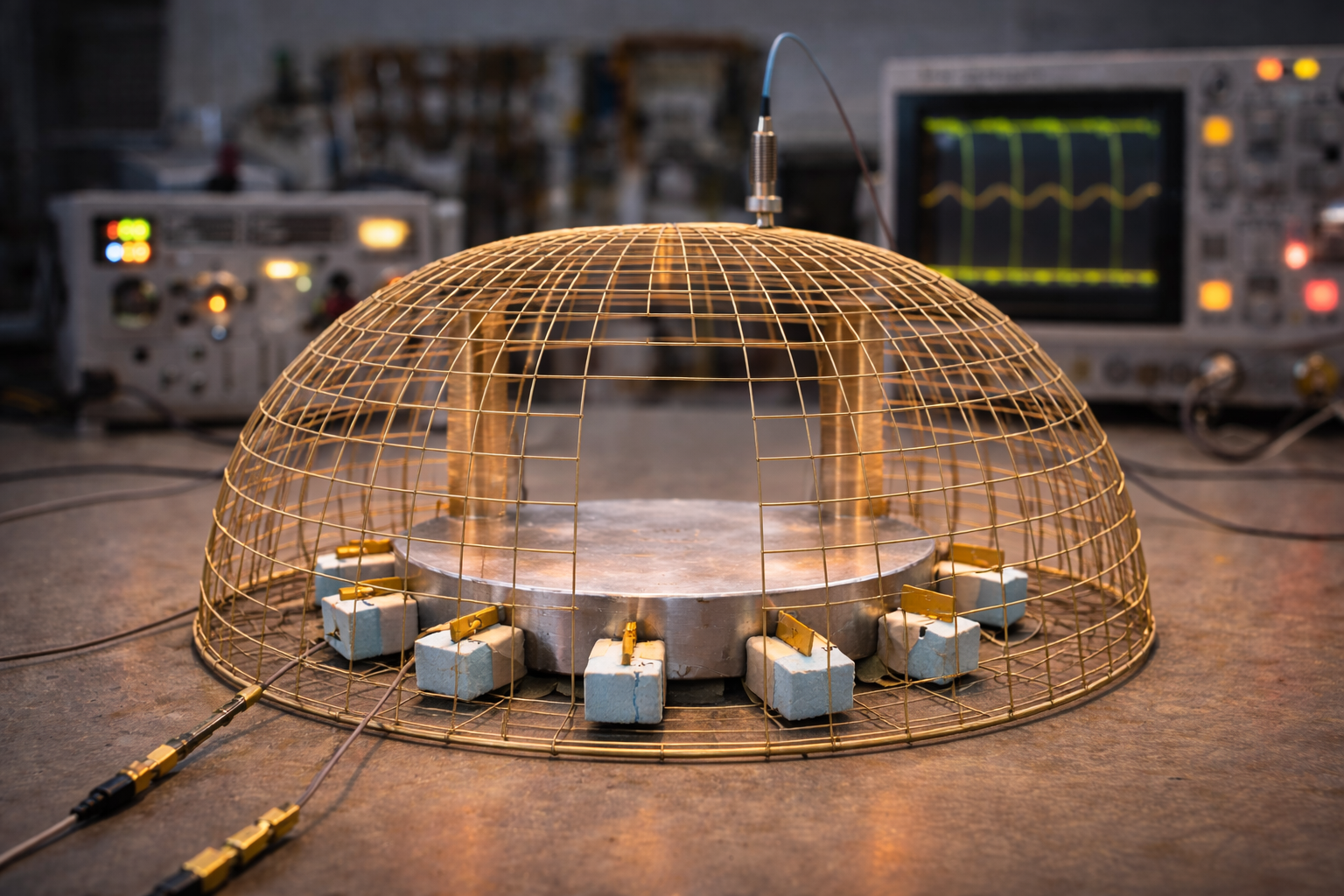
Researchers at the CUNY Advanced Science Research Center built a radio‑frequency device whose rapidly timed parameter changes create a traveling, synthetic rotation, allowing waves to extract energy and become amplified in a way that mirrors the Penrose–Zel’dovich process. The experiment uses a ring of tunable resonators and engineered metamaterials to simulate extreme rotational dynamics without any physical spinning, providing a controllable platform for exploring high‑energy physics, optics, and quantum technologies—and suggesting future tech applications.

Metamaterial MRI Antenna Delivers Sharper Eye and Brain Imaging on Existing Scanners
technology3 months ago

Metamaterial MRI Antenna Delivers Sharper Eye and Brain Imaging on Existing Scanners

Researchers at the Max Delbrück Center and Rostock University Medical Center unveiled a metamaterial-based MRI antenna that strengthens signals from deep tissues, enabling higher-resolution images of the eye and occipital brain regions and potentially shorter scan times without new equipment. Tested at 7.0 Tesla on volunteers, the compact antenna can be adapted to different body parts, may help reduce heating near implants, and could enhance MRI-guided therapies; larger clinical studies are planned and the approach targets broader organ imaging in the future.

Roll-to-roll printable metamaterials unlock multiscale, tunable colouration
technology4 months ago

Roll-to-roll printable metamaterials unlock multiscale, tunable colouration

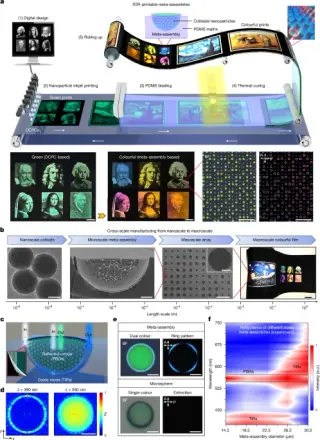
Researchers demonstrate a printable meta-assembly strategy that embeds low-cost polystyrene nanoparticles in a PDMS matrix to form a nanolattice-based microconic optical interface. This design enables precise coupling of guided and reflected waves to produce tunable color patterns across seven orders of length scale, achievable with metre-scale, single-pixel customization via continuous roll-to-roll manufacturing. By adjusting nanoparticle size and the printed feature diameter, designers can tailor color separation and integration, yielding vibrant, stable colors suitable for eco-friendly coloration, intelligent displays, and information security. The work showcases scalable, designable metamaterials and proves robustness under UV, heat, solvents, washing, and mechanical deformation.

Electromagnetic Time Mirrors Demonstrated in Breakthrough Experiment
science7 months ago

Electromagnetic Time Mirrors Demonstrated in Breakthrough Experiment

Researchers at City University of New York demonstrated temporal reflection by abruptly shifting a metamaterial's impedance, creating a time-reversed copy of an electromagnetic signal inside a fixed system— the first experimentally observed time mirror. Published in Nature Physics, the result confirms a long-theorized effect in time-varying photonic media and hints at future applications in encryption and adaptive antennas, though practical scaling and energy constraints remain hurdles; time itself remains unaffected outside the device.

Multicolor Metalenses Promise to Transform Camera Technology
technology11 months ago

Multicolor Metalenses Promise to Transform Camera Technology

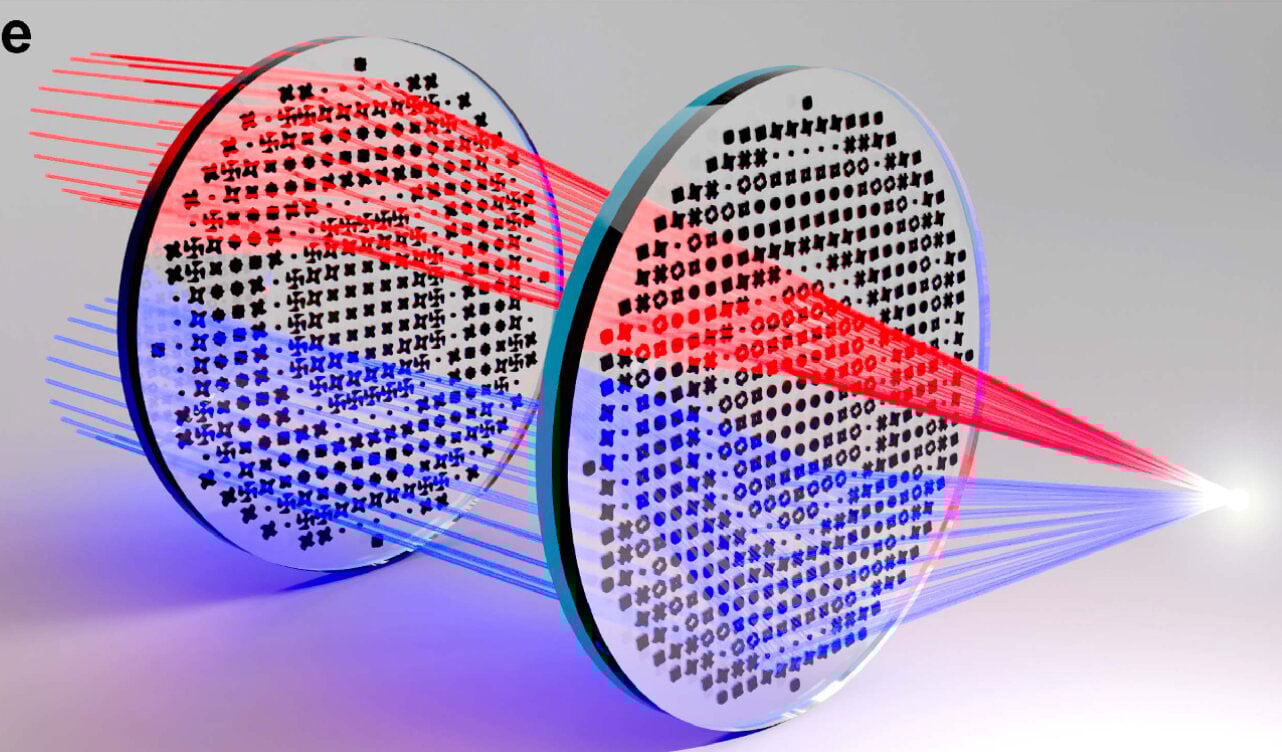
Researchers have developed layered multicolor metalenses using stacked metamaterials that can focus multiple wavelengths simultaneously, overcoming the limitations of single-layer lenses. This innovative design is easy to manufacture, polarization insensitive, and scalable, with potential applications in compact, high-performance optical devices for drones, smartphones, and other portable technologies.

"Solitons: Time, Space, and Rule Bending"
science-and-technology2 years ago

"Solitons: Time, Space, and Rule Bending"

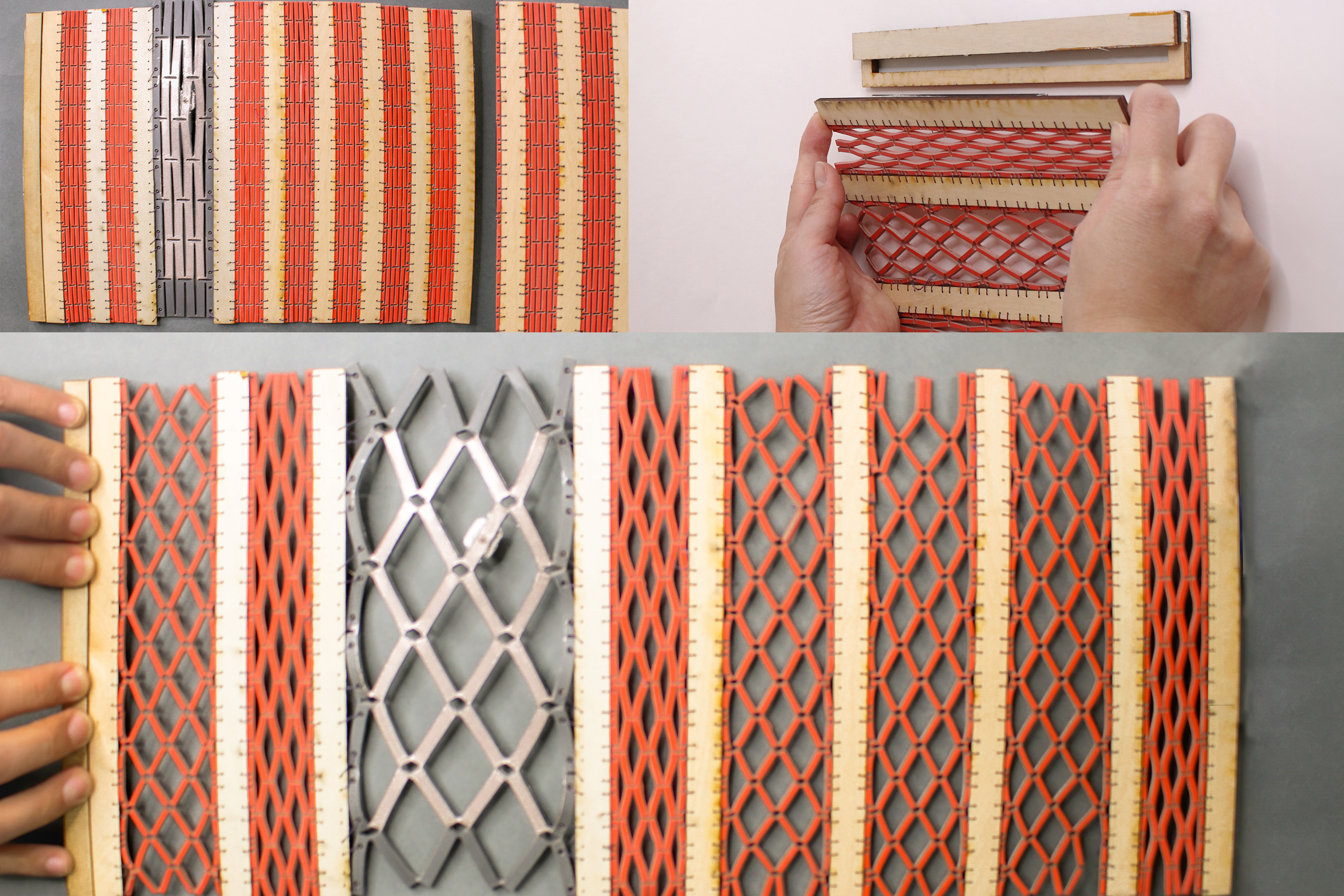
Researchers from the University of Amsterdam have demonstrated the unique behavior of topological solitons in a robotic metamaterial, showing that they can be harnessed through non-reciprocal interactions to control the movement of robots, sense their surroundings, and communicate. The solitons, which behave like particles but retain their shape and cannot disappear, are being studied for their potential applications in materials science, robotics, and engineering, offering new possibilities for self-propelled motion and advanced functionality.