SpaceX was awarded investment-grade ratings by Moody's (Baa1), Fitch (BBB+), and S&P Global Ratings (BBB) with stable outlooks, signaling solid credit quality as it moves forward with AI investments after its Nasdaq IPO, with shares easing slightly after hours.
Elon Musk publicly challenged Moody’s decision to rate SpaceX at Baa1 and Tesla at Baa3, arguing Tesla’s large cash cushion, no debt, and consistent profitability warrant a stronger rating, while Moody’s notes Tesla’s auto-margin pressures. SpaceX’s higher rating reflects recurring Starlink revenue, government contracts, and robust cash flows, highlighting a broader debate over how credit ratings value high-growth tech companies.
Moody’s chief economist Mark Zandi says the odds of a U.S. recession are a “serious threat,” with the probability potentially rising above 50% in the next 12 months as oil and gas prices surge amid the U.S.-Iran conflict; before the flare‑up, the model put odds at about 48.6%, and historically nearly every recession since WWII followed a spike in oil prices (except the pandemic). Goldman Sachs meanwhile assigns a 25% recession risk over the next year after a weak February jobs report (−92,000 payrolls vs. +50,000 expected) with the unemployment rate at 4.4%. While higher oil prices can weigh on activity, the U.S.’s status as a net exporter and domestic supply can dampen the impact somewhat. The outlook remains uncertain for investors.
Moody’s downgrades NYC’s financial outlook to negative, citing large, ongoing budget gaps and the plan to dip into reserves to balance this year’s budget; the Aa2 rating remains intact for now but the outlook could worsen if deficits persist. Mayor Mamdani’s proposal to withdraw nearly $1 billion from the rainy-day fund faces pushback from the City Council and comptroller, as state funding talks continue and the city confronts a roughly $7.3 billion budget gap.
Moody's warns that roughly $662 billion in planned data-center expansion is highly concentrated among five firms, creating material concentration risk for lenders and investors if demand weakens, financing tightens, or supply chains falter; the piece emphasizes potential impacts on project financing, asset valuations, and the broader tech infrastructure buildup.
Moody's warns that current US accounting rules may hide tens of billions in data-centre liabilities for Big Tech by allowing SPV-backed structures and renewal guarantees to stay off balance sheets; lease renewals and residual value guarantees may not be fully recorded unless deemed probable or reasonably certain. Meta and Oracle are among users; Meta's Hyperion facility via Beignet Investor involves a four-year lease with renewal options up to 20 years and RVG guarantees up to $28bn not recorded as of end-2025. Moody's would adjust debt to reflect likely renewal periods or RVG triggers, which could affect credit ratings and access to funding for AI data centres.
Amid a government shutdown, private data suggests the US job market experienced minimal growth in September, with employment mainly in wealthy states and sectors like healthcare, indicating a weakening economy that official data has yet to fully reveal.
Moody's economist Mark Zandi suggests the US can avoid a recession if the wealthy continue their current spending levels, as their consumption largely drives the economy, while lower-income groups' spending has only kept pace with inflation. A potential slowdown in spending by the wealthy could pose risks to economic stability.
Moody's has issued a warning about the U.S. housing market, highlighting rising inventory, slowing sales, declining prices, and reduced construction activity, signaling a potential downturn that could impact broader economic growth.
Moody's warns that the increasing involvement of retail investors in private credit markets could lead to liquidity and asset quality risks, as asset managers rush to meet demand with potentially lower-quality assets and products with periodic liquidity, raising concerns about transparency and market stability.
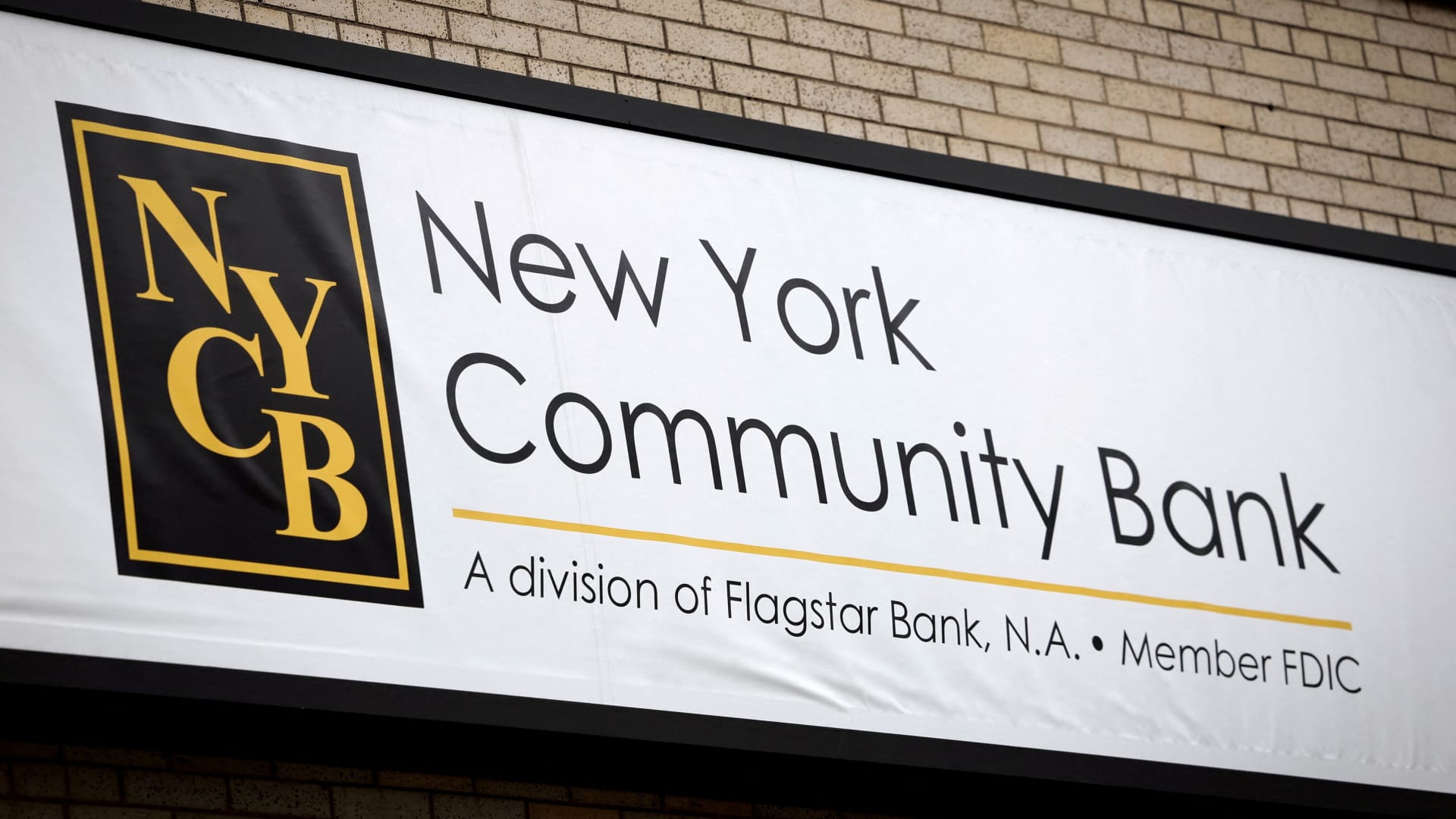
Moody's Investors Service downgraded New York Community Bank's deposit rating by four notches, putting it three levels below investment grade, potentially triggering contractual obligations and raising concerns about a flight of deposits. The bank's stock has plummeted 72% this year, and its ability to retain deposits is under scrutiny, with potential impacts on its "Banking as a Service" business and mortgage escrow unit. Analysts warn of increased costs and potential funding challenges for the bank as it grapples with the aftermath of the ratings downgrade.
New York Community Bancorp's credit rating was downgraded to junk status by Fitch Ratings and further lowered by Moody's Investors Service after the discovery of "material weaknesses" in its loan risk tracking. Fitch cited concerns about the bank's controls around provisioning adequacy, particularly in relation to its concentrated exposure to commercial real estate. Moody's highlighted potential credit risk on office and multifamily loans, leading to expectations of increased provisions for credit losses. The stock plunged 26% following the announcement, but the bank's new CEO expressed confidence in executing a turnaround plan.
Moody's decision to downgrade Israel's credit rating reflects global distrust of the country's far-right Orthodox-dominated government, signaling the end of the hope for economic development and normalcy in the region. Tensions between the Biden administration and Israel are growing over a potential ground invasion in Gaza, with the White House's warnings falling on deaf ears as long as there are no significant consequences for Israel's actions.
Moody's reported lower-than-expected Q4 earnings and revenues, causing a 3% drop in stock value. Despite a 37% increase in bottom line from the previous year, adjusted earnings of $2.19 per share missed estimates. Revenues of $1.48 billion also fell short of expectations. The company's liquidity position was strong, and it expects adjusted earnings for 2024 to be in the range of $10.25-$11.00 per share. Moody's remains well-positioned for growth, but faces challenges from elevated operating expenses and geopolitical concerns.
Israel's finance minister criticized Moody's decision to downgrade the country's credit rating, calling it a "political manifesto" lacking serious economic claims. Moody's cited the ongoing war in Gaza and potential conflict with Hezbollah as factors that could harm Israel's economy. Prime Minister Benjamin Netanyahu attributed the downgrade to the ongoing war and expressed confidence in the economy's strength. Israeli officials fear further downgrades could impact the country's ability to raise funds through bond sales. Despite resilience, the economy has faced challenges including military expenditures, reservist callups, governance concerns, and a slowdown in tech investments.