Tag

Neutrino

All articles tagged with #neutrino

Giant 43-Foot Beam Makes 4,850-Foot Descent for DUNE's Underground Neutrino Lab
science29 days ago

Giant 43-Foot Beam Makes 4,850-Foot Descent for DUNE's Underground Neutrino Lab

Crews are lowering 10 million pounds of steel into a former South Dakota gold mine for the Deep Underground Neutrino Experiment (DUNE). A 43-foot beam weighing about 15,890 pounds travels upright in a 4.5-foot-wide cage down the Ross Shaft 4,850 feet to form the two massive cryostats that will house 17,000 tons of liquid argon each. With more than 2,100 components needing to fit through the narrow shaft, the descent—done dozens of times this summer—is a critical, tightly choreographed step toward first neutrinos in 2031.

Antarctic Ice Becomes a World-Scale Neutrino Telescope
science1 month ago

Antarctic Ice Becomes a World-Scale Neutrino Telescope

IceCube is a cubic-kilometer neutrino detector buried in the South Pole ice, using 5,160 photomultiplier modules on 86 strings to detect Cherenkov light from neutrino interactions. By using the Earth as a filter, it can observe high-energy neutrinos from across the sky, turning the planet into a giant telescope. Since 2013 it has identified extraterrestrial neutrinos and linked sources such as TXS 0506+056 and NGC 1068, and in 2023 mapped the Milky Way in high-energy neutrinos. Deep ice, calibration LEDs, and hot-water drilling enabled its deployment, after which sensors remained inaccessible.

Earth-Directed Blazar Jets May Explain Record Ultra-High-Energy Neutrino
space2 months ago

Earth-Directed Blazar Jets May Explain Record Ultra-High-Energy Neutrino

A 220 PeV neutrino detected by KM3NeT in 2023 is examined for origins; a population of blazars—jets from active galactic nuclei aimed at Earth—could account for such events without exceeding the extragalactic gamma-ray background measured by Fermi, though no electromagnetic counterpart was found and IceCube’s non-detection constrains the scenario. The study shows the blazar-population model is plausible within a defined parameter range and highlights the need for future KM3NeT upgrades and more data to confirm or refute this diffuse-origin explanation.

Right-Handed Neutrinos Hint at a Hidden Dimension in Dark Dimension Theory
science4 months ago

Right-Handed Neutrinos Hint at a Hidden Dimension in Dark Dimension Theory

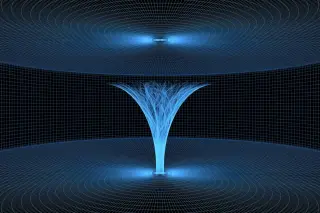
Scientists analyzing data from the Karlsruhe Tritium Neutrino Experiment (KATRIN) explore whether a heavy, right-handed neutrino could reside in a hidden micron-scale dimension as suggested by the Dark Dimension Proposal; by translating KATRIN beta-decay spectra into a test for extra dimensions, they identify two regions where a kink in the spectrum would reveal such a particle, potentially linking neutrino physics to dark matter, dark energy, and a changing cosmological constant and guiding future experiments.

Neutrino laser concept aims to harness ghost particles
science4 months ago

Neutrino laser concept aims to harness ghost particles

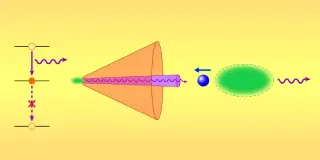
US researchers propose a 'neutrino laser'—a compact device that could emit coherent bursts of neutrinos by cooling radioactive atoms into a Bose-Einstein condensate and triggering synchronized decay via superradiance. If realized, it could transform neutrino research and enable new applications from underground communication to medical imaging, but the concept is still theoretical and faces significant technical hurdles.

Ghost-state neutrino from a black hole explosion could rewrite physics and dark matter
space6 months ago

Ghost-state neutrino from a black hole explosion could rewrite physics and dark matter

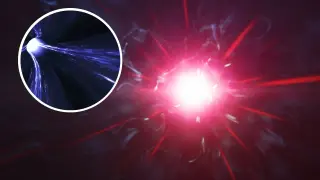
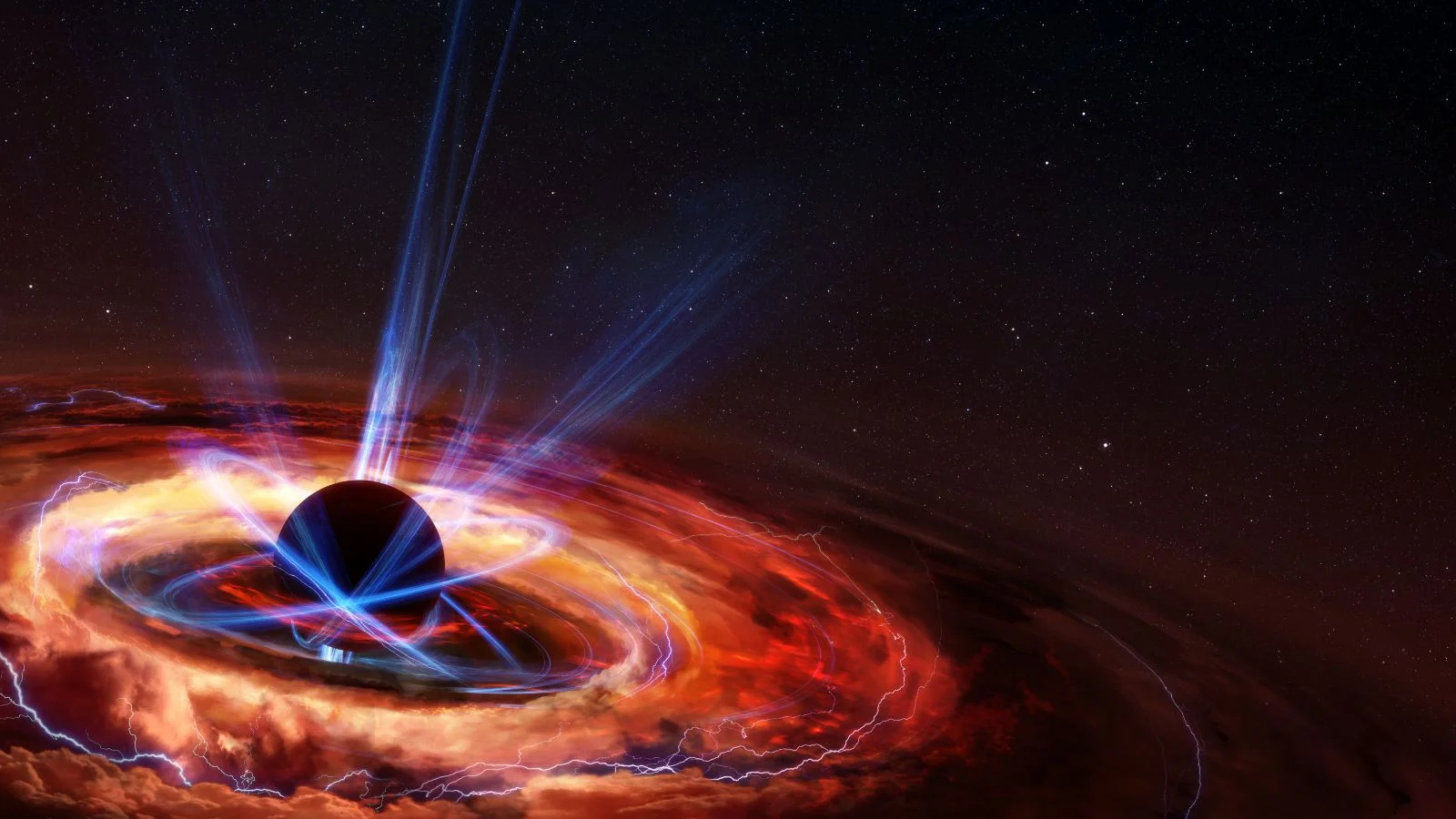
A 2023 ultra-energetic neutrino detected by KM3NeT may have originated from an exploding primordial black hole with a dark charge (a quasi-extremal PBH). If confirmed, such events could provide a complete catalog of subatomic particles and illuminate dark matter, but the idea is unproven and lacks corroborating detections. Researchers predict a first quasi-extremal PBH explosion could occur by 2035, highlighting a potential new window into particle physics and cosmology.

Ultra‑Energy Neutrino Sparks Dark-Electron Black Hole Theory
science6 months ago

Ultra‑Energy Neutrino Sparks Dark-Electron Black Hole Theory

A rare, ultrahigh-energy neutrino detected by KM3NeT in 2023 prompts a bold hypothesis: a quasi-extremal primordial black hole dumping dark electrons, triggering a rapid explosion that emits a narrow band of neutrinos; the idea, outlined in a Physical Review Letters preprint and set for formal publication, could explain why KM3NeT saw the event while IceCube did not, but it remains speculative pending more data and analysis.

Ultra-Powerful Neutrino Sparks Dark Matter Clue From Ancient Black Hole
science6 months ago

Ultra-Powerful Neutrino Sparks Dark Matter Clue From Ancient Black Hole

A 220 PeV neutrino detected by KM3NeT's ARCA detector in February 2023 far exceeds energies from any accelerator and challenges existing models; a University of Massachusetts Amherst team suggests it came from a primordial black hole evaporating via Hawking radiation, offering a potential link to dark matter and a window into new physics beyond the Standard Model.

Ultra-energetic neutrino hints at exploding primordial black holes and dark matter link
space6 months ago

Ultra-energetic neutrino hints at exploding primordial black holes and dark matter link

A 2023 ultra-high-energy neutrino detected by KM3NeT is proposed to be debris from an exploding primordial black hole, potentially evidencing Hawking radiation and primordial black holes as dark matter candidates, though IceCube’s non-detection and a proposed dark-charge model for quasi-extremal black holes add complexity to the interpretation.

Primordial Black Hole Bursts May Explain Ultra-Energetic Neutrinos
science6 months ago

Primordial Black Hole Bursts May Explain Ultra-Energetic Neutrinos

After a 2023 ultra-high-energy neutrino puzzled scientists, a UMass Amherst team proposes it originated from a primordial black hole explosion driven by Hawking radiation; their 'dark-charge' (quasi-extremal PBH) model could connect PBHs to dark matter and suggest these explosions may occur more often than thought, guiding future astrophysical searches.