Tag

Northern Lights

All articles tagged with #northern lights

Midwest and beyond could see northern lights as solar storm approaches this weekend
space24 days ago

Midwest and beyond could see northern lights as solar storm approaches this weekend

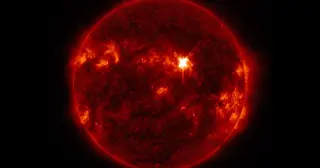
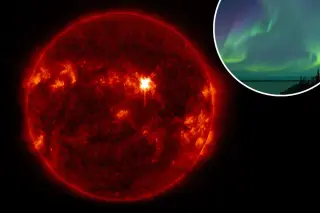
NOAA’s Space Weather Prediction Center warns of a G2 geomagnetic storm on March 19 (UTC) as multiple coronal mass ejections head toward Earth. The activity could push the auroral oval far south, with potential sightings in mid-latitudes including Illinois and New York, depending on CME timing and local conditions. Impacts could begin as early as 11 p.m. ET on March 18, with strongest activity 2–8 a.m. ET on March 19 and possibly lingering into March 20, and a wider window increases the chance for aurora displays given clear skies and favorable magnetic orientation.

Nine U.S. States Could See the Northern Lights Tonight
stargazing28 days ago

Nine U.S. States Could See the Northern Lights Tonight

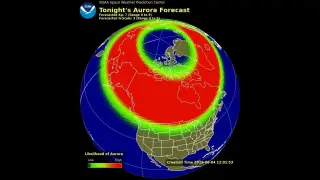
Space.com reports that a fast solar wind is expected to sweep past Earth tonight (March 13), potentially triggering a minor geomagnetic storm and making the northern lights visible across nine U.S. states (Alaska, North Dakota, Minnesota, Montana, South Dakota, Wisconsin, Idaho, Washington, and Maine) if skies are clear. Best viewing is tonight into Saturday, with auroras possibly reaching farther south if conditions strengthen, per NOAA's Space Weather Prediction Center.

Aurora Alert: Northern Lights Visible Across 10 U.S. States Tonight
science1 month ago

Aurora Alert: Northern Lights Visible Across 10 U.S. States Tonight

NOAA SWPC forecasts the Northern Lights will be visible tonight across 10 northern U.S. states (including Alaska, Washington, Idaho, Montana, the Dakotas, Minnesota, Wisconsin, Michigan and Maine) due to solar winds and a coronal mass ejection; best viewing from about 10 p.m. to 2 a.m. under dark skies away from city lights, with additional chances around the March 20 spring equinox.

Chasing a Fading Glow: Plan a Northern Lights Trip Before They Disappear
travel1 month ago

Chasing a Fading Glow: Plan a Northern Lights Trip Before They Disappear

After peaking in Oct 2024, the aurora borealis is fading as the solar cycle moves toward minimum; recent displays have even been seen in Florida, Mexico, and other southern urban skies. To maximize your chances before they fade, plan a high-latitude, dark-sky trip during clear, moonless nights, seek locations away from light pollution, and monitor space-weather forecasts for geomagnetic activity, staying flexible with dates and destinations.

Northern Lights Hit Ten States Tonight Amid Solar Storm Watch
science1 month ago

Northern Lights Hit Ten States Tonight Amid Solar Storm Watch

A NOAA geomagnetic storm watch due to a high-speed solar wind stream could bring the aurora borealis to ten U.S. states tonight through the weekend, visible between 10 p.m. and 2 a.m. local time if skies are clear. Best viewing is away from city lights; monitor live forecasts, and use Night Mode/Pro Mode on iPhones (preferably main lens, RAW if possible) for photos.

Orbiting camera spots vivid auroras over Iceland and Canada during a minor geomagnetic storm
stargazing1 month ago

Orbiting camera spots vivid auroras over Iceland and Canada during a minor geomagnetic storm

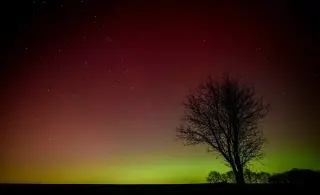
A NASA/NOAA VIIRS satellite captured grayscale aurora displays over the Denmark Strait toward Iceland and across eastern Canada during a minor G1 geomagnetic storm on Feb. 16, 2026. The article explains auroras form when solar particles are channeled by Earth's magnetic field and collide with atmospheric gases, producing greens at mid-altitudes with possible magentas and reds at higher/lower altitudes; ground observers would have seen shimmering curtains under the right conditions.

Valentine Night Lights: Aurora Visible Across 12 U.S. States
science1 month ago

Valentine Night Lights: Aurora Visible Across 12 U.S. States

NOAA forecasts a bright aurora borealis display tonight across 12 U.S. states due to intensified solar activity, offering a rare Valentine’s Day sky show. The best viewing window is 10 p.m.–midnight local time, with the possibility of the lights lingering until dawn in northern areas; colors like green, red, and purple are expected, and New York and Michigan could see it despite being typically too far south. To maximize visibility, seek dark skies away from city lights, and check local weather for clear skies. The event is linked to the sun’s approaching solar cycle maximum.

Solar Max Sparks Southern UK Auroras
science2 months ago

Solar Max Sparks Southern UK Auroras

Auroras lit up the South West of the UK (Devon, Cornwall and the Channel Islands) due to coronal mass ejections from the Sun at the height of solar cycle 25. Experts say 2025–2026 is the likely peak, with some forecasts suggesting the next maximum could be as late as 2037. Strong geomagnetic storms push auroras farther south, but visibility depends on dark skies and viewing conditions. To see them, monitor Met Office Space Weather alerts and head to dark-sky sites away from light pollution, using long-exposure photography; the article notes several South West dark-sky locations.

Rare aurora could glow over north Georgia as space storm hits
weather2 months ago

Rare aurora could glow over north Georgia as space storm hits

A strong G4 geomagnetic storm triggered by a solar flare and coronal mass ejection could produce faint northern lights visible in north Georgia tonight, depending on a KP index of 8–9. Observers should seek dark skies away from city lights, and a visible aurora may be hard to see with the naked eye. Solar storms can also affect GPS, satellites, and power grids.