Tag

Ocean Color

All articles tagged with #ocean color

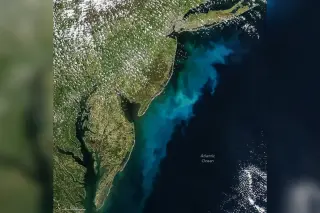
Color-Splashed Seas Signal Spring Phytoplankton Bloom, NASA Images Show
science9 days ago

Color-Splashed Seas Signal Spring Phytoplankton Bloom, NASA Images Show

NASA satellite imagery detects green and turquoise plumes off the U.S. Mid-Atlantic coast, likely caused by a mix of sediments, river outflows, and phytoplankton blooms (diatoms and coccolithophores). The Plankton, Aerosol, Cloud, Ocean Ecosystem (PACE) mission helps scientists monitor ocean health and carbon cycling, with blooms that can affect light penetration and will usually wane as nutrients are depleted unless replenished by storms or rivers.
Colorful Coastal Waters Signal Spring Phytoplankton Blooms Off the Mid-Atlantic
earth-science15 days ago

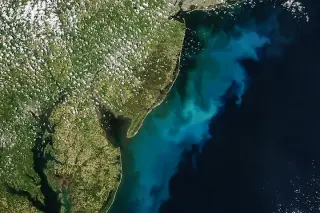
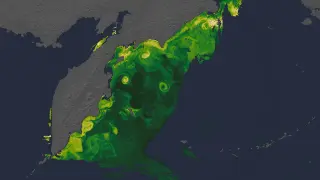
Colorful Coastal Waters Signal Spring Phytoplankton Blooms Off the Mid-Atlantic

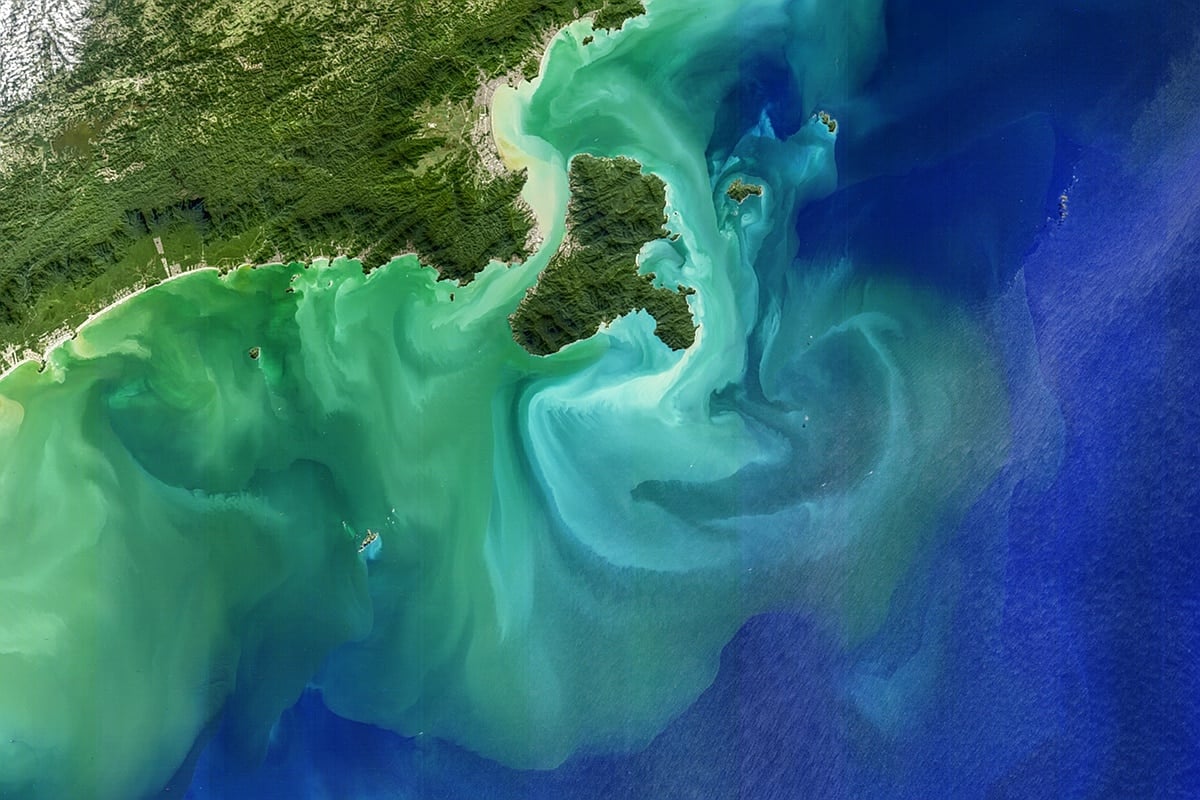
NASA's Earth Observatory used MODIS imagery to show vivid greens and turquoises off the Delaware–New Jersey–Virginia coast, where spring phytoplankton blooms—dominated by diatoms with coccolithophores mixed in—color the shallow Mid-Atlantic Bight; advances from the PACE mission are improving bloom detection in these optically complex coastal waters.

PACE Opens a Multispectral Window on Earth’s Oceans, Atmosphere and Life
earth-science1 month ago

PACE Opens a Multispectral Window on Earth’s Oceans, Atmosphere and Life

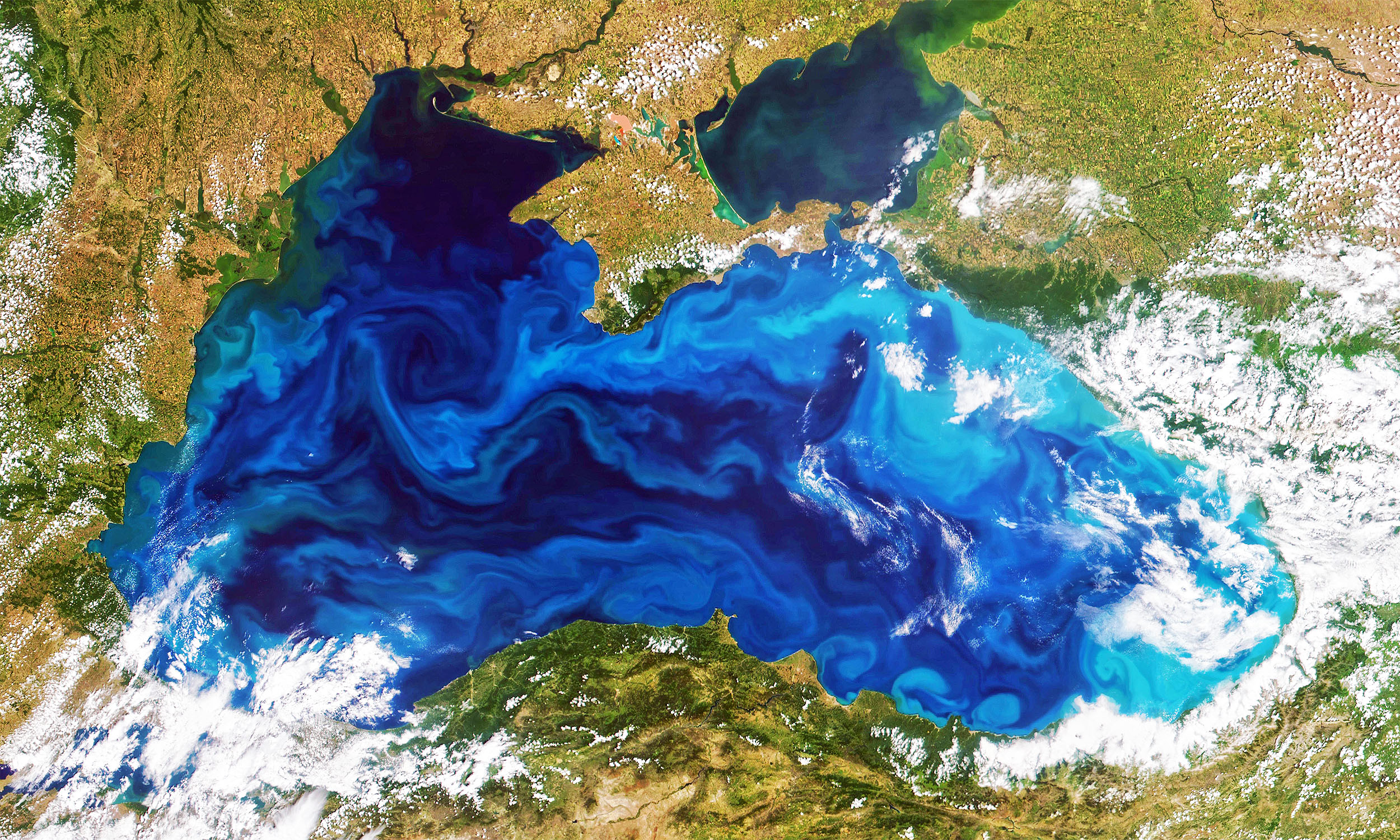
NASA’s PACE satellite uses hyperspectral imaging and polarimeters to monitor Earth’s oceans, atmosphere, and land—tracking dust and wildfire smoke plumes, mapping three-dimensional cloud structure, identifying ship-induced cloud effects, and detecting phytoplankton types (including diatoms) and blooms such as cyanobacteria in the Great Lakes and Karenia off Australia. These data help warn water managers, support emergency response, and deepen climate and ocean ecosystem understanding, while Artemis II imagery showcases Earth from space.

Meltwater from Antarctic Giant Triggers South Atlantic Phytoplankton Bloom
earth-science2 months ago

Meltwater from Antarctic Giant Triggers South Atlantic Phytoplankton Bloom

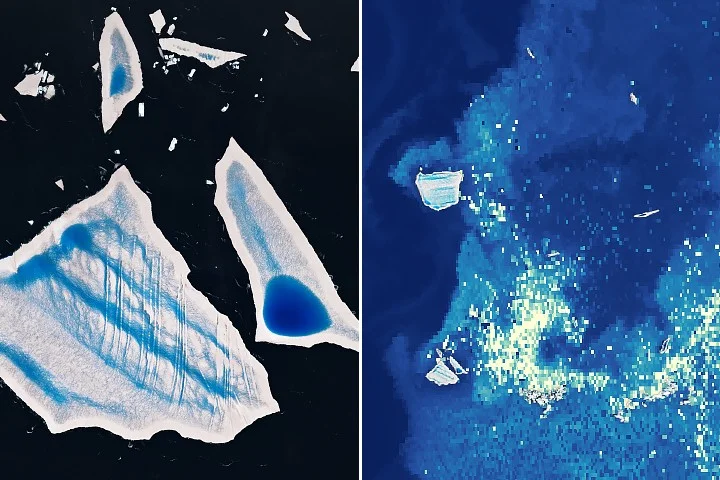
A melting Antarctic iceberg, A-23A, released nutrient-rich meltwater as it drifted into warmer South Atlantic waters, fueling a large phytoplankton bloom detectable by NASA satellites (VIIRS on Suomi NPP and the PACE mission). Scientists say light conditions and nutrients from iceberg melt promote bloom formation, with implications for the marine food web and carbon cycling; the duration and full ecological impact remain under study.

Unstoppable Shift: Earth's Oceans Change Color
environment1 year ago

Unstoppable Shift: Earth's Oceans Change Color

Over the past 20 years, more than half of the world's oceans have changed color, a shift linked to human-driven climate change affecting phytoplankton communities. These microscopic organisms are crucial for marine ecosystems and carbon capture. The changes, observed via satellite data, indicate significant impacts on the marine food web and highlight the urgent need to address climate change.

Shifting Hues: The Ever-Changing Colors of the Ocean
environment2 years ago

Shifting Hues: The Ever-Changing Colors of the Ocean

A study published in Nature reveals that the color of the world's oceans has been changing rapidly over the past 20 years, with 56% of the oceans experiencing a color shift. The change is attributed to global warming and the impact of greenhouse gas emissions. Marine algae, or phytoplankton, which play a crucial role in capturing and storing carbon dioxide, are particularly affected. The rapid color changes indicate an imbalance in the ocean ecosystem, with potentially detrimental consequences.

The Changing Colors of Earth's Oceans: A Climate Change Impact
environment2 years ago

The Changing Colors of Earth's Oceans: A Climate Change Impact

The color of more than half of the world's oceans is changing rapidly due to climate change, according to a study analyzing two decades of satellite observations. The changes in color are primarily caused by shifts in phytoplankton populations, which are highly sensitive to climate change. Rising temperatures, disrupted ocean currents, and changes in acidity are affecting the abundance and distribution of phytoplankton, leading to alterations in the ocean's color. These changes have significant implications for marine ecosystems and food chains. While the changes may not be immediately visible to the naked eye, they serve as a warning sign of the urgent need to address climate change.

The Changing Colors of Our Oceans: A Consequence of Climate Change
environment2 years ago

The Changing Colors of Our Oceans: A Consequence of Climate Change

A new study reveals that more than 56% of the world's oceans have changed color in the past two decades, with tropical oceans near the equator becoming greener due to changes in their ecosystems. The color of the ocean is determined by the presence of phytoplankton, which form the basis of the food web. The researchers suggest that human-induced climate change is likely responsible for these color changes, which could disrupt ocean ecosystems and affect the ocean's ability to store carbon. The study highlights the need to address climate change and its impact on marine environments.