GF Securities asserts Nvidia’s Vera Rubin GPU moved from a 4-die to a 2-die packaging design, a shift that’s cited as a reason memory stocks tumbled as investors priced in potentially lower demand for memory components and related packaging work from major memory players.
Burger King is updating its Whopper in 2026 with a sturdier sesame bun, a clamshell-style package, and a citrusy mayo, while keeping the patty unchanged; driven by guest and franchisee feedback, the rollout to more than 7,000 restaurants starts this week and will add about $4,000 in annual costs to each franchisee, which BK hopes won't be passed to customers.
Burger King has refreshed its Whopper for the first time in years, adding a premium bun, stacked onions and tomatoes, a new mayo, and packaging the burger in a cardboard box to ensure it arrives as pictured. The patty remains the same, but the changes are expected to add about $4,000 per year in costs for franchisees, a burden BK says shouldn’t be passed to customers. The overhaul, driven by guest feedback, follows a 2020 reformulation removing artificial preservatives, colors, and flavors from the Whopper.
Burger King is updating its Whopper for the first time in nearly a decade, swapping in a premium bun, creamier mayonnaise, and a clamshell box to keep the burger intact, with rollout to more than 7,000 restaurants this week. The changes, prompted by customer complaints about smashable burgers and quality, will cost franchisees about $4,000 more per year, and follow CEO-level outreach to diners as BK aims to boost sales amid competitive pressure and prior declines in brand perception. The beef patty remains the same; packaging and presentation are the new focus to improve the overall experience.
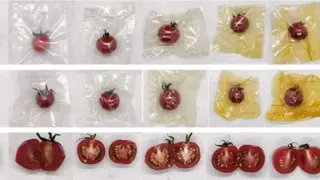
Researchers in Japan developed a plant-based plastic called cmcsp, made from cellulose, that stays strong during use but dissolves completely in seawater within hours, leaving no microplastics and offering a potential new packaging option. The material forms a cross-linked network stabilized by salt bridges and a plasticizer; seawater ions disrupt these bonds to trigger dissolution, with a thin barrier coating slowing breakdown during use. While the approach shows promise and can be processed in water-based systems, scaling, recycling dissolved components, and real-world disposal remain challenges, and it is not a universal solution to plastic pollution.
This article surveys multiple studies showing microplastics contaminating 14 common foods and drinks—salt, seafood, sugar, beer, bottled water, honey, milk, cheese, tea, chewing gum, produce, coffee, rice, and meat—with contamination arising from packaging, farming and processing. It notes widespread exposure (e.g., 100% sugar contamination in recent studies; thousands of plastic particles per year from beverages and salt) and health concerns, while stressing complete avoidance is unlikely; practical steps to reduce exposure include choosing plastic-free packaging, washing produce and seafood, avoiding plastic tea bags and cups, and selecting alternative storage or packaging.
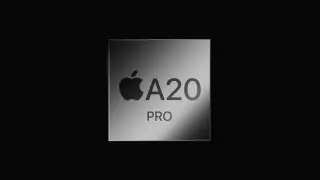
Apple is preparing to launch four new 2nm chipsets in 2026, including the A20 and A20 Pro with advanced WMCM packaging, which will enhance performance and efficiency. The company is expected to incorporate these chips into upcoming iPhones, MacBooks, and the Vision Pro headset, giving it a competitive edge as other manufacturers like Qualcomm and MediaTek also plan to introduce 2nm chips. TSMC's 2nm technology will be in high demand, with significant production capacity and high costs.
Apple plans to use TSMC's advanced WMCM packaging for its upcoming A20 and A20 Pro chips, and SoIC packaging for its server chips, starting in 2026, with new manufacturing facilities set up to support these technologies, aiming for smaller, more efficient chips with enhanced performance.
Aldi is facing a lawsuit from Mondelēz International over its private label snacks, which are alleged to copy the packaging and branding of popular Mondelēz products like Oreos and Ritz crackers, potentially misleading consumers and infringing on brand trademarks. The lawsuit seeks damages and an injunction to prevent further use of similar packaging.
Mattel mistakenly printed the URL of a pornographic website on the packaging of its 'Wicked' dolls, leading to a significant oversight in quality control. The company is addressing the error and working to rectify the situation.
Researchers have developed a sustainable hydrophobic paper using cellulose nanofibers and peptide sequences, offering a potential alternative to petroleum-based products. This innovative material, created through a supramolecular approach, enhances mechanical strength and water resistance without chemically altering the cellulose. The study, conducted by a team from Politecnico di Milano and collaborators, highlights the material's suitability for packaging and biomedical applications due to its biocompatibility and environmental benefits.
Amazon has announced a significant reduction in the use of plastic air pillows in its packaging, cutting down by 95% and planning to eliminate them entirely by the end of the year. The company is switching to crumbled paper filler to reduce plastic waste and focus on recycled materials, aiming to use paper filler for nearly all deliveries on Prime Day. This move addresses concerns about plastic pollution, which has surged with Amazon's growth, especially during the COVID pandemic.
Amazon will replace plastic air pillows in its North American shipments with recycled paper filler, eliminating nearly 15 billion plastic pillows annually. This move is part of the company's largest effort to reduce plastic packaging, addressing environmental concerns over plastic pollution, particularly in marine environments.
Amazon is replacing plastic air pillows with recycled paper for packaging in North America, aiming to eliminate almost 15 billion plastic air pillows annually by year-end. This move, part of Amazon's largest plastic reduction effort in the region, is driven by environmental concerns and customer satisfaction. The company has already transitioned 95% of its packaging to paper filler, which offers better protection and is easier to handle. Environmental groups and investors have welcomed the change but urge Amazon to further reduce single-use plastics and explore reusable packaging options.
Amazon is set to eliminate plastic air pillows from its North American delivery packaging by the end of the year, replacing them with 100% recycled paper filler. This change will remove nearly 15 billion plastic air pillows annually. Despite progress in other regions, Amazon has been slower to transition to paper packaging in the US. Conservation group Oceana acknowledges the improvement but urges Amazon to further reduce single-use plastic packaging globally.