Tag

Plasma Thruster

All articles tagged with #plasma thruster

space-technology13 days ago

Stuttgart PhD Research Proposes Indefinite Satellite Orbit Using Atmospheric Air as Fuel

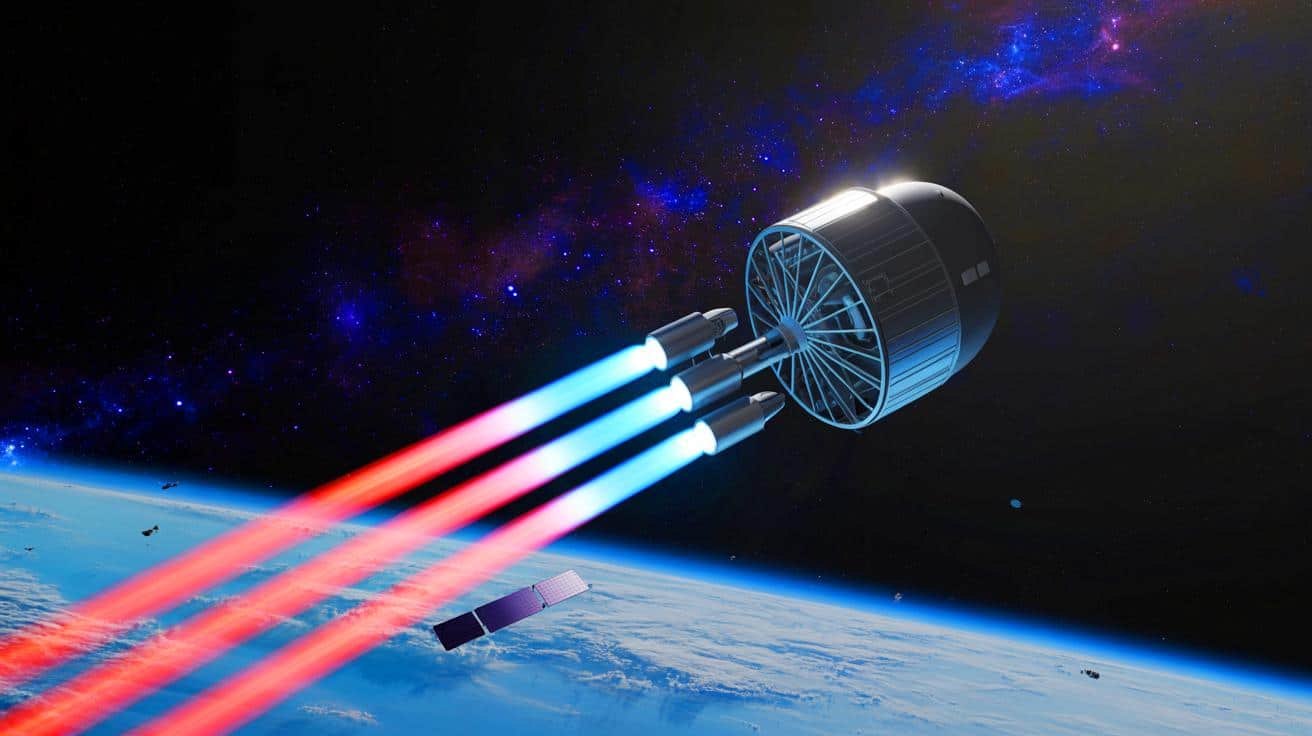
Francesco Romano’s PhD research at the University of Stuttgart introduces a new atmosphere-breathing electric propulsion (ABEP) system that could allow satellites to remain in Very Low Earth Orbit (VLEO) indefinitely without carrying conventional propellant. The system uses a radio-frequency helicon plasma thruster paired with a specular intake to capture atmospheric gases, specifically atomic oxygen, argon, and nitrogen, and convert them into thrust. Laboratory tests demonstrated that the thruster can operate reliably with only 50-60W of power, while modeling suggests it could sustain a satellite between 190 and 250 km altitude using less than 1.6 kW. Although the technology addresses the high cost and limited supply of xenon fuel, it remains unproven in actual space missions due to challenges like atomic oxygen corrosion and atmospheric variability.

NASA Demonstrates Record-Setting Lithium Plasma Thruster for Future Mars Missions
technology5 months ago

NASA Demonstrates Record-Setting Lithium Plasma Thruster for Future Mars Missions

NASA's JPL has demonstrated a record-high 120 kW lithium-fed magnetoplasmadynamic plasma thruster, the most powerful electric propulsion test in the U.S., signaling progress toward megawatt-class systems for crewed Mars missions. Electric propulsion offers substantial propellant savings and continuous thrust; researchers aim to scale to hundreds of kilowatts to megawatts and, potentially with nuclear power, enable multi-thruster propulsion for long-duration deep-space flights.

NASA Trials Groundbreaking Liquid-Lithium Engine for Mars Mission
space5 months ago

NASA Trials Groundbreaking Liquid-Lithium Engine for Mars Mission

NASA completed high-power tests of a liquid-lithium, magnetoplasmadynamic thruster at up to 120 kilowatts, a major step toward crewed Mars propulsion. Lithium promises higher exhaust velocities and reduced propellant mass versus xenon, but handling molten lithium and corrosion pose severe engineering challenges. Next steps include thousands of hours of endurance testing and scaling toward megawatt-class power (2–4 MW) for long-duration deep-space missions.