Tag

Polygenic Risk Score

All articles tagged with #polygenic risk score

Consensus GWAS uncovers 91 ADRD risk loci and ties polygenic risk to Alzheimer’s pathology
science1 month ago

Consensus GWAS uncovers 91 ADRD risk loci and ties polygenic risk to Alzheimer’s pathology

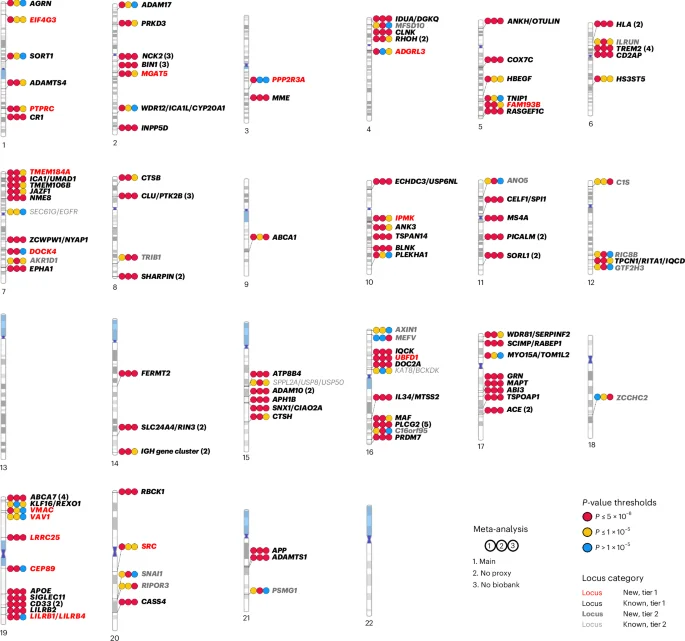
A European-ancestry meta-analysis of ADRD GWAS (128,681 cases/proxy; 849,833 controls) identified 91 genome-wide loci, including 16 new ones, with 56 loci influencing clinically diagnosed Alzheimer’s disease (18 tier-2 loci needing external validation). Excluding APOE, polygenic scores were linked to AD pathology: in top-decile individuals, Braak stage >4 and moderate/severe neuritic plaques at death were about 2× more likely, though overall predictive power is modest (roughly 4% of variance explained; small AUC gains). Results held across main, no-proxy, and no-biobank analyses and showed microglia enrichment and pathways tied to tau, amyloid, lipids, and immunity; genetic correlations connected ADRD with Lewy body dementia, ALS, PD and educational attainment. The authors call for larger well-characterized neuropathology datasets to clarify locus effects on AD pathology versus other dementias and provide further external validation for certain loci and no-proxy/no-biobank statistics for broader use.


Polygenic anhedonia risk linked to altered reward-brain activity
neuroimaging5 months ago

Polygenic anhedonia risk linked to altered reward-brain activity

A German neuroimaging study found that individuals with higher polygenic risk scores for anhedonia show distinct brain activity during a monetary incentive delay task: they exhibit decreased activation in the bilateral putamen and left middle frontal gyrus during reward anticipation and reduced right caudate activity during reward feedback. Higher risk is also associated with lower activity in the left middle frontal gyrus when anticipating losses and during salience processing, while there is heightened activity in the bilateral putamen and right caudate during loss feedback. The results highlight the involvement of striatal and prefrontal circuits in genetic risk for anhedonia, though replication and further research are needed.

Genetic Tools for Early Prediction of Obesity Risk in Children
health1 year ago

Genetic Tools for Early Prediction of Obesity Risk in Children

A large international study has developed a genetic test that predicts the risk of obesity, especially in children, with higher accuracy for individuals of European ancestry. The test uses a polygenic risk score that accounts for genetic variants linked to higher BMI, potentially enabling early interventions. However, its effectiveness varies across different populations, and lifestyle factors remain crucial in obesity risk management.

Genetic Testing Offers Early Prediction of Obesity Risk
health1 year ago

Genetic Testing Offers Early Prediction of Obesity Risk

A large-scale study has developed a genetic test that can predict a child's risk of obesity in adulthood, potentially enabling early interventions. The test, based on a polygenic risk score, is more effective than previous methods, especially for individuals of European ancestry, and highlights the importance of combining genetic insights with lifestyle factors to address obesity. Further research is needed to improve accuracy across diverse populations.

New Genetic Test Aids in Heart Attack Prevention
health3 years ago

New Genetic Test Aids in Heart Attack Prevention

Doctors are using a new genetic test called polygenic risk score to identify people most likely to have heart attacks long before they have them. The test looks at a collection of thousands of genetic variants to assess the risk of heart disease. Those at high risk would be treated aggressively, but the test may also spare some patients from unnecessary treatment if their risk turns out to be low. However, some critics say that a focus on treating younger people is misplaced because they may not comply with taking a statin or another drug for the rest of their lives.