Tag

Powershell

All articles tagged with #powershell

Electerm 5.9.0 Patch Fixes High-Severity PowerShell Injection Flaw
cybersecurity1 day ago

Electerm 5.9.0 Patch Fixes High-Severity PowerShell Injection Flaw

A high-severity vulnerability in Electerm versions prior to 5.9.0 allows attackers to execute arbitrary PowerShell commands on Windows systems. The flaw, identified as CVE-2026-134793, stems from improper handling of Unicode quote characters in file and folder names. Attackers can exploit this by delivering malicious names through archives, WSL distributions, or SMB shares, triggering code execution when users request folder sizes. The issue has been patched in version 5.9.0, which users should install immediately to mitigate the risk.

Widely Used Developer Placeholder Domain third-party.com Now Hosts ClickFix Malware
cybersecurity2 months ago

Widely Used Developer Placeholder Domain third-party.com Now Hosts ClickFix Malware

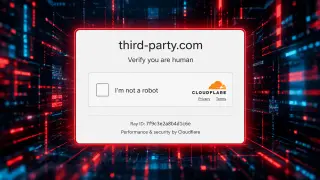
The domain third-party.com, a common placeholder in developer documentation, is now serving a fake Cloudflare verification page that tricks Windows users into executing malicious PowerShell commands. This ClickFix attack exploits the fact that the domain is not reserved for documentation like example.com, allowing attackers to hijack it for malware distribution. While the current payload is broken, the infrastructure remains live, posing a risk if reactivated.

TerminalFix Campaign Exploits PowerShell to Deploy Network Reverse Tunnels
cybersecurity2 months ago

TerminalFix Campaign Exploits PowerShell to Deploy Network Reverse Tunnels

Microsoft identified a new ClickFix variant called TerminalFix that tricks users into executing malicious PowerShell commands via fake Cloudflare CAPTCHAs. This multi-stage attack uses DLL sideloading and steganography to install a Python-based reverse tunnel, granting attackers persistent access to internal enterprise networks for lateral movement and data theft.

AI-Generated PowerShell Tool Maps Active Directory in Rapid Breach
security4 months ago

AI-Generated PowerShell Tool Maps Active Directory in Rapid Breach

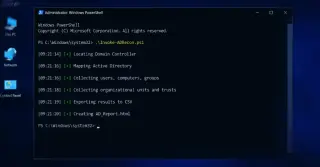
Cybersecurity researchers flag a June 2026 intrusion where attackers used an AI-generated, vibe-coded PowerShell script to enumerate a Windows Active Directory after gaining RDP access to a domain-joined server. The tool locates the Domain Controller, maps AD users, computers, groups, OUs, and trusts, creates a staging area, and exports results (including AD_Report.html). Attackers then deployed s5cmd and SharpShares to locate data repositories, exported data to CSV, archived it, and exfiltrated it to a remote server. The incident highlights how AI-assisted tooling lowers entry barriers and accelerates reconnaissance, aligning with established smash-and-grab playbooks, while a related Sygnia report notes AI-enabled cloud intrusions can scale quickly using credentials and cloud weaknesses rather than new malware.

Wipe Copilot from Windows 11: Two Practical Methods
technology5 months ago

Wipe Copilot from Windows 11: Two Practical Methods

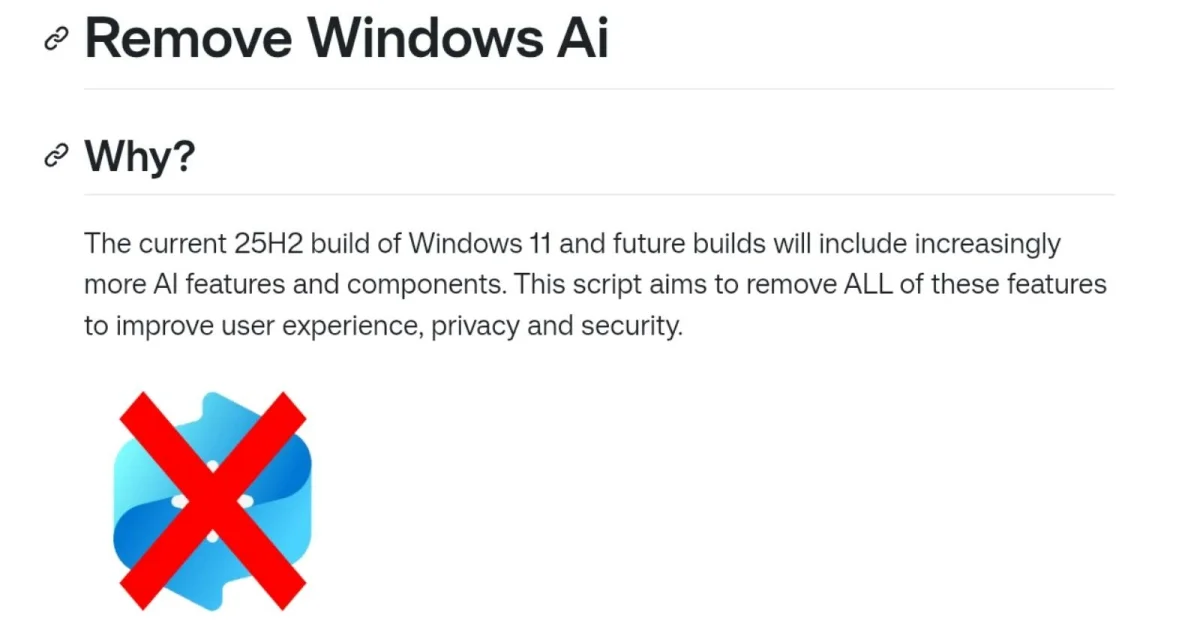
Lifehacker outlines two ways to remove Microsoft Copilot from Windows 11: (1) use the Group Policy Editor (gpedit.msc) to disable Copilot or turn off Windows Copilot, a feature available on Windows 11 Pro or higher and only if Copilot hasn’t been launched in the last 28 days; (2) run a GitHub script from RemoveWindowsAI in PowerShell to remove Copilot and other AI features from all apps, with caveats about antivirus blocks and reviewing the script first. Microsoft has begun dialing back Copilot, but a complete off switch isn’t perfect yet.

Preparing Windows for the June 2026 Secure Boot Certificate Update
technology6 months ago

Preparing Windows for the June 2026 Secure Boot Certificate Update

Secure Boot certificates expire in June 2026. Check if your PC already has updated certificates with a PowerShell check, then install any pending Windows updates and OEM firmware updates. If firmware updates aren’t available, use Microsoft’s registry-based workaround and reboot as directed. Windows 10 users may need Extended Security Updates to receive the update.

DNS Channel Used to Deliver PowerShell Payload in ClickFix Attacks
technology9 months ago

DNS Channel Used to Deliver PowerShell Payload in ClickFix Attacks

A new ClickFix variant uses a DNS-based delivery channel: victims are prompted to run nslookup in the Run dialog, querying an attacker-controlled DNS server. The DNS response contains a PowerShell payload that, when executed, downloads a ZIP with a Python runtime and malware scripts, establishes persistence, and installs ModeloRAT. This marks the first known use of DNS for staging and delivering ClickFix payloads, enabling on-the-fly payload updates and blending with normal DNS traffic instead of relying on HTTP.

GitHub Script Lets Windows 11 Users Turn Off Built-In AI
technology10 months ago

GitHub Script Lets Windows 11 Users Turn Off Built-In AI

A PowerShell script called Remove Windows AI, released on GitHub by Zoicware, enables Windows 11 users to disable built-in AI features such as Copilot, Recall, and Windows Studio Effects for privacy or a cleaner OS. The script is actively maintained and updated to remove newly added AI components, with users encouraged to report missing keys or features for future updates.

WinRAR SFX Archives Enable Undetected PowerShell Execution
cybersecurity3 years ago

WinRAR SFX Archives Enable Undetected PowerShell Execution

Hackers are using WinRAR self-extracting archives to plant backdoors without triggering security agents on target systems. The SFX files contain harmless decoy files and are password-protected. The attackers add malicious functionality to the SFX files, allowing them to run PowerShell, Windows command prompt, and task manager with system privileges. This type of attack is likely to remain undetected by traditional antivirus software. Users are advised to use appropriate software to check the content of SFX archives and look for potential scripts or commands scheduled to run upon extraction.

Undetectable PowerShell Execution via WinRAR SFX Archives
cybersecurity3 years ago

Undetectable PowerShell Execution via WinRAR SFX Archives

Hackers are using WinRAR self-extracting archives to plant backdoors without triggering security agents on target systems. The SFX files contain harmless decoy files and are password-protected. The attackers add malicious functionality to the SFX files, allowing them to run PowerShell, Windows command prompt, and task manager with system privileges. This type of attack is likely to remain undetected by traditional antivirus software. Users are advised to use appropriate software to check the content of SFX archives and look for potential scripts or commands scheduled to run upon extraction.

"Microsoft addresses BitLocker vulnerabilities with PowerShell scripts"
cybersecurity3 years ago

"Microsoft addresses BitLocker vulnerabilities with PowerShell scripts"

Microsoft has released PowerShell scripts to fix a BitLocker security bypass vulnerability in the Windows Recovery Environment (WinRE) for Windows 10 and 11 systems. The vulnerability could allow access to encrypted data in storage devices. The scripts enable enterprises to automatically update WinRE images to protect Windows devices. The flaw can only be exploited on systems with the winre.wim on the recovery partition.