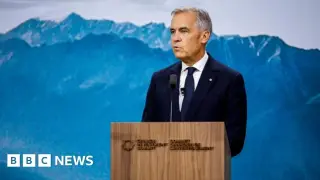
Canada is positioning itself as a safe harbour for global investors, with Mark Carney inviting trillions of assets to fund growth in defence, energy, AI and infrastructure and proposing privatizing major airports to finance transport projects, while seeking to diversify investment away from the US toward Europe, Asia and the Middle East; the Toronto summit features private sessions and panels, amid protests and calls for policy reforms.
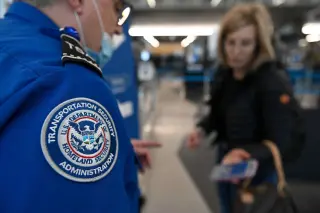
Decades after 9/11, the U.S. is easing some traveler restrictions (shoes can stay on; liquids rules persist) while expanding screening tech and programs. New scanners let travelers leave liquids in their bags, and options like TSA PreCheck and Clear offer expedited screening. TSA also launched a Gateside program allowing eligible travelers to access gate areas without a boarding pass at 13 airports, though not universally available and applications take a few days. The agency scrapped its TSA Gold+ privatization plan in favor of a screening-partnership approach, amid ongoing security challenges from AI, cybersecurity, and drones.
The Trump administration is weighing a land swap that would let the developer Kingsbarn Realty Capital use a portion of Yosemite National Park land to build a road into an 83-acre parcel for a proposed village, a move critics say would privatize public land and erode park integrity. The plan, which would shorten access to the site but still leave a substantial drive to Yosemite Valley, is described by Kingsbarn as benefiting the environment, while officials insist no final decision has been made and any exchange would require federal laws, environmental reviews, and public notification. Opponents including Democratic lawmakers, conservation groups, and Yosemite workers’ unions condemned the idea as a dangerous precedent, with California Gov. Gavin Newsom, climber Alex Honnold, NPCA, and Rep. Jared Huffman among those voicing opposition; Kingsbarn contends the project would bring environmental net positives and infrastructure benefits. The episode fits a broader pattern of privatization efforts the administration has pursued in other parks.
TSA is scrapping the Gold+ privatized screening concept in favor of an 'evolved' Screening Partnership Program as part of Administrator Cummins’ Horizon 25 Strategy to modernize checkpoints and broaden private partnerships (and bolster PreCheck). Tampa International Airport decided not to adopt Gold+, opting to keep TSA officers, while other airports had considered the plan. The shift follows ongoing privatization push debates, with labor groups weighing in and Gold+ procurement already underway before the pivot.
FIFA unveiled a plan to run the World Cup and related events through a private entity, FIFA Forward Enterprise (FFE), funded by private investors and valued at about $20 billion. The scheme would raise up to $4.2 billion for development, with investors including Thrive Eternal founded by Joshua Kushner, amid scrutiny given Kushner-Trump ties. UEFA condemned the move, arguing football governance cannot be sold, while FIFA would retain control of regulations and competitions; 211 member federations could access up to $20 million through a new FIFA Fast-Forward program. The proposal echoes earlier privatization efforts and has implications for future World Cups and governance.”
Campaigners led by the Jamaica Beach Birthright Environmental Movement (Jabbem) are filing five court cases to prevent privatization of public beaches including Mammee Bay, Little Dunn’s River, Blue Lagoon, Bob Marley Beach and Flankers/Providence, arguing the 1956 Beach Control Act and the Narra Act erode long-held public access and threaten livelihoods. The government says access should be balanced with economic benefits and resilience, pointing to corridors for the sea and a proposed beach access policy, while critics warn that new laws could grant developers “qualified rights” and weaken oversight.
Sen. Ted Cruz publicly floated the idea of privatizing Social Security by expanding private accounts, a stance associated with GOP reform efforts linked to former President Trump. The remarks are framed as exposing a long-held GOP position on restructuring the program, drawing support from conservatives while raising concerns among critics about guarantees and solvency. The piece places Cruz’s comments in the broader context of ongoing Republican discussions on Social Security reform.
Sen. Ted Cruz on a panel at the Milken Institute described the so‑called Trump accounts for children—created under the One Big Beautiful Bill Act that lets parents open tax‑advantaged accounts—as Social Security personal accounts, drawing a direct line to privatizing or reforming the retirement program and citing Australia’s superannuation model. He argued conservatives have pursued this approach for decades and predicted a growing constituency once parents see their kids’ Trump accounts grow, potentially pressuring a redesign of payroll taxes. The White House characterizes the accounts as a wealth-building supplement rather than privatization, while noting Social Security faces funding challenges with the trust fund set to run out by 2034.
At the Milken Institute Global Conference, Sen. Ted Cruz framed Trump’s new accounts as “Social Security personal accounts,” suggesting a path to privatize Social Security by diverting payroll taxes into stock-based accounts for future generations—a view echoed by some conservatives and investors but criticized by advocates as a backdoor privatization; White House and Treasury officials say the accounts are additive and do not change Social Security.
HSBC reported 2025 pre-tax profit of $29.91 billion on revenue of $68.27 billion, beating estimates with RoTE of 13.3% and a target of 17%+ for 2026–2028. The results come after the privatization of Hang Seng Bank completed Jan 26 and are expected to yield synergies gradually. Q4 pre-tax profit rose to $6.8 billion and revenue to $16.4 billion. The bank is pursuing cost efficiency, signaling about 8% payroll cost reductions and a 15% cut in managing-director roles, while potential performance-linked bonus changes are being discussed to weed out underperformers.
USPS opened fiscal 2026 with a $1.25 billion first-quarter loss, but first-class mail delivery improved to 87.3% on time. APWU President Jonathan Smith argues USPS must be affordable and offer broader services (e.g., postal banking, EV charging, copies) to win back customers, while opposing privatization and pushing for prudent staffing and service improvements amid ongoing reform discussions and AI concerns.
Less than 1% of Jamaica's coastline is accessible to locals due to privatization driven by laws and private developments, leading to community displacement and loss of cultural ties; residents and activists are fighting for the repeal of laws to restore public access, while responsible tourism advocates support visiting public beaches and supporting local businesses.
Pakistan's government sold a majority stake in its national airline, PIA, for $482 million to a consortium led by Arif Habib Limited, amid ongoing debates over transparency, military involvement, and the airline's future prospects, as part of a broader effort to privatize loss-making state enterprises under IMF pressure.
The US Postal Service is facing severe financial difficulties, losing over $100 billion since 2007, with potential privatization and service cuts on the horizon, despite the vital role postal workers play in communities and their historical significance.