Tag

Rotorcraft

All articles tagged with #rotorcraft

Dragonfly to Titan: NASA's Flying Lab Heads for a Methane-World
science10 days ago

Dragonfly to Titan: NASA's Flying Lab Heads for a Methane-World

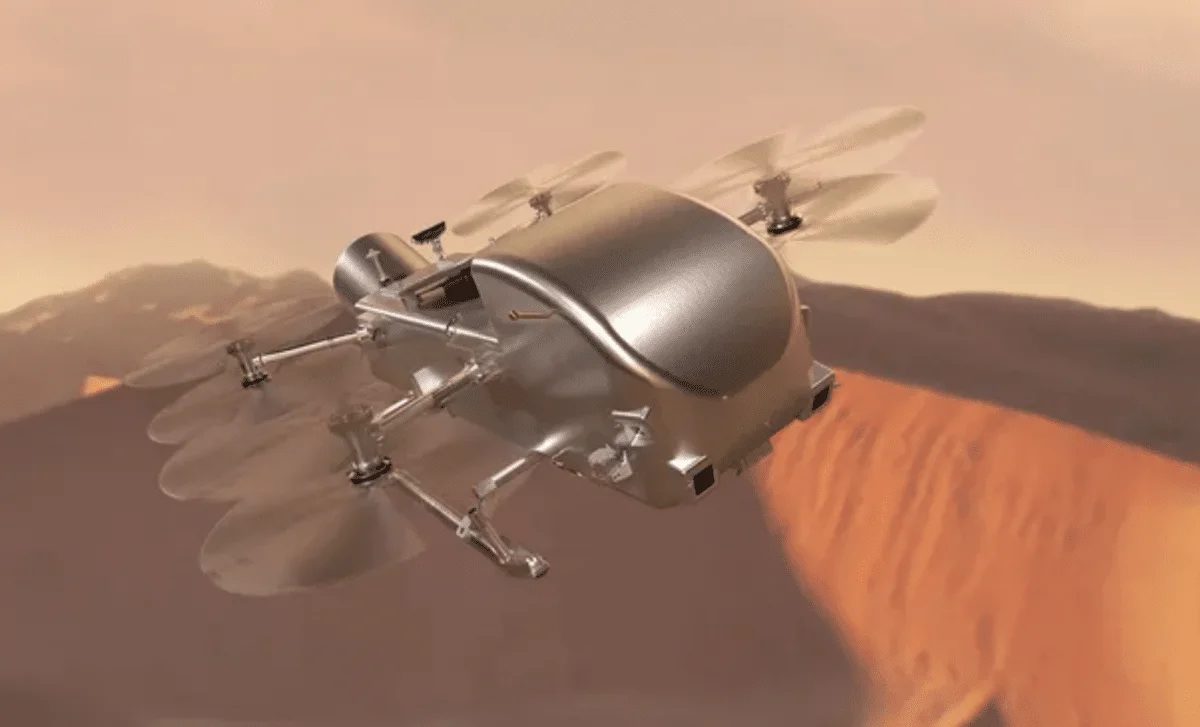
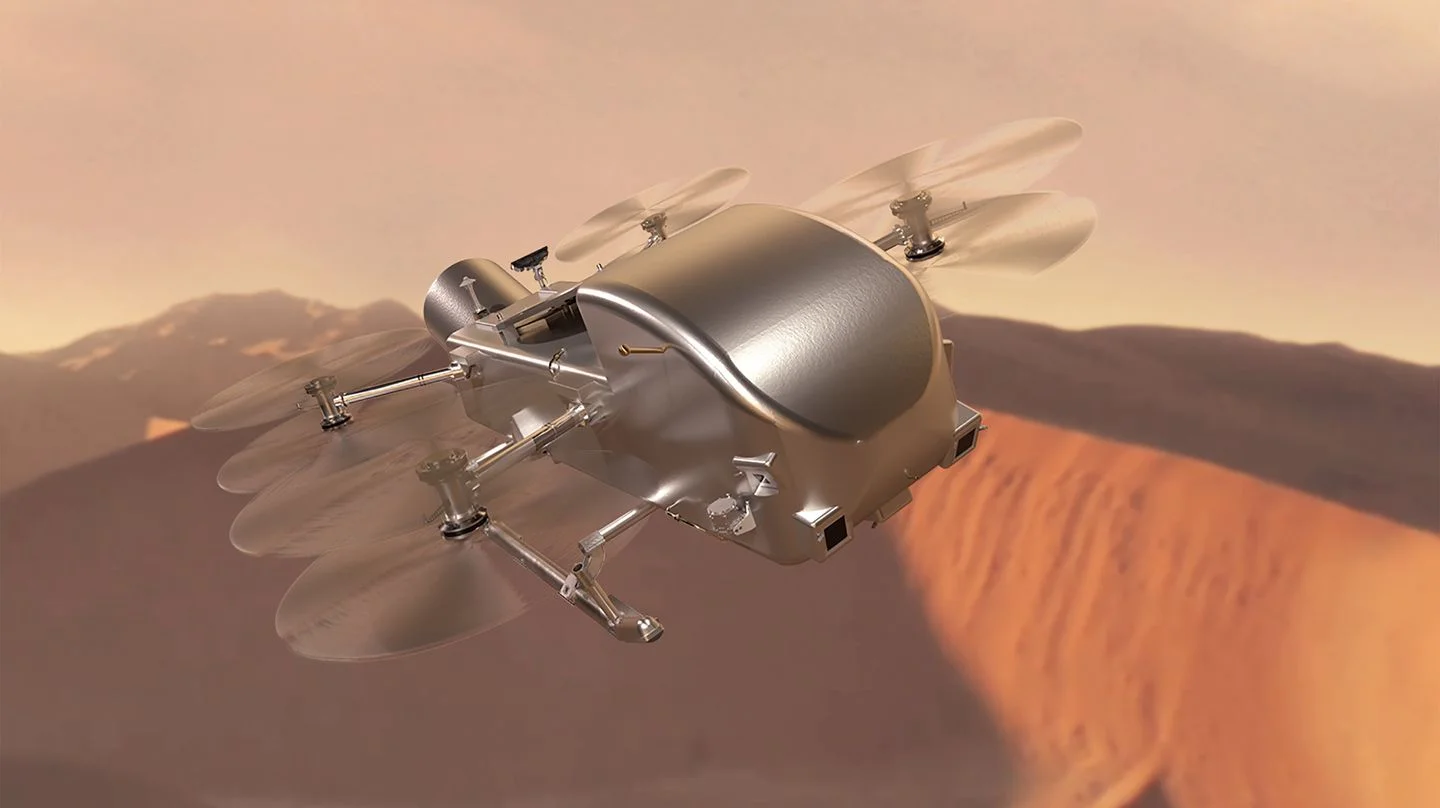
NASA’s Dragonfly, a nuclear-powered rotorcraft designed to fly Titan’s dense, methane-rich atmosphere, is set for a July 2028 Falcon Heavy launch from Kennedy Space Center. After a six-and-a-half-year cruise, it will descend to Titan in late 2034 to explore dunes, craters and the moon’s lakes and seas, using a suite of instruments to study complex organics and Titan’s habitability rather than searching for life. The mission will fly between 20–30 sites across about 115 kilometers, autonomously handling entry, descent and multiple sorties on a world with methane rain and rivers. The schedule has evolved due to funding, pandemics, and supply-chain factors, with the date described as “no earlier than July 2028.”

Ingenuity: Mars' Tiny Helicopter That Outlived Its 30‑Day Plan
science25 days ago

Ingenuity: Mars' Tiny Helicopter That Outlived Its 30‑Day Plan

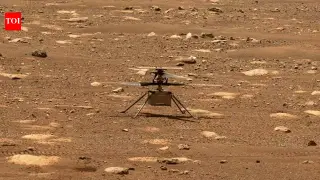
NASA's Ingenuity began as a 30-sols tech demo on Mars but far exceeded expectations, completing 72 flights, traveling over 17 km, and supporting Perseverance for 1,004 sols—until a damaged rotor blade grounded it in January 2024, with NASA announcing the mission's end on Jan 25, 2024. The mission's remarkable success reshaped future planetary exploration and inspired rotorcraft concepts for the Moon, Mars, and Titan.

Ingenuity's Afterlife: Mars' Tiny Helicopter Becomes a Quiet Weather Recorder
space1 month ago

Ingenuity's Afterlife: Mars' Tiny Helicopter Becomes a Quiet Weather Recorder

NASA's Ingenuity, built to complete five flights over 30 Martian days, ended up flying 72 times across nearly three years before a hard landing shattered its rotor blades. Now grounded, it continues to wake each Martian day, inspect itself, photograph the surface, and log temperatures as a weather-like memory bank, with no live link to Earth and data stored for future retrieval.

NASA advances Dragonfly, a nuclear-powered Titan drone aimed for 2028
space-exploration5 months ago

NASA advances Dragonfly, a nuclear-powered Titan drone aimed for 2028

NASA has begun building and testing Dragonfly, a nuclear-powered rotorcraft that will explore Titan’s atmosphere and surface. After months of integration and power/instrument testing at the Johns Hopkins Applied Physics Laboratory, Dragonfly is on track for a 2028 launch aboard a SpaceX Falcon Heavy, with further system testing at Lockheed Martin and Kennedy Space Center to study Titan’s chemistry, geology and potential clues to life.

Flight Engineers Support NASA's Dragonfly Mission
science7 months ago

Flight Engineers Support NASA's Dragonfly Mission

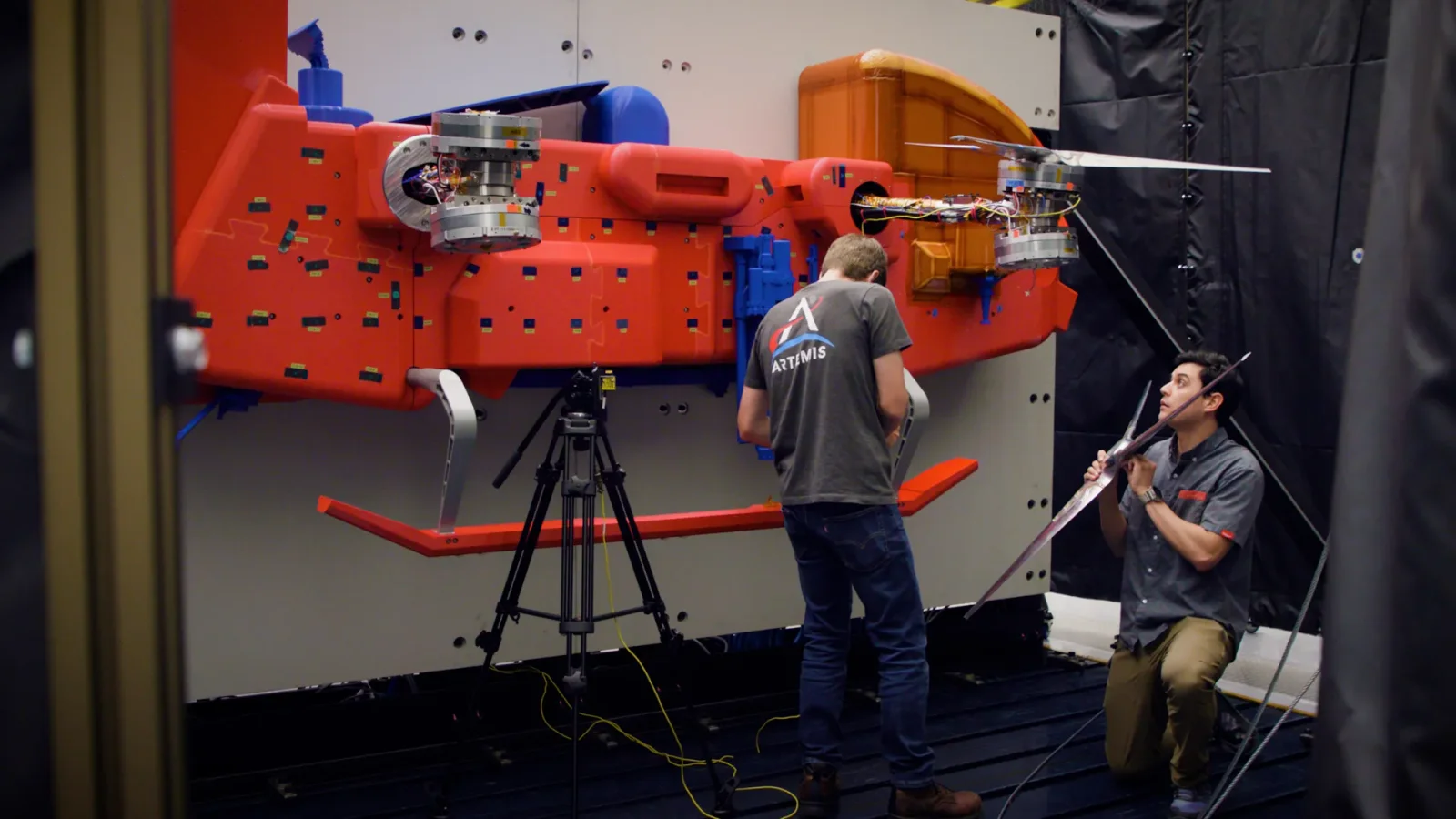
NASA's Dragonfly mission, set to launch in 2028, involves a car-sized rotorcraft designed to explore Saturn's moon Titan. Extensive testing, including aerodynamic and structural assessments at NASA's Langley Research Center, has validated the rotor design, which is crucial for the mission's success. The project is a collaborative effort involving multiple institutions, aiming to study Titan's diverse environments and potentially find conditions suitable for life.

NASA's Mars Helicopter: Pushing Boundaries and Inspiring Future Flight
space-exploration2 years ago

NASA's Mars Helicopter: Pushing Boundaries and Inspiring Future Flight

NASA has conducted dual-planet aircraft tests, with advanced rotor testing on Earth and record-breaking flights by the Ingenuity Mars Helicopter. This pioneering work in rotorcraft technology is enhancing our understanding of flight in different atmospheric conditions, marking a significant step in Mars exploration. Engineers tested a new rotor for next-generation Mars helicopters on Earth, while Ingenuity achieved new altitude and airspeed records on Mars. The tests aim to improve the performance and capabilities of future Mars helicopters, with the rotor blades reaching near-supersonic speeds during testing. Ingenuity has exceeded expectations, flying 66 times and achieving higher speeds, altitudes, and slower landing speeds than originally designed. Future plans include high-speed flights to gather data for fine-tuning rotorcraft models on Mars.

"Mars Helicopter Aims for Speed Record in Upcoming Attempt"
space2 years ago

"Mars Helicopter Aims for Speed Record in Upcoming Attempt"

NASA has scheduled the 62nd flight of the Ingenuity Mars Helicopter with the goal of achieving a new speed record for rotorcraft on Mars. Originally planned for only five flights, Ingenuity has continued to fly successfully for over two years. The upcoming flight is expected to surpass the previous top speed of 8m/sec and will cover a distance of 268 meters in 119.3 seconds. This comes after Perseverance, another Mars rover, recently set its own speed record by moving 347.7 meters in a single day without human intervention.

aviation3 years ago

Turkish Aerospace Unveils T925 Heavy Helicopter at Paris Air Show.

Turkish Aerospace has unveiled a full-scale mock-up of its T925 11.5-metric-ton heavy rotorcraft at the Paris Air Show. The T925 is part of the company's growing rotorcraft family, which includes the T625 Gokbey twin-engine utility helicopter and two attack helicopters. The T925 is expected to be used for both military and commercial purposes, including passenger transport, offshore energy support, search and rescue, and VIP tasks. The helicopter will likely use the same dynamic systems and engines as the ATAK 2 prototype, which is currently using the Motor Sich TV3-117 turboshaft in flight-testing.