Social anxiety affects up to 12% of people, often worsening during university due to isolation and self-focus. Experts advise breaking cycles of self-monitoring and safety behaviors through cognitive behavioral therapy and gradual exposure.
Professor Biao Xiang, a 54-year-old anthropologist, has become an unlikely celebrity among young Chinese people who are grappling with intense economic and social pressure. His popularity stems from his candid discussions about anxiety, job insecurity, and the failure of traditional success metrics. While China's economy has grown rapidly, Gen Z faces high competition, limited job prospects, and a sense of disillusionment. Xiang’s lectures, which address these 'pain points' of the times, resonate with a generation that feels squeezed by systemic demands. He argues that society is at a turning point, where individuals must seek meaning beyond competitive exams and stable jobs, offering a rare public voice on youth discontent in a heavily censored environment.
A small study from Radboud University found that dual-site transcranial alternating current stimulation can improve emotional action control in individuals with high social anxiety. By synchronizing rhythmic activity between the lateral prefrontal cortex and sensorimotor cortex, the intervention helped participants override automatic avoidance behaviors during a joystick task. The findings, published in The Journal of Neuroscience, suggest a potential adjunct to exposure therapy, though individual variability and the small sample size limit immediate clinical application.
Young adults are increasingly replacing alcohol with prescription medications like pregabalin and beta-blockers to manage social anxiety. While these drugs offer a perceived 'cleaner' alternative without hangovers, experts warn that unsupervised, high-dose use can lead to severe dependency, withdrawal symptoms, and life-threatening risks. This trend, fueled by social media influencers and the 'sober generation' movement, highlights a growing crisis in mental health among Generation Z, who are experiencing higher rates of anxiety than previous generations.
A study of 872 Chinese university students reveals that co-occurring social anxiety and vulnerable narcissism, specifically self-centeredness, predicts higher aggression. While anxiety typically leads to withdrawal, this combination shifts behavior toward hostile responses, challenging the view that anxiety is purely inhibitory.
AVPD is a long-standing pattern of extreme fear of rejection and social inhibition that leads people to avoid social situations and relationships. It differs from general social anxiety in its pervasiveness across most life areas, not just specific scenarios. Signs include deep self-doubt, feelings of inadequacy, and sensitivity to criticism, which reinforce avoidance. Causes likely involve a mix of low self-esteem, childhood experiences, and genetics. Treatment focuses on psychotherapy (such as CBT or psychodynamic therapy) to challenge negative beliefs, build self-esteem, and gradually reduce avoidance, with medications for anxiety or depression as needed.
New research shows that framing first impressions as stable—a fixed mindset—can reduce the cognitive load of social interactions and improve performance in high-stress social tasks among socially anxious individuals, though effects vary and long-term benefits are uncertain.
New research shows that social anxiety in some adolescents can manifest as aggression and impulsivity rather than withdrawal. In a study of 298 teens, latent profile analysis revealed three groups: a well-adjusted majority, a prototypical high-anxiety group with vulnerable narcissism, and an atypical aggressive-impulsive group with high vulnerable and grandiose narcissism (more common in boys). The findings emphasize heterogeneity in social anxiety and suggest the need for longitudinal studies and tailored interventions beyond the usual shy-withdrawal model.
New research suggests that the gut microbiome may play a role in social anxiety disorder, with transplant experiments in rats showing that bacteria from adolescents with social anxiety induce anxiety-like behaviors and brain changes, highlighting a potential biological link via the gut-brain axis.
A meta-analysis found that individuals with insecure affective attachment are more likely to experience social anxiety, highlighting the importance of attachment patterns in mental health.
The article explains that when someone avoids eye contact, it is often due to psychological reasons such as social anxiety, deception, shame, cultural differences, emotional overwhelm, distraction, need for mental processing, or emotional boundaries, rather than disinterest or rudeness, encouraging more understanding and compassion in interactions.
A study finds that socially anxious individuals are better at detecting subtle signs of anger in dynamic facial expressions, with increased brain activity during later processing stages, highlighting their heightened sensitivity to social threats.
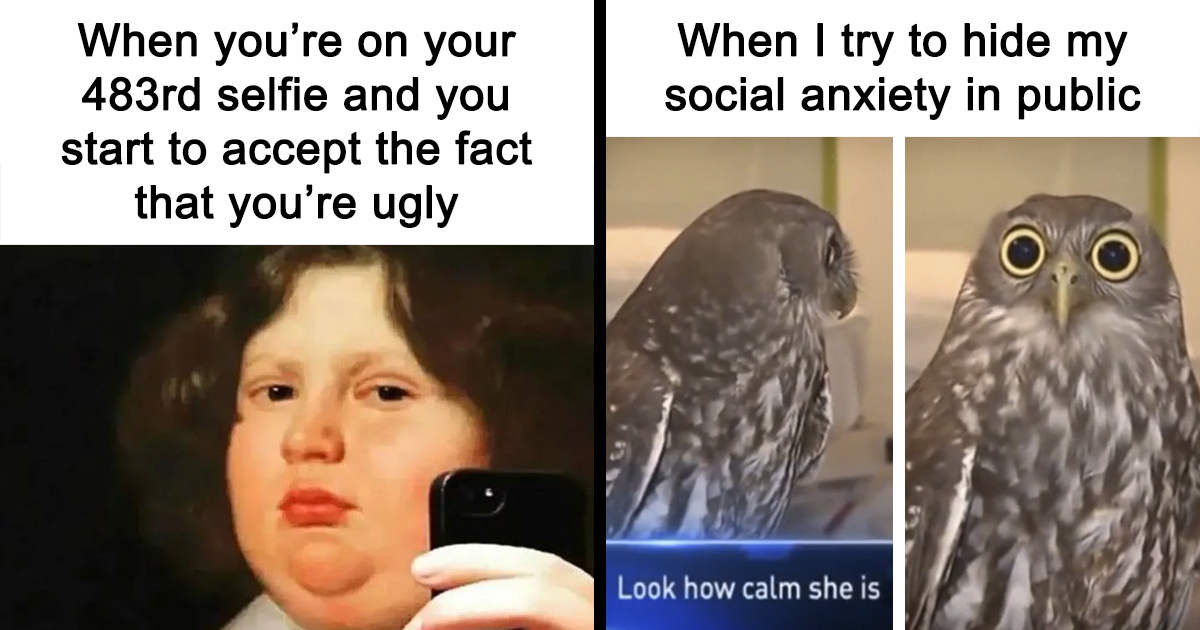
The article discusses social anxiety, its symptoms, and effective coping strategies, emphasizing the role of humor and memes in helping individuals feel less alone and manage their condition better. It features insights from Arlin Cuncic and highlights the benefits of laughter and support groups in alleviating social anxiety.
Long summer weekends can exacerbate feelings of loneliness, especially for those without plans. Experts suggest mapping out your weekend with activities that genuinely make you happy, rather than succumbing to societal pressures. Creating new traditions and focusing on self-care can help alleviate the anxiety and sadness associated with these holidays.
A study on college students reveals a significant link between social anxiety and celebrity worship, with mobile phone addiction and socioeconomic status playing nuanced roles. The findings suggest that celebrities may serve as emotional refuge for those experiencing social anxiety, with mobile phones mediating the relationship. Individuals from higher socioeconomic backgrounds are less likely to develop mobile phone addiction and intense celebrity worship. The study's cross-sectional design leaves open the question of causality, highlighting the need for future longitudinal research.