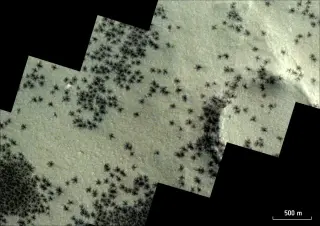
Mars spiders finally revealed: CO2 ice and soil pores sculpt the Martian araneiform terrain
NASA-led work confirms Mars’ seasonal carbon-dioxide ice drives the spider-like araneiform terrain; 2024 lab experiments reproduced CO2 condensation, sublimation and plume formation that carve the features, while a 2026 follow-up shows soil grain size and moisture beneath the ice influence crack networks and plume vigor. Mature spiders are not yet directly observed, but the findings suggest these processes could record Mars’ wetter past, with results published in The Planetary Science Journal.