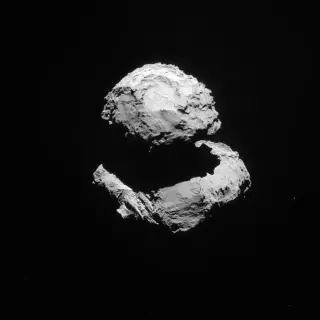
Sunlit comet dust masquerades as stars, sending Rosetta into safe mode near 67P
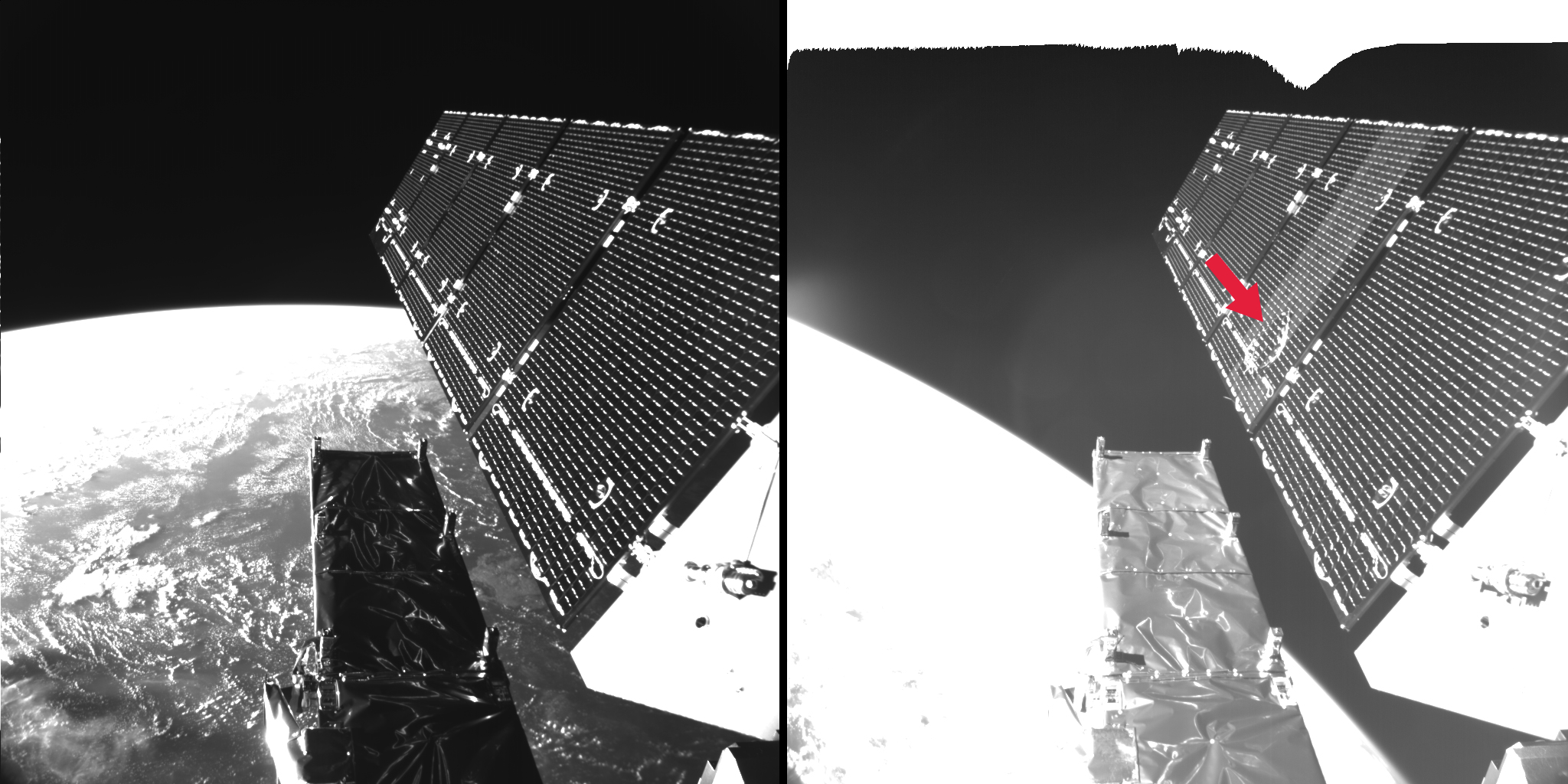
During a 2015 close approach to comet 67P/Churyumov–Gerasimenko, Rosetta’s star trackers mistook sunlit dust grains for bright stars, degrading attitude estimates, causing a day-long loss of reliable sky references, a drift of the high-gain antenna from Earth, and a safe-mode sequence that shut down science instruments. Ground controllers later noted the issue was an optical hazard—false positives rather than real debris—prompting replanned flybys and adjustments to keep Rosetta at safer distances. A similar false-star event occurred again in 2016 before the mission ended with a controlled descent to the comet, illustrating how transient optical effects near an active nucleus can challenge navigation even when the environment is not physically destructive.