Tag

Stellar Companions

All articles tagged with #stellar companions

Dust Veil Explains Why Hubble Missed Betelgeuse’s Companion Star
astronomy1 month ago

Dust Veil Explains Why Hubble Missed Betelgeuse’s Companion Star

New research suggests that Betelgeuse’s companion star is hidden from Hubble’s ultraviolet view not because it is too faint, but because it is obscured by a dusty wake stirred up as it orbits through the red giant’s extended atmosphere. This explains the discrepancy between ground-based detections and Hubble’s non-detections.
VLT Imaging Confirms Betelgeuse's Elusive Companion, Siwarha
astronomy3 months ago

VLT Imaging Confirms Betelgeuse's Elusive Companion, Siwarha

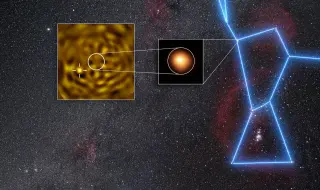
Astronomers have captured the clearest image yet of Betelgeuse B, a companion star to the famous red supergiant. Using the Very Large Telescope in Chile, researchers detected a star with two to three times the mass of the Sun, resolving a century-long debate about the existence of a binary system. While the discovery is strong, scientists plan further observations to confirm the gravitational binding and orbital motion of the pair.

"Spider Pulsars: Stellar Destruction Captured by Chandra"
astronomy3 years ago

"Spider Pulsars: Stellar Destruction Captured by Chandra"

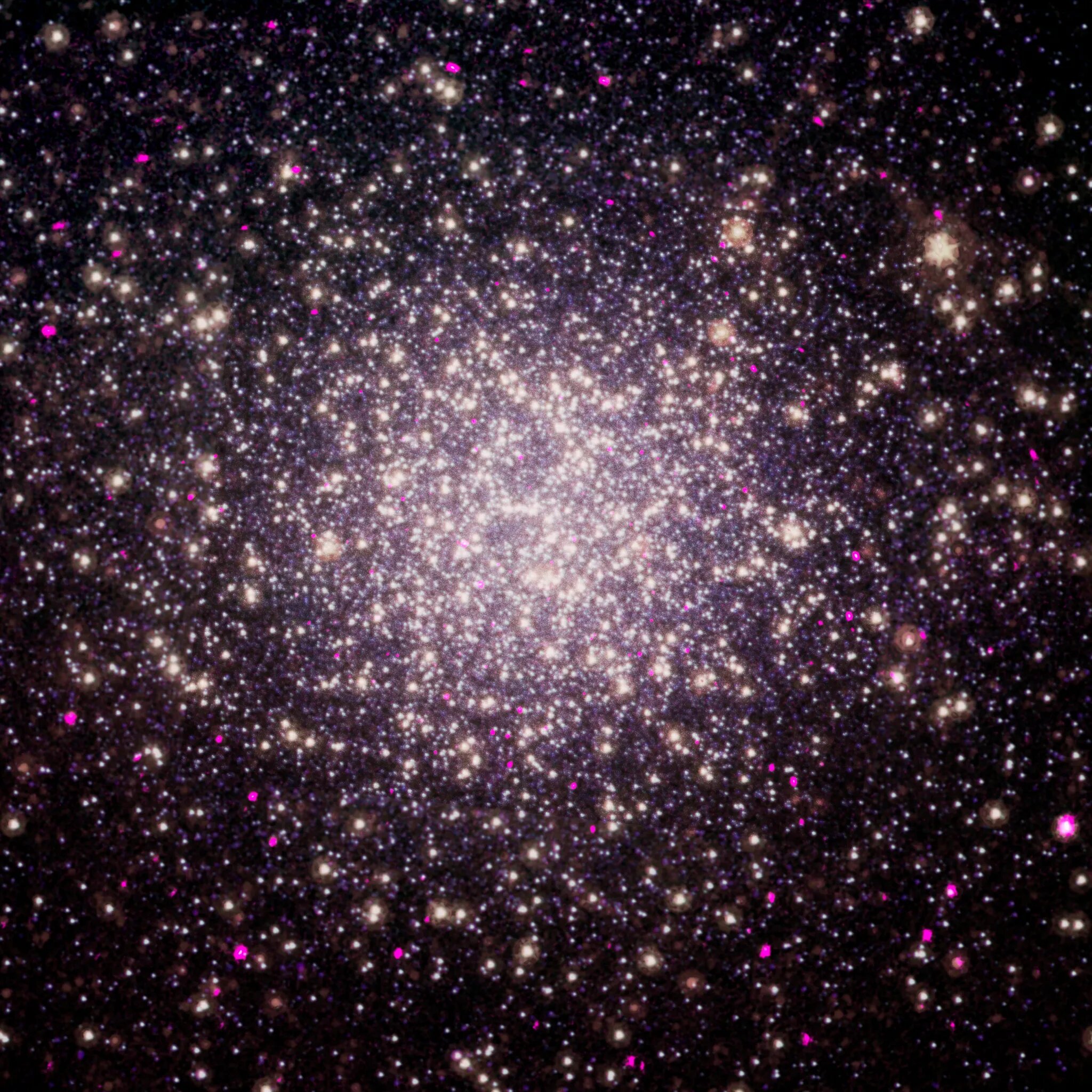
NASA's Chandra X-ray Observatory has captured data revealing that spider pulsars, a type of millisecond pulsar, are destroying their companion stars through winds of energetic particles. Astronomers discovered 11 millisecond pulsars emitting X-rays in the globular cluster Omega Centauri, with five of them being spider pulsars. The study found a correlation between X-ray brightness and the mass of the companion star, confirming previous work. The close proximity of the companion stars to the pulsars causes significant damage due to the energetic particles. Chandra's sharp X-ray vision is crucial for studying these pulsars in globular clusters.

Unveiling the Mystery of 'Ghost Stars' in the Milky Way's Core
astronomy3 years ago

Unveiling the Mystery of 'Ghost Stars' in the Milky Way's Core

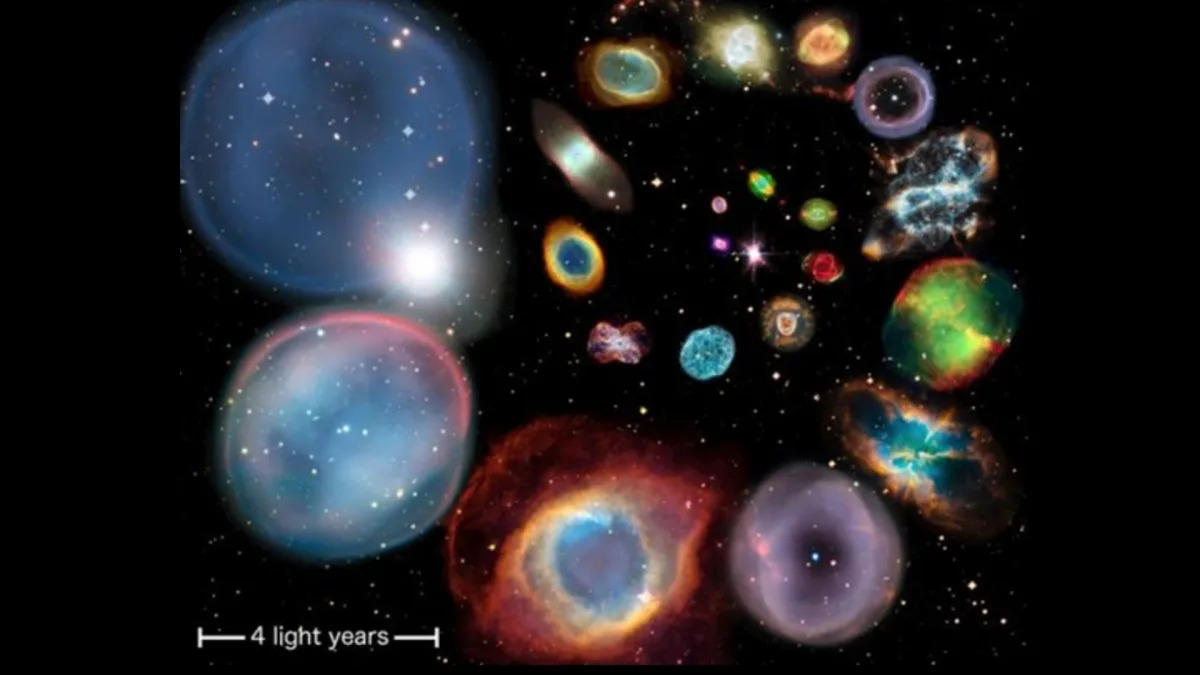
Scientists have discovered the reason behind the mysterious alignment of planetary nebulas in the galactic bulge at the center of the Milky Way. Using images from the Hubble Space Telescope, researchers found that the alignment is only present in planetary nebulas with a close stellar companion. The alignment is absent in planetary nebulas without a companion star, suggesting that the rapid orbital motion of the companion star creates the alignment. This finding provides insight into the complex process of star formation in the Milky Way's bulge region.

Hubble Captures Cosmic Chaos at Pegasus Supernova Afterparty
astronomy3 years ago

Hubble Captures Cosmic Chaos at Pegasus Supernova Afterparty

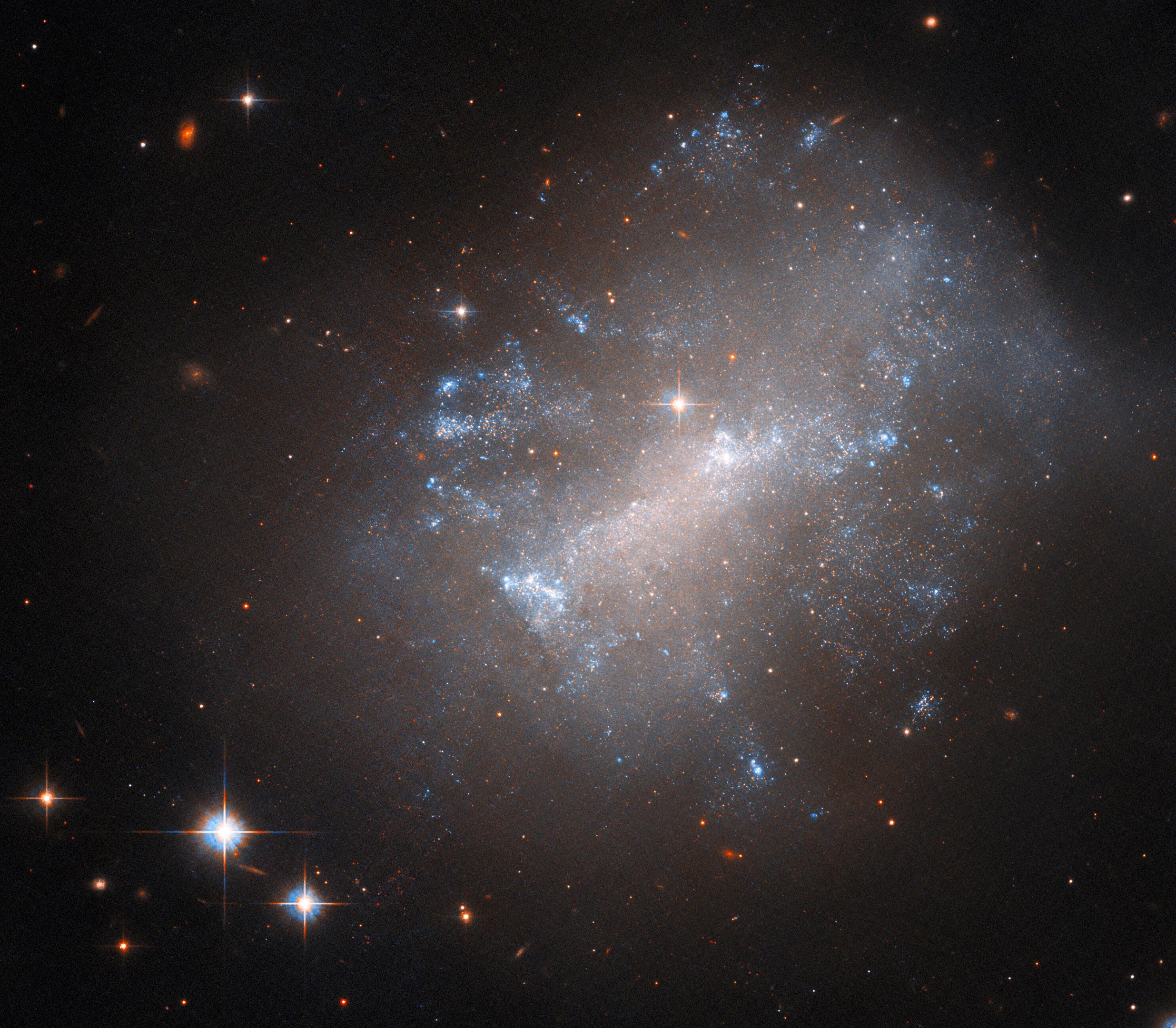
The Hubble Space Telescope has captured an image of the irregular galaxy NGC 7292 in the Pegasus constellation, which is known for its stretched-out core and classification as a low surface brightness galaxy. The study focuses on the aftermath of its supernova, SN 1964H, to better understand Type II supernovae and the potential surviving stellar companions. Astronomers hope to learn more about the diversity of Type II supernovae they have observed by scrutinizing the aftermath and remaining nearby stars of a large sample of historical Type II supernovae.