Tag

Orion

All articles tagged with #orion

NASA projects face delays as civil workforce shrinks
civil1 month ago

NASA projects face delays as civil workforce shrinks

A GAO report released July 23 finds NASA's civil-service headcount has fallen about 22% over the past year, affecting 25 of 36 major projects and potentially delaying work; Orion lost roughly 10% of civil servants and SLS about 20%, with Goddard hardest hit at 34% and several centers facing staffing gaps that could become staffing risks, though cost and schedule have not dramatically worsened yet. The agency reported $478.2 million in net overruns concentrated in SLS Block 1B and Orion, and noted possible bigger impacts in FY2027 funding; NASA is pursuing contractor-to-civil-service conversions and a new NASA Force program to shore up critical skills like aerospace, mechanical, electrical engineering, IT, and cybersecurity.

Artemis III aims to choreograph three spacecraft and four astronauts in a two-week Earth orbit
space-exploration1 month ago

Artemis III aims to choreograph three spacecraft and four astronauts in a two-week Earth orbit

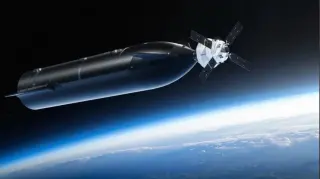
NASA’s Artemis III will be its most complex flight yet: four astronauts aboard Orion on an SLS rocket will rendezvous with two private lunar landers—SpaceX’s Starship and Blue Origin’s Blue Moon—in low Earth orbit over about two weeks. The mission requires cross-pad launches from Kennedy Space Center and Cape Canaveral, multiple in‑orbit docking checks, and an EVA-style test aboard Blue Moon’s lander before Orion returns to Earth with a Pacific splashdown. The objectives test critical interoperability and systems ahead of Artemis IV’s crewed lunar landing, while stressing coordination among NASA, SpaceX, and Blue Origin and paving the way for expanded lunar operations in 2028.

Artemis III advances toward 2027 launch as SLS stack begins assembly
space-exploration1 month ago

Artemis III advances toward 2027 launch as SLS stack begins assembly

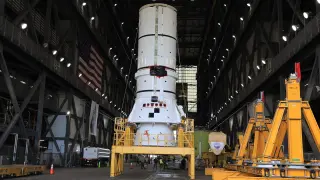
NASA has begun stacking the Space Launch System for Artemis III at Kennedy Space Center, with a solid rocket booster segment delivered to the Vehicle Assembly Building. The two SRBs, plus the core stage, will provide about 7.2 million pounds of liftoff thrust, delivering more than 75% of the rocket’s power. Artemis III, targeting a mid-to-late 2027 launch, will send four astronauts aboard Orion to rendezvous and dock with private lunar landers (Blue Moon and SpaceX’s Starship-based system) to test rendezvous and docking ahead of future lunar missions. The core stage arrived at the VAB in May without its engine section; the engine will be attached later. NASA aims to complete a wet dress rehearsal before year’s end as assembly continues.

Artemis II’s lunar flyby: capturing history from 250,000 miles away
space1 month ago

Artemis II’s lunar flyby: capturing history from 250,000 miles away

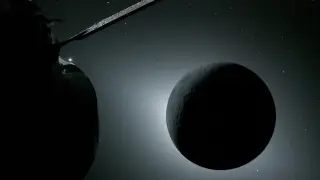
Live Science spoke with Artemis II lead INCO Chris White about coordinating hundreds of camera commands for Orion’s close lunar flyby, the 40‑minute loss of signal behind the Moon, and the meticulous scripting that produced dramatic photos—including eclipse‑style imagery showing the Moon, Earth, and planets like Venus, Saturn and Mars. White describes the Moon “looking wrong” from the far side angle, the need to tweak exposure to reveal color nuances, and the sense of relief when ground contact returned with the footage the next day. He emphasizes it was a true team effort across flight control, engineering, and imagery, and says he plans to stay involved with Artemis III.

Webb captures newborn stars sculpting Orion’s OMC-2 cloud
space2 months ago

Webb captures newborn stars sculpting Orion’s OMC-2 cloud

A new James Webb Space Telescope image reveals OMC-2, a dense star-forming region in the Orion Molecular Cloud just south of the Orion Nebula, behind the Sword of Orion. The infrared view peers through gas and dust to show protostars at multiple formation stages, with jets carving glowing ridges through the cloud—a vivid snapshot of stellar birth about 1,280 light-years away.

Sea Landings vs Ground Landings: The Evolving Art of Returning Spacecraft
technology2 months ago

Sea Landings vs Ground Landings: The Evolving Art of Returning Spacecraft

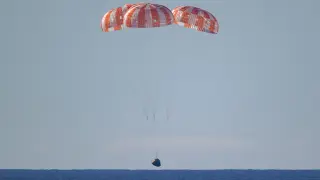
NASA’s Orion relies on ocean splashdowns to simplify recovery and cushion impact, a method chosen over precise land landings due to technical and safety trade-offs; Russia’s Soyuz uses a ground touchdown with a last-second retrorocket burst, trading weight and crew capacity for a firm, flat landing. Boeing’s Starliner is experimenting with ground landings using inflatable airbags, while SpaceX’s Dragon remains water-based and Starship aims for fully reusable, ground-based landings at spaceports in the future, potentially ending the era of ocean recoveries.

Giant Telescope Pinpoints Artemis 2’s Moon Loop in Unprecedented Detail
space3 months ago

Giant Telescope Pinpoints Artemis 2’s Moon Loop in Unprecedented Detail

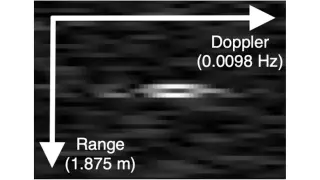
NSF's Green Bank Telescope tracked NASA's Artemis 2 Orion capsule around the Moon for five days from more than 213,000 miles away, delivering distance and Doppler measurements that matched NASA projections to about 0.2 millimeters per second and producing a pixelated image of the spacecraft with a scientist noting “there are four people in those pixels.” The observations illustrate how a giant radio telescope can assist future space missions and radar-related efforts, highlighting the Green Bank Telescope’s role as the largest moving structure on land.

Artemis 3 to test complex Earth-orbit docking with private lunar landers
space-exploration3 months ago

Artemis 3 to test complex Earth-orbit docking with private lunar landers

NASA says Artemis 3 will be one of its most complex missions, testing rendezvous and docking in Earth orbit between the Orion crew capsule and private lunar landers (SpaceX’s Starship and/or Blue Origin’s Blue Moon) as a stepping stone to Artemis 4’s moon landing; the crew will spend more time in Orion, a spacer will mimic the upper stage to save cost, and lander tests and cubesats could be part of the run — Artemis 3 is now planned for late 2027.

Artemis 3 to fly SLS with spacer upper stage replacing ICPS
space3 months ago

Artemis 3 to fly SLS with spacer upper stage replacing ICPS

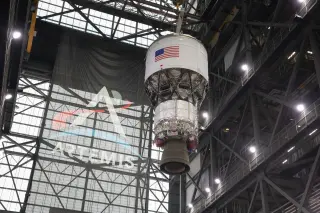
NASA will launch Artemis 3 on the Space Launch System with an inert spacer substituting for the ICPS upper stage. The spacer, built at Marshall Space Flight Center, will match ICPS dimensions and interfaces so Orion’s flight hardware and missions can proceed. With ICPS no longer in production, Artemis 4 will carry the ICPS, while Centaur will be used on later SLS launches; Artemis 3 will rely on Orion’s own propulsion to circularize into a ~463-km orbit as NASA defines a three‑launch campaign to test rendezvous with two landers from Blue Origin and SpaceX. Exact crew, suit testing, and dates remain under development, with a rough target in 2027–2028.

Charred Orion Hull: Artemis 2’s fiery ride home
space3 months ago

Charred Orion Hull: Artemis 2’s fiery ride home

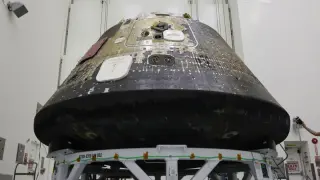
Space.com’s Space Photo of the Day shows NASA’s Artemis 2 Orion capsule charred at Kennedy Space Center after its 10‑day lunar mission, highlighting a reentry temperature near 5,000°F. The crew—Reid Wiseman, Victor Glover, Christina Koch, and Jeremy Hansen—returned to Earth with a Pacific splashdown on April 10, and NASA will study the heat shield’s performance to inform Artemis 3.

Animated 'Hello, World' sequence reveals new details from Artemis II Earth images
space3 months ago

Animated 'Hello, World' sequence reveals new details from Artemis II Earth images

NASA released a trove of Artemis II photos; a sequence of 17 frames of the iconic 'Hello, world' shot was animated by Andy Saunders to highlight details like lightning, aurorae, and satellites. Some appearances of solar arrays may be optical effects from Orion’s window. The animation runs about 1 minute 20 seconds at 30x speed, using images captured with a Nikon D5, Nikon Z9, and iPhone 17s.

NASA Releases 12K Artemis 2 Photos, Showing Earth and Moon From a New Perspective
space3 months ago

NASA Releases 12K Artemis 2 Photos, Showing Earth and Moon From a New Perspective

NASA has released 12,217 Artemis 2 photos in its public archive, offering a front-row view of the mission around the Moon. The shots include Earth glimpsed from Orion’s far side, a six-second star-trail exposure, and lunar-surface details described by the crew as browns and greens, plus two named craters, Integrity and Carroll. The Artemis 2 crew—Reid Wiseman, Victor Glover, Christina Koch and Canadian astronaut Jeremy Hansen—launched on April 1 for a 10-day lunar flyby, reaching a maximum distance of about 252,760 miles (406,773 km) from Earth. Data were initially limited via transmission; NASA recovered most images from the mission’s SD cards after splashdown April 10 and is now sharing them publicly.

Artemis 3 timeline muddied as NASA revises plan and slips loom
space3 months ago

Artemis 3 timeline muddied as NASA revises plan and slips loom

NASA’s Artemis 3 mission, originally intended as a crewed lunar landing, has been redefined as a low-Earth orbit test and key details like its orbit profile, duration, crew, and test scope remain unsettled. Core SLS work progresses at Kennedy Space Center, while capabilities from SpaceX and Blue Origin’s lunar landers are being aligned for a potential rendezvous in orbit. If Artemis 3 slips into late 2027, NASA’s plan to launch Artemis 4 in early 2028 and Artemis 5 in late 2028 could be imperiled, potentially delaying the two lunar landings planned for 2028.

Heat shield’s deep-sea postscript: Artemis 2’s fiery relic photographed underwater
space3 months ago

Heat shield’s deep-sea postscript: Artemis 2’s fiery relic photographed underwater

NASA’s Artemis 2 heat shield was photographed underwater after the Orion capsule’s splashdown off San Diego on April 10, 2026. The scorched tiles endured reentry temperatures near 5,000°F (about 2,800°C), and divers captured images of the heat shield as the capsule is prepared for return to Kennedy Space Center for further study ahead of Artemis 3.