Tag

Targeted Delivery

All articles tagged with #targeted delivery

Tiny CRISPR enzyme boosts in-body gene editing for targeted therapies
science1 month ago

Tiny CRISPR enzyme boosts in-body gene editing for targeted therapies

NIH-backed researchers identified the small Al3Cas12f CRISPR enzyme and engineered the Al3Cas12f RKK variant to dramatically improve editing in human cells, raising efficiency from under 10% to over 80% (up to 90% in a key region). This enzyme's size allows packaging into AAV delivery vectors, a major step toward in-body gene therapies for diseases like cancer and ALS; next, researchers will test AAV-packaged delivery to move toward clinical use.
"Advancing Targeted Gene Editing: CRISPR Delivery Breakthroughs"
science-and-technology2 years ago

"Advancing Targeted Gene Editing: CRISPR Delivery Breakthroughs"

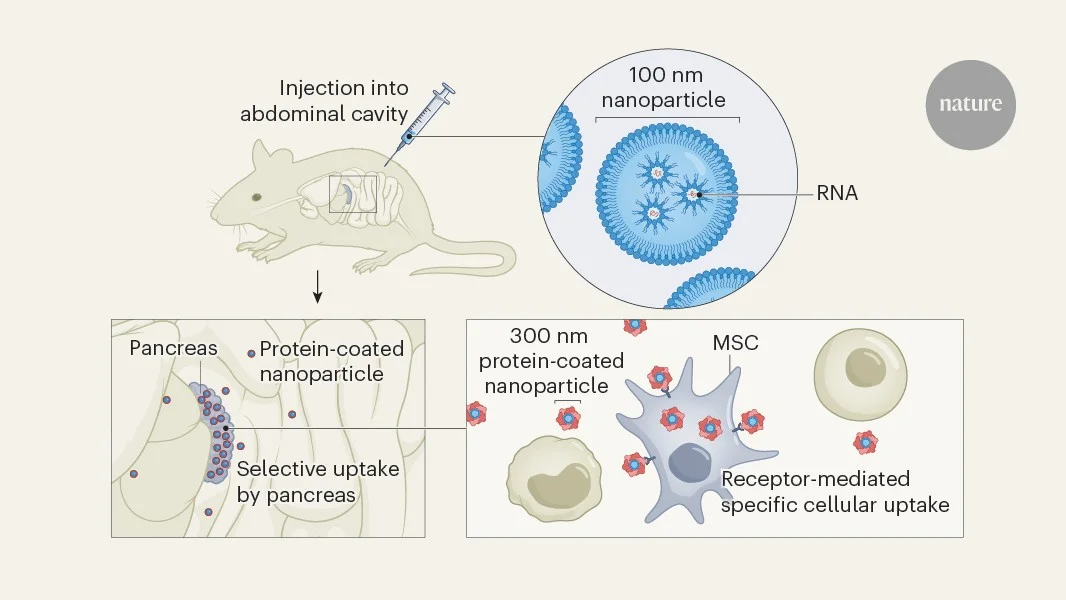
Scientists have developed enveloped delivery vehicles (EDVs) that can transport CRISPR genome editing tools to specific cells for precise genome engineering within living organisms. These EDVs, created by Nobel Prize winner Jennifer Doudna's lab, have the potential for widespread therapeutic use and were shown to successfully target and edit the genomes of human cells in both in vitro and in vivo experiments. The research establishes a programmable delivery method for genome editing and highlights the potential for targeted in vivo engineering of tissue-resident stem cells.

"Enhancing Targeted Biologic Delivery to T Cells through Genetically Encoded Extracellular Vesicles"
biotechnology2 years ago

"Enhancing Targeted Biologic Delivery to T Cells through Genetically Encoded Extracellular Vesicles"

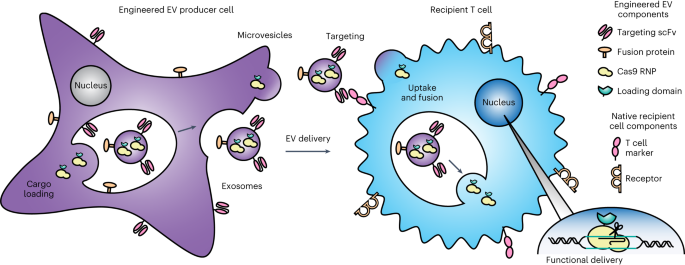
Scientists have developed a method to genetically encode multiple functionalities into extracellular vesicles (EVs) for targeted delivery of biologics to T cells. EVs, such as exosomes, have shown promise as vehicles for therapeutic cargo delivery, but their targeting capabilities have been limited. By engineering EVs to express specific ligands or antibodies on their surface, researchers were able to enhance their binding and uptake by T cells. This approach could potentially improve the efficacy of T cell-based therapies and expand their applications in treating various diseases.