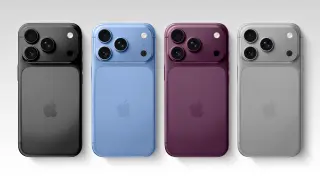
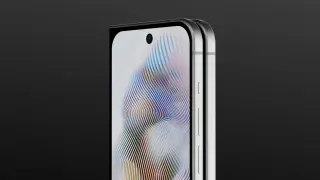
Apple's first foldable, the $1,999 iPhone Duo, is selling out but faces criticism for missing Face ID, unoptimized apps, and hinge defects. While it captures 25% of the 2026 foldable market, delivery delays and reliability issues persist.
TrendForce forecasts Apple will capture 24.8% of the global foldable smartphone market in 2026 with 5 million iPhone Duo units, offsetting a 20% decline in Android shipments. The device features a 7.6-inch inner display, a 48 MP camera, and Touch ID, prioritizing thinness over a periscope lens. While Samsung retains the lead with 35.1% share, Apple’s entry stabilizes a stagnant sector facing rising component costs.
Apple’s first foldable, the iPhone Ultra, is set for a September 9 unveiling but faces criticism for missing key features found in the iPhone 18 Pro. Despite a high price tag, the device lacks Face ID, a telephoto camera, and an Action button due to its thin design. Analysts warn that high costs and potential shipping delays could limit its market impact.
Apple's September 9 event will unveil the iPhone 18 Pro and Pro Max, featuring a mechanical variable aperture camera, improved vapor chamber cooling, and in-house C2 modems. The event also marks the debut of the foldable iPhone Ultra, though the base iPhone 18 is delayed. Rising memory costs are expected to push prices up by 10-20%, with the Pro Max potentially starting near $1,300.
Apple is set to unveil the iPhone 18 Pro, iPhone 18 Pro Max, and its first foldable iPhone Ultra on September 9, 2026. While the new devices feature significant hardware upgrades, including a smaller Dynamic Island and 5G satellite connectivity, rising memory costs are driving up prices. Pre-orders are expected to begin on September 12, with the standard iPhone 18 delayed until spring 2027.
Apple is set to unveil its first foldable smartphone, the iPhone Ultra, at an event on September 9. TrendForce estimates the device will start at $2,099 in the US, with top configurations exceeding $3,000, making it the most expensive iPhone ever. The phone features a 5.5-inch outer display, a 7.8-inch inner OLED screen with ProMotion, an A20 Pro chip, and Touch ID. While interest is high, repair costs are a major concern; replacing the inner screen could cost $1,155, significantly more than Samsung equivalents. Consumer surveys indicate a gap between interest and spending power, with many buyers unwilling to pay the premium.
Apple faces a 400% surge in memory costs for the iPhone 18 Pro, driving up manufacturing expenses. The company is expected to raise retail prices by approximately $100 to maintain margins while absorbing some costs. The foldable iPhone Ultra is also anticipated to launch with a starting price near $2,000.
Apple is expected to raise prices for the iPhone 18 Pro and Pro Max by $150 to $200 at its September 9 event, driven by a 400% surge in memory costs. The new foldable iPhone Ultra may start above $2,000, while Apple aims to absorb some costs through lower margins and services revenue.
The iPhone 18 Pro is expected to launch with 256GB of base storage, matching the previous generation, according to TrendForce. While storage capacity remains unchanged, retail prices are projected to rise by $200 to $300 due to a global memory chip shortage. Apple is set to announce the device in September, with starting prices potentially reaching $1,399 for the Pro and $1,499 for the Pro Max.
The iPhone 18 Pro faces a 38% increase in production costs due to a global memory chip shortage, with memory now accounting for 34% of its bill of materials. Apple is expected to absorb some costs by reducing margins, but higher retail prices and limited launch availability are likely.
TrendForce estimates the bill of materials for the 256GB iPhone 18 Pro will rise by 38% compared to its predecessor, driven by a five- to sevenfold increase in memory prices since early 2025. Memory now accounts for roughly 34% of component costs, up from 10% a year ago, and is projected to exceed 40% by mid-2027. To manage this, Apple is expected to absorb some costs through reduced gross margins, similar to its recent MacBook strategy, while potentially raising prices on older iPhone models. Android vendors in the mid-range and entry-level segments are predicted to face steeper price hikes or product line cuts due to thinner margins. The iPhone 18 Pro and the first foldable iPhone 'Ultra' are expected to launch next month.
UBS lifts its DRAM and NAND price forecasts amid ongoing memory-supply constraints, predicting DDR contract prices to rise 32% QoQ in Q3 and 18% QoQ in Q4, with NAND up 30% QoQ in Q3 and 12% QoQ in Q4. TrendForce likewise flags persistent shortages, while UBS notes demand growth outpaces supply (roughly 36% vs about 19% for DRAM in 2027), suggesting higher memory prices could persist and drive substantial industry revenue growth into the late 2020s (with price changes varying by product/brand).
TrendForce reports Apple plans to adopt advanced OLED panels capable of 95% of the BT.2020 color standard across future MacBook Pro, iPad Pro, and iMac, delivering deeper reds, greens, and blues and improved energy efficiency, with a gradual rollout expected from 2026 to early 2027 for the MacBook Pro and broader adoption across the lineup.
Apple treats foldables as a materials problem, focusing on how the display's adhesive layers and layered stack handle stress to reduce creases rather than relying solely on hinge design; TrendForce-backed analysis notes that smarter OCAs and material strategies like variable-thickness glass aim to improve long-term panel durability.
TrendForce says optically clear adhesive (OCA) is the key to a crease-free foldable iPhone, aided by ultrathin glass designs and hinge engineering; Apple is reportedly pursuing crease elimination at any cost, with Foxconn in trial production and Samsung Display slated to mass-produce OLED panels by May for a September reveal alongside the iPhone 18 Pro; TrendForce estimates Apple could capture about 20% of the foldable smartphone market this year.