Tag

Utility Regulation

All articles tagged with #utility regulation

Ten US States Legalize Plug-In Solar as Safety Standards and Utility Pushback Shape Adoption
energy-and-policy2 days ago

Ten US States Legalize Plug-In Solar as Safety Standards and Utility Pushback Shape Adoption

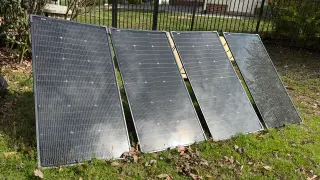
Ten US states have legalized plug-in solar systems, allowing consumers to install small, portable panels that connect directly to wall outlets. These systems, often called 'balcony solar,' offer a low-cost alternative to rooftop solar, particularly for renters. While adoption is growing, legal and safety hurdles remain, including utility opposition and the need for new safety standards like UL 3700.
Michigan Regulators Trim Consumers Energy Gas Hike to $139M, Rejecting $240M Request
energy4 days ago

Michigan Regulators Trim Consumers Energy Gas Hike to $139M, Rejecting $240M Request

The Michigan Public Service Commission (MPSC) approved a $139.2 million annual rate increase for Consumers Energy natural gas customers, effective November 1, 2026. This decision represents a 42% reduction from the utility's initial $240 million request. The hike will raise average monthly bills by approximately $4 for 1.8 million customers. While the MPSC approved a 9.8% return on equity and funding for infrastructure replacement, it rejected $7.9 million for pipeline integrity work, citing over-projection. Attorney General Dana Nessel criticized the utility for inflating costs and urged systemic regulatory changes.

Senate Energy Bill Targets Utility Monopolies to Cut Grid Costs
energy-policy6 days ago

Senate Energy Bill Targets Utility Monopolies to Cut Grid Costs

A bipartisan Senate bill, the Bipartisan American Affordability and Jobs Act (BAAJA), aims to lower electricity costs by forcing utilities to build long-distance transmission lines. The legislation empowers the Federal Energy Regulatory Commission (FERC) to approve interstate projects if local governments delay them and allows private developers to bypass utility monopolies. While the bill faces potential lobbying resistance, it is seen as a significant step toward modernizing the grid and reducing consumer bills.

PG&E slashes $2B in 2027 spending as California wildfire liability fight stalls
business1 month ago

PG&E slashes $2B in 2027 spending as California wildfire liability fight stalls

Pacific Gas & Electric (PG&E) announced a $2 billion reduction in its 2027 capital spending plan, citing the financial burden of California’s current wildfire-liability rules. This move follows the collapse of a legislative compromise (SB 492) that would have limited utility liability for fires sparked by their equipment. The failed deal, which Governor Gavin Newsom attempted to push through in a last-minute legislative 'jam,' resulted in a 20% drop in PG&E stock and intensified tensions between utilities, insurers, and state lawmakers over who should bear the costs of catastrophic wildfires.

California Passes Data Center Energy Rules Amid Grid Cost Fears
technology-and-policy1 month ago

California Passes Data Center Energy Rules Amid Grid Cost Fears

California lawmakers finalized a compromise on Friday to regulate the energy use of data centers, aiming to prevent these facilities from shifting infrastructure costs to general consumers. The legislation requires the California Public Utilities Commission to establish specific rates for data center electricity usage, including charges for new power and infrastructure upgrades. This move follows intense community backlash and concerns over rising utility bills, as the state anticipates data center electricity consumption to double within a decade. While the bills were approved, industry groups argue that California’s high energy costs and new restrictions may hinder future development, while environmental advocates remain divided on the final provisions.

Newsom Retreats on Wildfire Liability Caps After Protests and Lawmaker Pushback
politics1 month ago

Newsom Retreats on Wildfire Liability Caps After Protests and Lawmaker Pushback

Gov. Gavin Newsom abandoned his push to shift wildfire costs to insurers and cap victim payouts after intense protests and legislative resistance. A late-night deal produced a 96-page bill that bans hedge fund speculation on claims and limits executive bonuses, but drops the controversial liability caps. The legislation was rushed through just before the session ended, with survivors praising the outcome while acknowledging the need for further structural reform.

Braun reshapes Indiana’s utility regulator after AES rate decision
politics3 months ago

Braun reshapes Indiana’s utility regulator after AES rate decision

Gov. Mike Braun replaced Andy Zay as chairman of the Indiana Utility Regulatory Commission with Anthony Swinger, effective immediately; Zay remains on the five-member panel. The shake-up follows Braun’s criticism of the IURC’s approval of AES Indiana’s roughly $70 million annual rate increase. Swinger did not vote on the AES case due to his prior work with the Indiana Office of Utility Consumer Counselor. The IURC sets rates for electricity, natural gas and other utilities. Zay’s chair salary was $163,000 vs Swinger’s $152,000 as commissioner. Braun can remove members for cause but did not; Veleta and Ziegner are the other commissioners, with Ziegner’s term through 2027.

politics7 months ago

Georgia's Utility Board Upset Signals a National Playbook on Energy Prices

Democrats Alicia Johnson and Peter Hubbard won Georgia's Public Service Commission in a historic upset, flipping two of five seats from Republicans and showing how rising electric bills can drive turnout and fundraising in a normally low-profile regulatory race. Backed by national groups and a targeted get-out-the-vote push, the campaign framed ratepayer protections against the backdrop of soaring energy costs, data-center growth, and a costly grid expansion. The result is being watched as a potential blueprint for other states with elected utility regulators, though Georgia’s commission remains in the minority and replication may take time.

California Tightens Restrictions on Rooftop Solar Compensation for Renters, Schools, and Farms
energy2 years ago

California Tightens Restrictions on Rooftop Solar Compensation for Renters, Schools, and Farms

The California Public Utilities Commission has unanimously voted to reduce payments to apartment buildings, schools, and businesses that sell excess solar power to the grid, marking the second major reduction in financial support for rooftop solar in the past year. The new regulations will result in significantly lower payments for these customers, with solar advocates estimating a decrease of about 80% per unit of energy sold. The commission argues that the reduced incentives are necessary to prevent unfair subsidies and ensure that property owners contribute their fair share to maintaining the grid. However, solar advocates criticize the decision, stating that it will discourage new solar installations and hinder the state's goal of achieving 100% carbon-free electricity by 2045.