Tag

Water Infrastructure

All articles tagged with #water infrastructure

German microtunneling machine anchors to rock to bore water intakes under Georgia reservoir
infrastructure1 month ago

German microtunneling machine anchors to rock to bore water intakes under Georgia reservoir

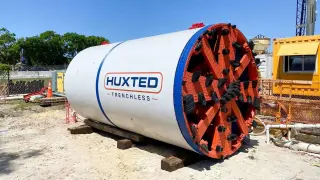
Huxted Trenchless completed three 51-inch water intake tunnels under the Dog River Reservoir in Douglas County, Georgia, using an 8-ton Herrenknecht AVN1000HR microtunneling machine. The project aims to raise the dam by 35 feet and triple storage capacity to 6.5 billion gallons by 2029. The machine required hydraulic grippers to prevent rotational torque from rolling the unit over during hard rock excavation. Each tunnel ended at the lakebed, requiring divers to recover the equipment after the machine broke through the water. The new intake feeds a pump station with two 2,500-horsepower vertical turbine pumps, ensuring the county’s primary drinking water source can sustain 23 million gallons daily through severe droughts.

California Audit Reveals $28B Dam Repair Gap Amid Record El Niño Threat
infrastructure-and-environment1 month ago

California Audit Reveals $28B Dam Repair Gap Amid Record El Niño Threat

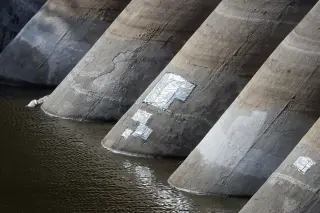
A new state audit warns that 57 California dams are in poor condition, posing a potential $265 billion economic risk to 1.5 million people as a record-breaking El Niño approaches. Despite having enforcement powers since 2017, the Department of Water Resources has never penalized owners for neglect, and current funding is insufficient to address the $28 billion repair backlog.

California Auditor Warns 57 Aging Dams Pose $265B Risk as El Niño Approaches
environment1 month ago

California Auditor Warns 57 Aging Dams Pose $265B Risk as El Niño Approaches

A new state audit reveals 57 California dams are in poor condition, posing a potential $265 billion economic risk to 1.5 million people. Despite having enforcement powers since 2017, the Department of Water Resources has never penalized owners for neglect. With an El Niño winter forecast to bring extreme rainfall, experts warn that current funding is insufficient to address the $28 billion repair backlog, while some officials argue the audit misunderstands the complexities of dam safety.

NIST Releases Practical Guidelines to Secure Water Utility Remote Access After July Cyberattacks
cybersecurity1 month ago

NIST Releases Practical Guidelines to Secure Water Utility Remote Access After July Cyberattacks

NIST has published new guidelines to help water and wastewater utilities secure remote access to operational technology (OT) systems, following a surge in cyberattacks in July 2026. The publication, NIST SP 1800-45, offers practical, step-by-step reference architectures for utilities of varying sizes, emphasizing that security must be integrated into connectivity rather than treated as an afterthought. The guidelines address vulnerabilities in internet-facing devices like programmable logic controllers (PLCs), which were targeted in recent attacks to disrupt operations and lock out authorized users. By demonstrating how to implement firewalls, cloud-based access, and system-to-system encryption, NIST aims to help utilities maintain operational resilience and protect public health.

Brownsville trades 444 acres for $220M SpaceX water deal after tense vote
local-government2 months ago

Brownsville trades 444 acres for $220M SpaceX water deal after tense vote

Brownsville city commissioners unanimously approved the disannexation of 444.45 acres and a $220 million memorandum of understanding with SpaceX on August 29, 2026. The decision, finalized after a six-hour special meeting, was conditioned on SpaceX funding critical water infrastructure projects to secure the city's long-term water supply. While supporters emphasized the necessity of the investment for future growth, critics and residents raised concerns about the rushed process and the impact on local communities.

CISA Reveals Water Cyberattacks Hit 100+ Systems, Prompting White House Response
infrastructure3 months ago

CISA Reveals Water Cyberattacks Hit 100+ Systems, Prompting White House Response

Federal officials have revised the scope of a July 2026 cyberattack on U.S. water systems, acknowledging that over 100 facilities in 12 states were targeted, rather than the initial estimate of 30. The attacks, attributed to Iranian state actors, compromised programmable logic controllers, forcing some utilities to manual operations and causing localized pressure drops. In response, the White House is preparing to launch a free cybersecurity assistance program for vulnerable water utilities, starting with Texas.

technology-and-policy3 months ago

White House to Launch Free Cybersecurity Program for Texas Water Utilities

The Trump administration is preparing to announce a new initiative offering free cybersecurity services to vulnerable U.S. water facilities, starting with a pilot in Texas. This move follows a surge in cyberattacks across at least a dozen states, which federal and state officials suspect are linked to Iran. The program, led by the Office of the National Cyber Director, aims to provide tools for scanning network vulnerabilities to protect critical infrastructure that often lacks robust funding or staffing for cyber defenses.

Oregon confirms water district breach as national cyberattacks expose critical infrastructure gaps
technology-and-security3 months ago

Oregon confirms water district breach as national cyberattacks expose critical infrastructure gaps

Oregon Governor Tina Kotek confirmed that hackers gained access to an unnamed state water district’s core operating technology, joining a wave of attacks across at least 12 U.S. states. While officials have not confirmed if the incidents are linked to Iran, the breaches highlight severe vulnerabilities in programmable logic controllers (PLCs) that control water pressure and flow. Experts warn that these systems often lack basic security measures, leaving utilities vulnerable to disruptions that could impact public health and emergency services.

Iranian Cyberattacks Expose Deep Flaws in U.S. Water Infrastructure
security-and-infrastructure3 months ago

Iranian Cyberattacks Expose Deep Flaws in U.S. Water Infrastructure

Suspected Iranian cyberattacks have disrupted water systems across multiple U.S. states, highlighting critical vulnerabilities in aging, internet-connected infrastructure. While no contamination occurred, the incident reveals that small utilities lack resources for robust defense, prompting federal agencies to urge immediate isolation of control systems from public networks.

Iran-linked hackers disrupt water systems across 12 US states, exposing critical infrastructure gaps
cybersecurity3 months ago

Iran-linked hackers disrupt water systems across 12 US states, exposing critical infrastructure gaps

A coordinated cyberattack targeting internet-connected water and wastewater utilities has affected at least 12 US states, including Minnesota, Michigan, Georgia, and New Jersey. The intrusion, suspected to be linked to Iran-backed hackers, compromised programmable logic controllers (PLCs) in small municipalities, forcing operators to switch to manual controls. While no drinking water was contaminated and services were restored within hours, the incident highlights severe vulnerabilities in aging, poorly secured local infrastructure. Federal agencies have urged utilities to disconnect remote controls and strengthen firewalls, though the Trump administration has publicly dismissed the Iranian attribution and proposed cuts to the Cybersecurity and Infrastructure Security Agency (CISA).

U.S. Water Utilities Face Broadest Coordinated Cyberattack Yet, with 12 States Affected
technology3 months ago

U.S. Water Utilities Face Broadest Coordinated Cyberattack Yet, with 12 States Affected

Cyberattacks targeting water and wastewater utilities have expanded to at least 12 U.S. states, marking the broadest known coordinated campaign against municipal water systems. While drinking water remains safe, some facilities experienced pressure loss and flooding, forcing manual operations. Federal agencies suspect Iran is responsible, though President Trump has disputed this attribution, blaming Minnesota officials instead.

FBI confirms multi-state water cyberattacks as Iran attribution remains contested
cybersecurity3 months ago

FBI confirms multi-state water cyberattacks as Iran attribution remains contested

Coordinated cyberattacks have compromised water systems in at least seven US states, with Minnesota reporting breaches at over 30 facilities. While no water contamination has occurred, the FBI and EPA warn that operations were degraded. Attribution is disputed: experts and CISA suspect Iran, but President Trump has blamed Minnesota officials, while Iran denies involvement.

Federal probe into multi-state water cyberattacks highlights Iran suspicion and federal-state blame game
national-security3 months ago

Federal probe into multi-state water cyberattacks highlights Iran suspicion and federal-state blame game

A federal investigation is underway after hackers targeted water systems in at least seven states, including Georgia, Michigan, and Minnesota. While no water contamination has been reported, the attacks disrupted operations in over 30 facilities in Minnesota alone. U.S. agencies suspect Iran-linked groups, but President Trump has blamed Minnesota Governor Tim Walz, drawing sharp criticism from officials and cybersecurity experts.

FBI and EPA warn of coordinated cyberattacks on U.S. water systems in seven states
national-security3 months ago

FBI and EPA warn of coordinated cyberattacks on U.S. water systems in seven states

Federal authorities have issued a joint alert after at least seven U.S. states reported cyberattacks disrupting water and wastewater operations. The FBI and EPA warned that hackers remotely accessed programmable logic controllers (PLCs), altering settings and causing operational issues like pressure loss. While no water contamination has been reported, the attacks have forced some utilities to switch to manual operations. Intelligence agencies suspect Iran is behind the intrusions, though attribution remains preliminary. President Trump publicly dismissed the Iran theory, instead blaming Minnesota’s state leadership, a claim fact-checkers have labeled baseless.