Russian forces pushing toward Zaporizhzhia have been halted and bottled up around Huliaipole, aided by Ukrainian counterattacks and a Russian comms outage, making Zaporizhzhia city safer than months ago but still a potential future objective.
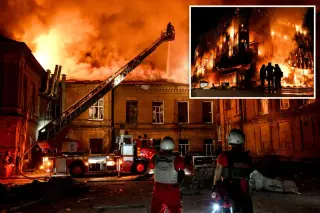
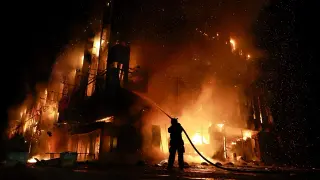
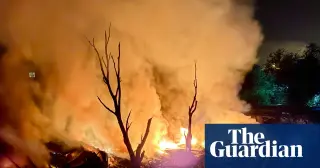
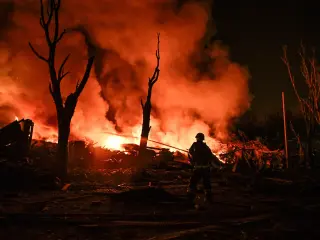
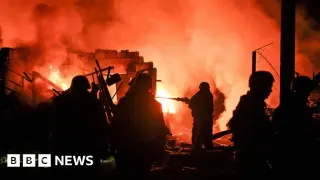
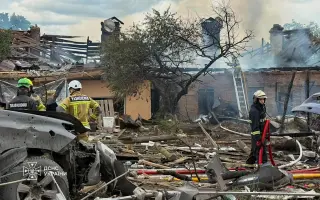
Russia launched a large-scale missile and drone attack on multiple Ukrainian cities overnight, killing at least four people and injuring 16, with strikes reported in Zaporizhzhia, Poltava and Kherson as air defenses were active and residents were urged to seek shelter.
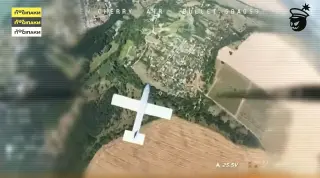
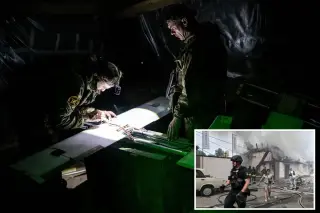
In the Zaporizhzhia region, Ukrainian drone crews fly Leleka reconnaissance planes and Shark fixed-wing systems from dugouts to watch, track, and guide strikes, turning live feeds into real-time battlefield decisions as distance and timing become critical. Drones feed artillery and other units within minutes, yet the operation is hampered by a manpower shortage— plenty of machines but not enough trained operators. Russians adapt by moving in small groups and exploiting weather and electronic-warfare countermeasures to stay unseen between drone cycles. The piece follows drone specialists with backgrounds in journalism and IT, illustrating how this “war of drones” blends cutting-edge technology with human endurance. The war is far from over, with Ukraine needing to stay ahead technologically and strategically as it endures and adapts.
A Russian drone strike in Zaporizhzhia killed two people and injured two children as Ukrainian and American negotiators meet in the US to discuss ending the war and potential easing of Russian oil sanctions; talks continue, but there is little sign of a breakthrough amid ongoing tensions.
Ukraine’s military says its forces, including the Ukrainian military intelligence (HUR) and the Tymura special forces, halted a Russian offensive toward Zaporizhzhia as part of a three‑month southern defense, with HUR reporting over 300 Russian soldiers killed or wounded and 39 captured; the exact halt area was not disclosed. The claim comes as winter-front activity has slowed and Ukrainian units along the southern front press forward amid the ongoing occupation of Europe’s largest nuclear power plant in Zaporizhzhia Oblast.
Russia has deployed two elite airborne divisions and other units to the village of Stepnohirsk near Zaporizhzhia, as Ukrainian special forces (FERRATA) and drones mount a fierce defense. The village’s fall could allow Russian artillery and drones to bombard Zaporizhzhia more easily, making Stepnohirsk a potential turning point on the southern front. Ukrainian commanders note extreme risks, including very short life expectancy for mobilized Russian troops amid intense frontline fighting.
Ukraine's Air Assault Forces say they have neutralized Russian sabotage groups, regained control of eight settlements in the Oleksandrivka sector, and advanced across more than 300 square kilometers in coordination with adjacent units to disrupt Russian plans in the Dnipropetrovsk and Zaporizhzhia regions; the operation is ongoing, described as very dynamic, and final results remain uncertain.
Ukraine’s counteroffensive is gaining momentum, reclaiming land in Zaporizhzhia and on other fronts (Kharkiv, Pokrovsk, Novopavlivka) with ISW noting advances roughly 80 km east of Zaporizhzhia city. Kyiv says momentum is aided by Russia’s disrupted access to Starlink, following actions to block Russian drone comms, and by Ukrainian cyber operations that disabled Russian Starlink terminals. Moscow reportedly struggles to secure launch positions for a planned summer 2026 offensive, as Kyiv presses forward across multiple fronts.
As Russian forces press deeper into Ukraine’s southeast, residents of Tavriiske and nearby villages flee by evacuation bus and on foot, with authorities racing to rescue those in danger as shelling and drone attacks intensify. Civilians describe mounting fear as the front line widens toward Zaporizhzhia, underscoring the human toll of the conflict amid renewed peace talks in Abu Dhabi.
Ukrainian forces reportedly advanced in western Zaporizhzhia as Russia mounted another large night of drone and missile strikes across Ukraine. Kyiv said air defenses downed numerous drones, while Russia targeted energy infrastructure and civilian sites in multiple regions. The broader frontline fighting persists across several directions, with officials describing ongoing clashes and casualties as both sides push to shape the battlefield.
Ukraine’s energy crisis deepens as Russia targets power infrastructure; Khmelnytskyi’s nuclear plant has become a linchpin of the grid, with Moscow aiming to disrupt Substations to shut down nuclear energy, while Zaporizhzhia remains under Russian control, raising fears of cooling failures and a Chernobyl-scale disaster despite IAEA monitoring—making the future of Ukraine’s nuclear fleet a central issue in war and possible peace talks.
Ukrainian drone strikes damaged energy networks in the Russia-occupied southern Ukraine, cutting electricity for hundreds of thousands as Moscow continued attacks on Ukraine’s grid; two people were killed overnight, and Zelenskyy said repairs remain challenging but ongoing, with the IAEA reporting repair work has begun on the Zaporizhzhia Nuclear Power Plant’s backup power line.
Russian President Vladimir Putin has instructed the military to continue their campaign to take full control of the Zaporizhzhia region in southern Ukraine, with Russian forces reportedly nearing the city, as part of ongoing efforts to expand Russian-held territories in Ukraine. Putin emphasized the importance of maintaining the offensive, despite the challenging situation, and recent reports indicate significant territorial gains by Russian forces in 2025.
Ukrainian President Zelenskyy proposed a plan to end the Russia-Ukraine war, including creating a demilitarized, free economic zone in the Donbas region monitored by international forces, and suggested a referendum on peace agreements. The plan involves troop withdrawals, joint operation of the Zaporizhzhia nuclear plant, security guarantees similar to NATO's Article 5, and economic and political reforms. Russia has not indicated support for troop withdrawals, and negotiations remain complex and ongoing.
Ukrainian forces are attempting to stabilize the southern front amid ongoing Russian advances in Zaporizhzhia, with peace talks ongoing but skepticism remains high. Russia's slow territorial gains contrast with its high casualties and relentless push, while Ukrainian troops focus on defense and adaptation in a war characterized by attritional and mobile warfare.