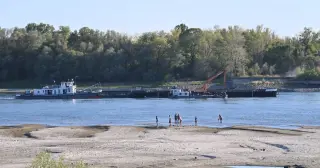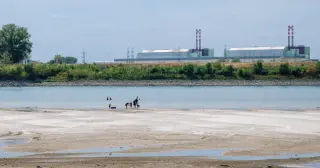
Facing record-low Danube water levels from Europe’s heatwave, Hungary is sinking two barges to raise the river around the Paks nuclear plant, a move backed by the prime minister to prevent turbine shutdown and safeguard a large share of the country’s electricity.
With the Danube at record lows from drought, Hungary will raise river levels to keep the Paks nuclear plant online by sinking barges and building a bed sill upriver. About 145,000 cubic meters of rock will be used, and two large barges may be sunk to lift water at the cooling points, potentially adding up to 3 feet upstream and inches at the pumps. The intervention could cost around 6 billion forints, far less than the monthly cost of a shutdown (up to 50 billion forints), and a final decision on sinking the barges is expected soon.
In 1958 the US Air Force quietly studied detonating a nuclear device on the Moon to send a visible message to the USSR (Project A119); the plan was shelved due to fears over lunar contamination and harming future science. The episode helped spur space-law frameworks—culminating in the Outer Space Treaty and later Artemis-era norms—that treat the Moon as a shared domain and regulate lunar resources rather than endorsing nation-by-nation ownership.
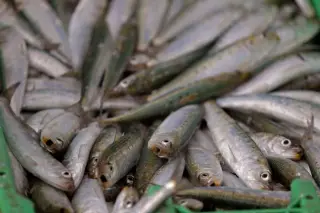
Jellyfish swarms forced parts of the Gravelines nuclear plant offline on Aug. 11, 2026, repeating a 2025 disruption as several dozen tons clogged cooling pumps; EDF deployed cameras and patrol boats to monitor and prevent major influx, highlighting how warming seas are increasing biotic disruptions to France’s reactors.
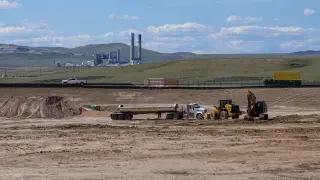
Kemmerer, WY is divided over TerraPower’s Natrium, a Gates-backed small modular reactor funded with about $2 billion in public subsidies; supporters say it will create thousands of construction jobs and provide carbon-free baseload power as coal declines, while opponents warn about safety, waste, and the wisdom of public funding for a billionaire-led project.
Chinese researchers propose burying a nuclear device inside a near-Earth asteroid and detonating it to create a deep crater that alters its path; simulations suggest a 200-bomb Hiroshima-scale blast buried about 30 meters could completely break apart a ~100 m asteroid, and for larger rocks the detonation could yield a delta-v over 30 cm/s—offering a foundation for defence against short-warning asteroids, though practical and safety issues remain.
The US–Saudi 30-year nuclear framework has sparked alarm among nonproliferation experts by potentially enabling Saudi enrichment and weakening Washington’s strict standards, with uncertainties from side letters and conditions that could invite congressional pushback. The article argues the better path is a regional, IAEA‑run nuclear fuel bank on Saudi soil to supply low-enriched uranium under strict oversight, which would curb the push for sovereign enrichment, enhance U.S. and regional oversight, and reduce the likelihood of a regional arms race, while preserving civilian nuclear power. The central questions remain how to manage Saudi sovereign autonomy, deter proliferation, and whether normalization with Israel should be tied to stronger safeguards and multilateral guarantees.
At a White House meeting, President Trump and Israeli Prime Minister Netanyahu reaffirmed their ironclad commitment to ensuring Iran never has nuclear weapons, a stance set against broader Middle East tensions, U.S.-led naval pressure on Iran, and ongoing allied efforts to deter Iran's nuclear ambitions and its role in the region.
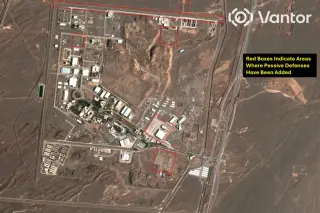
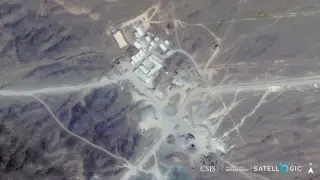
The US is reportedly considering a covert, high-stakes operation to seize Iran’s enriched uranium from fortified nuclear sites, including Fordo and Isfahan (with Natanz’ Pickaxe Mountain cited), using a large team of special operators and secure-perimeter logistics. Described by experts as potentially the most sophisticated military mission in history, the plan would involve ground assaults, booby-traps, airspace control, and a dangerous exfiltration, highlighting immense logistical and political risks amid ongoing tensions over Iran’s nuclear program. The story is based on unnamed sources and reflects speculation surrounding US strategy and Iran’s defenses, with the IAEA noting Iran has tens of thousands of pounds of enriched uranium.
China’s renewables routinely beat targets thanks to industrial-scale production and parallel deployment, while its nuclear goals lag behind despite approvals and a large reactor program. The piece argues forecasts should be based on demonstrated throughput for wind/solar versus the completion cadence of reactor projects, treating renewables as policy floors and nuclear targets as aspirations until actual operation data supports them.
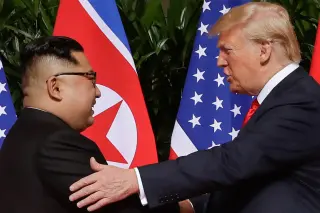
Trump said any U.S.-brokered civil nuclear deal with Saudi Arabia would require Riyadh to normalize ties with Israel via the Abraham Accords, making the agreement contingent on regional peace; the pact reportedly allows enrichment and could include a Saudi enrichment facility, drawing proliferation concerns, while the deal faces congressional review and scrutiny over inspections and details.
The US is set to announce a 30-year deal permitting Saudi Arabia to pursue a civilian nuclear program, potentially including on-site uranium enrichment at a US-built facility; the arrangement could be worth billions to US firms but has sparked concerns among nuclear experts and Israel over possible weaponization, and it does not require Saudi-Israeli normalization, though it may face congressional scrutiny.
A peer‑reviewed Chinese study proposes two nuclear‑detonation approaches to stop a threatening asteroid: a shallow-crater detonation and a deeper, pre‑excavation detonation. Modeling suggests that, with ample warning time, the deep‑crater method could couple more energy and impart about a 1 m/s velocity change to a roughly 100‑meter asteroid within about 60 days, potentially pushing it off a collision course; the shallow method could be deployed faster but offers weaker energy transfer and more stringent timing. The researchers note many real‑world challenges remain—asteroid composition, debris risks, weapon delivery, and other logistical issues—though NASA’s DART mission shows that deflection is feasible in principle.
The U.S. Department of Energy issued a conditional $17.5 billion loan commitment to finance long-lead items for five projects that will deploy 10 Westinghouse AP1000 reactors, accelerating construction by up to three years and rebuilding the American nuclear supply chain. EDF will support up to five loans, each backing two reactors, with each project requiring $1 billion upfront equity ($500M from Westinghouse and $500M from a partner) and letters of intent from potential partners. Final financing depends on meeting technical, legal, environmental, and financial conditions. The move aligns with President Trump’s goal of having 10 reactors under construction by 2030 and aims to reduce costs and timelines through bulk purchasing of equipment.
U.S. Vice President JD Vance said talks with Iran in Switzerland produced a solid foundation for a final deal within 60 days, including a High Level Committee, a deconfliction line to secure safe passage through the Strait of Hormuz, and Iran agreeing to IAEA inspections; a Qatar-backed asset-unfreezing idea was floated, while technical talks on nuclear limits, sanctions and dispute resolution continue amid ongoing tensions and threats from Trump.