Naked mole-rat queens secrete isopropyl myristate, a stable odor that suppresses fertility in non-breeding females and, even when the queen is absent, can keep colonies from breeding or mounting coups, showing a simple chemical mechanism behind their insect-like eusocial hierarchy.
A Nature study shows naked mole-rat queens emit isopropyl myristate (IPM), a scent that suppresses reproduction in non-breeding females by altering prolactin; IPM exposure activates olfactory neurons, and experiments that block smell or pair non-breeding females with males reduce prolactin and enable mating. IPM alone can maintain the colony’s single-queen structure even without a queen, explaining how this eusocial mammal keeps one reproductive leader.
Engineered mice carrying the naked mole rat Has2 gene overproduced high‑molecular‑mass hyaluronan, modestly extending median lifespan (~4.4%), reducing inflammation, improving gut barrier, and increasing resistance to tumours—demonstrating a transferable longevity mechanism rather than a universal therapy.
Scientists traced naked mole-rats’ exceptional lifespan to four amino acid changes in their version of the DNA-sensing protein cGAS. These substitutions prolong cGAS, shifting its interaction from suppressing to promoting homologous recombination with key repair proteins, leading to more efficient DNA repair and reduced aging-related damage. Experiments removing cGAS increased DNA damage in mole-rat cells, while introducing the four substitutions into fruit flies extended their lifespans, suggesting potential human longevity avenues—but the mole-rat’s longevity likely relies on multiple mechanisms, and translating this to humans remains uncertain and distant.
Researchers transferred the naked mole rat's longevity-associated gene that boosts production of high-molecular-weight hyaluronic acid into mice, leading to healthier aging, reduced inflammation, better gut health, and a 4.4% increase in median lifespan, suggesting transferable longevity mechanisms across species.
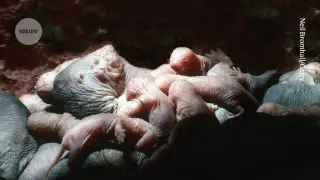
In a Science Advances study, researchers at the Salk Institute observed a rare peaceful transfer of power in a naked mole rat colony: after relocating the Amigos colony, the reigning queen Teré paused reproduction for almost a year, two of her daughters began reproducing in sequence, and Arwen ultimately became the new breeding queen by the end of 2025, showing that even highly eusocial mammals can exhibit flexible, nonviolent queen succession.
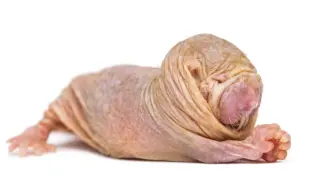
The naked mole-rat, a mammal native to East Africa, exhibits unique characteristics such as eusocial behavior and remarkable cancer resistance, and it thermoregulates in a manner similar to cold-blooded animals by relying on external heat sources and behavioral adaptations, challenging traditional classifications of mammals as strictly warm-blooded.
Scientists discovered that four amino acid changes in the cGAS enzyme of naked mole-rats enhance DNA repair, potentially explaining their extraordinary lifespan, which is nearly ten times longer than similar species. These molecular tweaks may improve genome stability and delay aging, offering insights into longevity mechanisms.