Tag

Fireball

All articles tagged with #fireball

Green fireball streak lights up skies across 15 states
science24 days ago

Green fireball streak lights up skies across 15 states

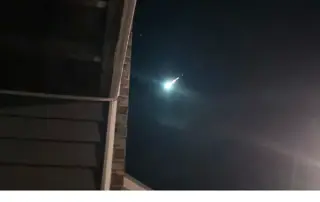
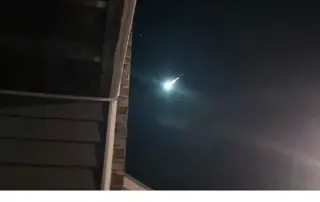
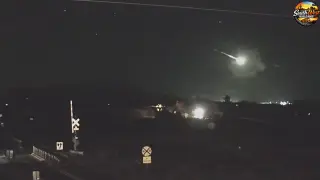
A bright green fireball lit up the night across at least 15 states from near Memphis toward St. Louis, with roughly 400 reports to the American Meteor Society. Experts say it was a meteor, not a satellite, and the green color comes from vaporized nickel or magnesium as it sped through the atmosphere at about 25,000 mph, often breaking apart before disappearing.

Green Fireball Meteor Lights Up Skies Across 15 States
science25 days ago

Green Fireball Meteor Lights Up Skies Across 15 States

A bright green fireball lit up the night sky Sunday across at least 15 states from near Memphis toward St. Louis, with observers noting up to 20 seconds of visibility and sparks along its path. About 400 reports were logged with the American Meteor Society, and scientists say the event was a natural meteor, not a satellite, with the green color caused by vaporized metals (nickel or magnesium) at speeds exceeding 25,000 mph.

NASA confirms daytime fireball over the Northeast released energy equivalent to 230 tons of TNT
space1 month ago

NASA confirms daytime fireball over the Northeast released energy equivalent to 230 tons of TNT

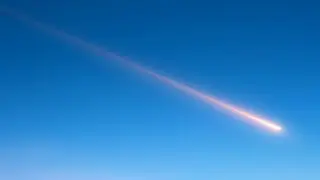
NASA confirmed a bright daytime fireball meteor, about 5 feet (1.6 meters) in diameter, exploded over the northeastern United States on May 30, releasing energy roughly equal to 230 tons of TNT. The object streaked through the atmosphere at about 42,000 mph (67,000 km/h), broke the sound barrier about 31 miles up, and debris rain fell over Cape Cod. An NOAA satellite captured the event, and there were no injuries or property damage reported, though residents heard a loud sonic boom. NASA notes such small meteors are common and pose little risk to cities.

science1 month ago

Daylight fireball sparks widespread reports across the Northeast

A daytime fireball about three feet wide produced a double boom and shook buildings from Massachusetts to Rhode Island, with dozens of sightings from Delaware to Montreal. While the American Meteor Society says the event was a meteor that likely burned up, not an earthquake, USGS said there was shaking but no earthquake detected on seismographs; researchers will need trajectory data to determine if any debris reached the ground, possibly landing in the ocean.

Green fireball streaks over Mayon eruption, likely burned up in atmosphere
science1 month ago

Green fireball streaks over Mayon eruption, likely burned up in atmosphere

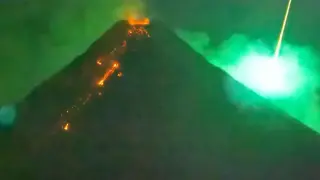
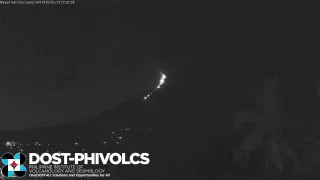
A green fireball lit up the sky during Mount Mayon’s eruption in the Philippines, but scientists concluded it probably burned up in Earth’s atmosphere rather than striking the ground or the volcano. Energy estimates were around 6.8 million kilograms of gunpowder, and the event was captured on livestreams and cameras. The lava flow continued beneath as researchers stressed that such space rocks are typically slowed or disintegrated by the atmosphere, with roughly 25 million meteors expected to be handled by it daily. It’s a rare, dramatic glimpse into the volatility of our planet.

Emerald Fireball Sparks Over Mayon Volcano Amid Philippine Eruption
space1 month ago

Emerald Fireball Sparks Over Mayon Volcano Amid Philippine Eruption

A rare bright-green fireball meteor illuminated the Philippine night sky as Mount Mayon erupted, with two livestreams capturing a brief emerald streak above the volcano. Scientists later confirmed the meteor disintegrated in the atmosphere and did not strike the slopes, though such events can produce meteorites. The sight highlighted the dramatic coincidence of space rocks and volcanic activity, without posing a reported threat to nearby areas.

ISS Captures Fiery Fireball as Space Debris Burns Up
science1 month ago

ISS Captures Fiery Fireball as Space Debris Burns Up

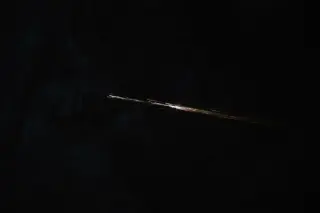
An astronaut aboard the International Space Station photographed a bright fireball streaking through the upper atmosphere on April 27, 2026; the source is unclear—could be debris, a rocket body, a satellite, or meteoric material—though Progress 95 was not involved. NASA notes debris in the thermosphere can reenter and burn up due to atmospheric drag, with observations captured by a Nikon Z9 and shared via the Crew Earth Observations program.

Fireball from Space: ISS Captures Debris Reentry Over West Africa
space2 months ago

Fireball from Space: ISS Captures Debris Reentry Over West Africa

From the International Space Station's Cupola, NASA astronaut Chris Williams recorded a bright fireball streaking through the upper atmosphere—likely the reentry of debris from the Progress MS-34 mission. Observed at about 10:40 PM GMT on April 27 from roughly 250 miles up, the event provided a rare orbital view of how high-speed objects break up upon atmospheric entry; Williams shared photos and video on X, noting the pass over West Africa and emphasizing that such reentries typically occur over remote areas and pose no risk to people on the ground.

ISS Captures Spectacular Fireball Likely Debris Reentry After Progress MS-34 Launch
space-exploration2 months ago

ISS Captures Spectacular Fireball Likely Debris Reentry After Progress MS-34 Launch

NASA astronaut Chris Williams aboard the International Space Station photographed a dramatic fireball on April 27, 2026, likely caused by debris from a satellite or the upper stage of the Soyuz rocket related to the Progress MS-34 (Progress 95) mission. The fireball appeared as the Progress 95 cargo ship—launched April 25, docked two days later and to remain attached for about seven months—passed overhead near West Africa, with Williams noting a bright streak that split into a shower of pieces. Williams is a rookie aboard an eight‑month stay, sharing the ISS with SpaceX Crew-12 astronauts Jessica Meir and Jack Hathaway, along with Sophie Adenot and Andrey Fedyaev.

Cosmic cameo: Fireball crosses path with Comet PanSTARRS over Czech castle
space2 months ago

Cosmic cameo: Fireball crosses path with Comet PanSTARRS over Czech castle

Photographers captured a rare time‑lapse of a bright fireball meteor streaking in front of Comet PanSTARRS above Kunětická Hora Castle in the Czech Republic on April 18, reportedly tied to an asteroid explosion over Belarus; PanSTARRS reached perihelion around April 19 and was one of 2026’s most visible comets, making for a striking celestial coincidence.

Emerald fireball lights up the UK sky over Lindisfarne
space2 months ago

Emerald fireball lights up the UK sky over Lindisfarne

A bright emerald fireball lit up Lindisfarne’s night sky in northeast England as a small meteor—about 12 grams and traveling ~20,000 mph (32,000 km/h)—exploded in Earth’s atmosphere; it was witnessed by hundreds across the UK and parts of Belgium, the Netherlands and Germany and captured on doorbell cameras, with the green hue likely from magnesium and nickel; no debris or sonic booms were reported, and NASA notes this ‘fireball season’ is common.

Bright Fireball Surge Across North America Indicates Real Uptick in Meteoroids
space3 months ago

Bright Fireball Surge Across North America Indicates Real Uptick in Meteoroids

Unusually bright fireballs were seen across North America in March 2026; data from the American Meteor Society suggests a real uptick in large fireball events and meteorite recoveries, beyond reporting bias, with possible contributions from longer meteors and springtime orbital dynamics, while AI and better cameras may amplify reporting but do not fully explain the trend.

Green fireball lights up Northwest Ohio skies in latest meteor sighting
science3 months ago

Green fireball lights up Northwest Ohio skies in latest meteor sighting

A green fireball was reported over northwest Ohio at about 4:52 a.m. Thursday, with video and sightings from Fostoria, Maumee, Swanton and Perrysburg, plus reports across southern Michigan and western Pennsylvania. This marks the third meteor-related sighting in the region in a little over two weeks, following a March 17 Medina County event described by NASA as a seven-ton small asteroid and a March 24 fireball over the Great Lakes. UToledo astronomer Michael Cushing notes that tiny space rocks constantly enter Earth’s atmosphere and burn up; when larger they can produce a sonic boom, though no boom was reported this time. No immediate National Weather Service update was available.)