
LINK spacecraft approaches doomed Swift telescope but cannot prevent its reentry
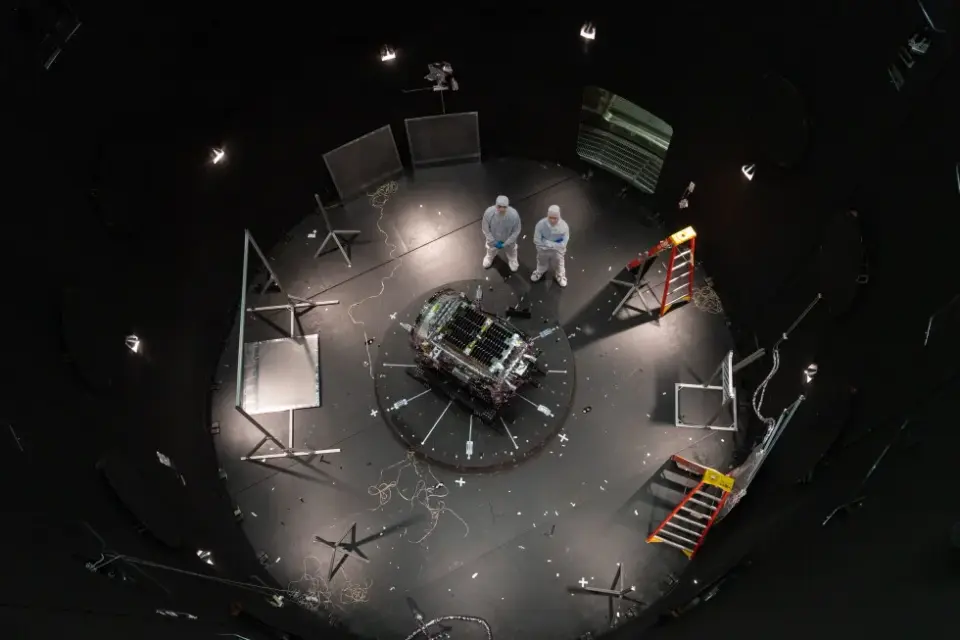
A private spacecraft developed by Katalyst Space has successfully maneuvered close to NASA’s Swift gamma-ray observatory, but the mission cannot save the aging telescope from reentering Earth’s atmosphere. Although the LINK spacecraft reached the vicinity of Swift, technical limitations and the telescope’s rapid orbital decay prevent any attempt to raise Swift’s orbit. The Swift observatory, launched in 2004, is currently losing altitude due to atmospheric drag and is expected to burn up before the end of 2026. This outcome marks a failed rescue attempt for a $30 million mission intended to extend the telescope’s operational life by years. While the primary goal of saving Swift has failed, the mission will continue to conduct rendezvous demonstrations to gather data for future satellite servicing efforts.
Key points
- The LINK spacecraft, operated by Katalyst Space, has successfully approached the Swift gamma-ray observatory.
- Despite the close approach, the mission cannot raise Swift’s orbit to prevent its reentry into Earth’s atmosphere.
- Swift is currently losing altitude due to atmospheric drag and is expected to disintegrate before the end of 2026.
- The failed rescue attempt was part of a $30 million NASA initiative to extend the telescope’s life.
- The LINK mission will continue to perform rendezvous demonstrations to inform future satellite servicing technologies.
Background
In August 2026, the LINK spacecraft suffered attitude-control failures after launch, with two of three reaction wheels malfunctioning. Engineers uploaded a software patch to stabilize the spacecraft, but the mission was ultimately aborted due to ongoing control issues. Prior to the failure, Swift faced a 50% chance of uncontrolled reentry by mid-2026. The current close approach represents a final attempt to assess the feasibility of rescue, though the telescope’s rapid orbital decay has made saving it impossible.
Why it matters
The failure to save Swift highlights the significant technical challenges involved in servicing aging satellites in low Earth orbit. While the telescope’s loss is a setback for astronomical research, the data gathered from the LINK mission’s close approach and previous attempts will provide critical insights for future satellite servicing missions. These lessons are essential for developing technologies that can extend the lifespan of valuable space assets in the future.
What to watch
The LINK spacecraft will continue to conduct rendezvous demonstrations to collect data on satellite servicing techniques. NASA will analyze the findings from this mission to inform future efforts to rescue or reposition other aging satellites. Meanwhile, Swift is expected to reenter Earth’s atmosphere and disintegrate before the end of 2026.
Want the full story? Read the original reporting
Read on AP News