
Voyager 1 Marks One Light-Day Milestone Amidst Aging Hardware Challenges
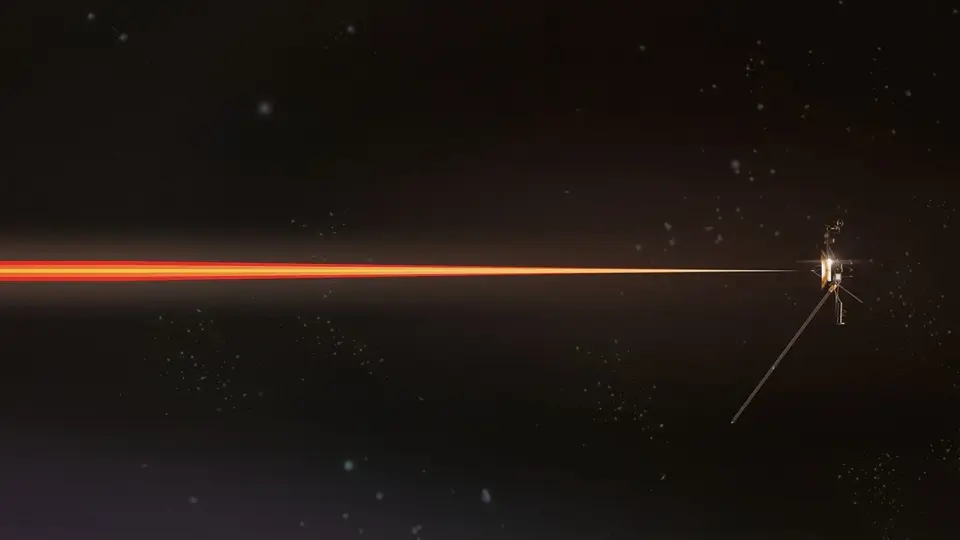
NASA’s Voyager 1 probe reached a distance of one light-day from Earth on November 18, 2026, becoming the first human-made object to achieve this feat. The milestone, marking a distance of approximately 16 billion miles, was celebrated at a press conference at the Jet Propulsion Laboratory on November 19. Despite the achievement, the spacecraft is currently experiencing a communication anomaly that has halted the transmission of science data, though engineers remain confident in resolving the issue. The probe, launched in 1977, continues to operate far beyond its original five-year mission lifespan, now traveling through interstellar space with dwindling power and aging components.
Key points
- Voyager 1 reached one light-day from Earth on November 18, 2026, at 10:16 UTC, a distance of roughly 16 billion miles.
- The milestone means radio signals now take 24 hours to reach the probe and another 24 hours to return, creating a 48-hour round-trip delay.
- A communication anomaly began on November 14, stopping the transmission of science and engineering data, though the carrier signal remains strong.
- The spacecraft is currently powered by radioisotope thermoelectric generators that produce roughly 210 watts, down from 470 watts at launch.
- Voyager 1 is heading toward the star Gliese 445, with its closest approach expected in approximately 40,000 years.
Background
Voyager 1 was launched in September 1977, shortly after its twin, Voyager 2. Originally designed for a five-year mission to explore Jupiter and Saturn, the probe has operated for nearly 50 years. It crossed the heliopause into interstellar space in 2012. Previous archive coverage noted that the probe faced significant power constraints, leading to a major power reconfiguration in September 2026 known as 'The Big Bang,' which extended the mission's life by conserving energy. A brief communication outage in October 2026 was resolved automatically, but the current anomaly is more persistent.
How outlets are covering it
Space.com and NASA JPL emphasized the emotional and historical significance of the milestone, highlighting the celebration event and the resilience of the mission team. CNN focused on the technical challenges, detailing the 'Big Bang' power swap and the declining power output of the radioisotope thermoelectric generators. Live Science provided a retrospective on the probe's scientific discoveries, such as the first images of volcanic activity on Io and the 'Pale Blue Dot' photograph. All sources agree on the distance milestone but differ in emphasis: Space.com and Live Science highlight the human and historical aspects, while CNN focuses on the engineering hurdles and the finite lifespan of the probe's power source.
Why it matters
The one-light-day milestone underscores the extreme challenges of deep-space exploration and the longevity of NASA's Voyager missions. It highlights the increasing difficulty of communicating with distant spacecraft, where round-trip delays reach 48 hours. The ongoing communication anomaly serves as a reminder of the aging hardware and dwindling power reserves of the probe, which is expected to lose contact with Earth around 2036. Despite these challenges, Voyager 1 continues to provide unique data on the interstellar medium, offering insights that cannot be obtained from Earth-based telescopes.
What to watch
NASA engineers are working to resolve the current communication anomaly, which is expected to be temporary. The mission team is monitoring the probe's status and will continue to send commands via the Deep Space Network. Voyager 1 is expected to remain operational for several more years, with its science instruments potentially lasting into the 2030s. The probe will continue its journey toward Gliese 445, eventually passing within 1.7 light-years of the star in approximately 40,000 years. Even after losing contact, the spacecraft will continue traveling through interstellar space indefinitely, carrying the Golden Record with it.
- Voyager 1 team, unbowed by communications glitch, celebrates epic 1-light-day distance milestone Space
- APOD: 2026 November 20 – V-G-R NASA Science (.gov)
- NASA’s Voyager 1 is now one light-day away from Earth CNN
- Voyager's light-day milestone: Relive 50 years of the legendary NASA spacecraft's discoveries in photos Live Science
- NASA probe achieves light-day milestone and is 'not done yet' Reuters
Want the full story? Read the original reporting
Read on Space