Tag

Blue Moon

All articles tagged with #blue moon

Ex-NASA Chief Warns Artemis Lander Plan Is Too Complex for 2028 Moon Return
space3 days ago

Ex-NASA Chief Warns Artemis Lander Plan Is Too Complex for 2028 Moon Return

Former NASA administrator Jim Bridenstine says Artemis' crewed lunar landers are far more complex than Apollo’s design, warning the architecture could bite the program as Artemis 3 and Artemis 4 rely on SpaceX’s Starship and Blue Origin’s Blue Moon, both of which face delays and require multiple launches and refueling. He notes NASA’s plan to test both landers in orbit ahead of a 2028 lunar landing, the possibility of reopening lander contracts due to delays, and argues for pursuing a simpler, quicker path to the moon.

Artemis lander plan refresh speeds Starship-Orion docking and Blue Moon redesign
space27 days ago

Artemis lander plan refresh speeds Starship-Orion docking and Blue Moon redesign

NASA outlined accelerated Artemis lander concepts: SpaceX will dock Starship with Orion in Earth orbit and use Starship for the translunar injection and lunar landing, reducing propellant needs and removing NRHO loiter, while Blue Origin is dropping its transporter in favor of Mark 1-derived transfer stages to speed the Blue Moon, aiming for Artemis 3 readiness by 2027 and an Artemis 4 crewed landing around 2028, with manufacturing underway despite a May explosion at the New Glenn test site.

Blue Origin's Fireball Delays NASA's Moon Mission Timeline
space1 month ago

Blue Origin's Fireball Delays NASA's Moon Mission Timeline

Blue Origin’s New Glenn exploded during a May 28 static-fire test at Cape Canaveral, destroying LC-36 and grounding the heavy-lift rocket, prompting NASA to reassess Artemis timelines since the Blue Moon lunar lander relies on New Glenn; Artemis 3’s first lunar landing could slip from late 2027 and Artemis 4 to late 2028, while SpaceX’s Starship may gain leverage in the lunar-lander race—the speed of LC-36 repairs and Blue Origin’s recovery will determine how quickly Moon plans can stay on track.

Detroit Gets Ideal Skies for Blue Moon Night
weather1 month ago

Detroit Gets Ideal Skies for Blue Moon Night

Clear, dry conditions across Southeast Michigan set up ideal Blue Moon viewing tonight, with a micromoon peaking early Sunday. Expect comfortable evenings around 60°F and overnight lows in the 40s–50s, followed by sunny days with highs in the 70s–80s all week and no rain until late Friday; Jupiter, Venus, and Mercury will line up in the western sky after sunset.

Moon Twice in a Month: Why the Blue Moon Captivates Us
space1 month ago

Moon Twice in a Month: Why the Blue Moon Captivates Us

Space.com explains that a Blue Moon is not literally blue; it refers to either the second full moon in a calendar month or the fourth in a season with four full moons; the article traces its pop-culture roots—from a 1940s Sky & Telescope misinterpretation to songs and films—and notes that the Moon's enduring appeal comes from its regular cycles and its place in human culture and science.

May 2026's micromoon: rare Blue Moon livestream highlights smallest full Moon
space1 month ago

May 2026's micromoon: rare Blue Moon livestream highlights smallest full Moon

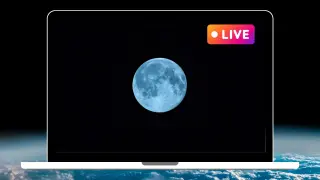
Space.com reports that May 30–30, 2026 at 9:30 p.m. EDT (01:30 GMT on May 31) will feature the year’s smallest full Moon, a micromoon and May’s second full Moon (a monthly Blue Moon), livestreamed from Manciano, Italy by Gianluca Massi and the Virtual Telescope Project with views of Rome’s monuments; watchable on Space.com or the Virtual Telescope Project’s WebTV/YouTube if weather permits. The piece explains the two Blue Moon definitions (seasonal vs. monthly) and notes the micromoon may appear up to about 14% smaller than a supermoon due to apogee.

May’s Blue Moon Lights Up the Night Sky (Second Full Moon of the Month)
space1 month ago

May’s Blue Moon Lights Up the Night Sky (Second Full Moon of the Month)

Space.com reports that the May Blue Moon—the second full Moon in May—will peak around 4:45 a.m. EDT on May 31. In the U.S., the Moon will first rise around sunset on May 30, with Antares the red star nearby and Jupiter, Venus, and Mercury lined up above the western horizon at sunset. A “Blue Moon” here simply means the second full Moon in a calendar month, not a color change; the article also notes additional context about Moon photography and viewing tips.

This Weekend’s Blue Moon Won’t Look Blue, But It Will Be May’s Second Full Moon
space1 month ago

This Weekend’s Blue Moon Won’t Look Blue, But It Will Be May’s Second Full Moon

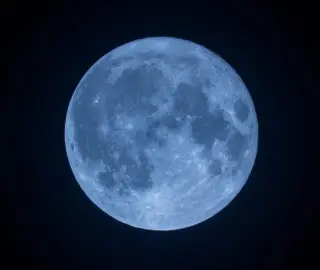
A true blue moon—the second full moon in May—will light the sky this weekend, peaking around 4:45 a.m. ET Sunday; it won’t look blue to the naked eye. The moon will be near apogee, creating a micromoon and sitting about 252,334 miles from Earth, so it may appear slightly smaller, though the change is hardly noticeable. In the Americas, the full Moon is most prominent late May 30 (into May 31 elsewhere). A calendrical blue moon occurs roughly every two to three years, and the term comes from historic almanacs; a true blue tint is rare (as after Krakatoa in 1883). The next calendrical blue moon isn’t until 2037.

Weekend blue micromoon: a distant, dimmer full moon won't return until 2028
space1 month ago

Weekend blue micromoon: a distant, dimmer full moon won't return until 2028

A rare blue micromoon will appear this weekend as the second full moon of May (a blue moon) and the most distant, smallest-looking full moon of the year. It will be about 6% smaller and 10% dimmer than a typical full moon due to its distance of roughly 252,360 miles, so the effect may be subtle. The next blue moon won’t occur until December 31, 2028. In the Northern Hemisphere it will appear near Antares in the Scorpius constellation, with the Southern Hemisphere potentially seeing Antares briefly disappear behind the Moon. The Virtual Telescope Project will stream live images of the event.

Blue Moon Myth Bust: It’s Calendar Timing, Not Color
science1 month ago

Blue Moon Myth Bust: It’s Calendar Timing, Not Color

A blue moon isn’t actually blue. It’s a term used to describe either the second full moon in a calendar month or, in the seasonal definition, the third full moon in a season. The phrase originates from folklore and a 1940s misinterpretation, and it doesn’t imply any color change or affect celestial events. The article explains how often such moons occur and when the next one might appear based on the Moon’s orbit.

Moon Close to Spica: A Blue-White Star in May's Sky
space1 month ago

Moon Close to Spica: A Blue-White Star in May's Sky

On May 26, the waxing Moon (about 83% illuminated) will pass near Spica, the blue-white star in Virgo. Spica is a binary giant-star system with a combined luminosity of more than 12,000 suns. The Moon will be roughly 40° high at sunset and drift toward Spica through the night, setting on May 27; the week also features a Blue Moon later in the month.