Tag

Plate Tectonics

All articles tagged with #plate tectonics

Ancient Earth Moves: Earliest Plate Tectonics Traced to 3.5 Billion Years Ago
science16 days ago

Ancient Earth Moves: Earliest Plate Tectonics Traced to 3.5 Billion Years Ago

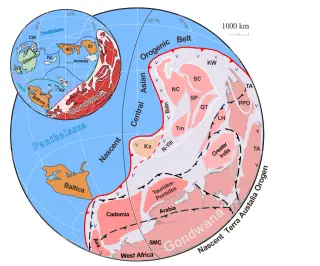
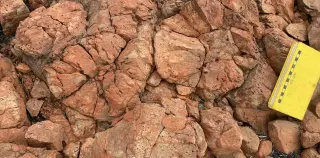
Scientists report in Science that Earth’s plate tectonics began much earlier than once thought, with the earliest direct evidence found in the East Pilbara Craton of Western Australia dating to about 3.5 billion years ago in the Archean. By analyzing 900 rock samples for paleomagnetic data, researchers observed a latitude drift from ~53° to ~77° and a clockwise rotation over millions of years, suggesting the lithosphere was segmented rather than a single unbroken shell. Comparative data from the Barberton Greenstone Belt supports this view, implying Earth moved toward plate tectonics much earlier and that early tectonic activity helped shape conditions for life on our planet.

Ancient rocks reveal Earth's plates were already moving 3.5 billion years ago
science17 days ago

Ancient rocks reveal Earth's plates were already moving 3.5 billion years ago

A Harvard-led team analyzing 900 rock samples from Australia’s East Pilbara Craton and South Africa’s Barberton Greenstone Belt used paleomagnetism to show Earth’s lithosphere was segmented and actively moving around 3.5 billion years ago, pushing back the onset of plate tectonics and shedding light on early Earth conditions that fostered life.

Cascadia crust tearing offshore: a 22-mile slab fracture near Vancouver Island
science28 days ago

Cascadia crust tearing offshore: a 22-mile slab fracture near Vancouver Island

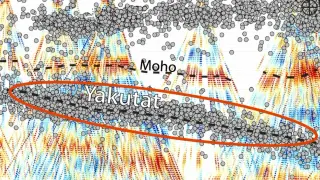
Researchers mapped a deep, 22‑mile tear forming in the Cascadia margin offshore Vancouver Island, where the Nootka Fault Zone is ripping a fragment from the downgoing plate. The tear could progress into a slab window and alter heat and melting patterns, but it does not change the region’s megathrust hazard yet; the finding helps scientists model how ruptures might propagate through a segmented boundary.

Shifting plates and a mantle plume carved the Atlantic’s 500-km canyon
science1 month ago

Shifting plates and a mantle plume carved the Atlantic’s 500-km canyon

Geoscientists mapped the King’s Trough, a 500-kilometer canyon-like feature about 1,000 km off Portugal, and concluded it formed around 37–24 million years ago due to a transient plate boundary that fractured the seafloor. A hot mantle plume likely weakened the crust, aiding tectonic forces; the boundary later migrated south toward the Azores, with the finding supported by high-resolution mapping and volcanic rock analysis and suggesting parallels with the Terceira Rift.

Ancient zircons push plate tectonics to 3.3 billion years ago
science1 month ago

Ancient zircons push plate tectonics to 3.3 billion years ago

New analyses of 3.3‑billion‑year‑old zircon crystals from Jack Hills in Western Australia suggest Earth already hosted more atmospheric oxygen (and possibly more water) than previously thought, and that tectonic plates may have been moving by about 3.3 billion years ago—implying early Earth had geologic processes that recycle key chemicals and could support life, though the findings are debated and require further verification.

Hidden mantle blobs could rewrite Earth's tectonic story
science1 month ago

Hidden mantle blobs could rewrite Earth's tectonic story

Seismologists using high-resolution full-waveform inversion on earthquake data detected large, anomalous pockets in the lower mantle beneath the Pacific, visible as regions where seismic waves move unusually fast or slow. These “sunken worlds” may be remnants of ancient plates or other mantle materials, challenging traditional ideas about subduction and plate evolution. A ETH Zurich–Caltech team notes the exact composition is unclear and more data and methods (including EM signals and mineral physics) are needed, but the findings could require updates to models of mantle convection and heat transfer. The study appears in Scientific Reports.

Mantle on the Map: Two Remote Spots Where Earth's Deep Rock Pops Up
science1 month ago

Mantle on the Map: Two Remote Spots Where Earth's Deep Rock Pops Up

Two remote locations reveal mantle rocks at the surface: Macquarie Island, where ongoing plate motion brings oceanic mantle-derived rock to the surface at an active boundary, and Gros Morne National Park’s Tablelands, where an ancient ophiolite block places upper-mantle rocks atop continental crust—each site representing different tectonic settings and timescales, with Macquarie remaining remote and heavily bio-secured and Gros Morne playing a historic, foundational role in plate tectonics research.

Earth May Reassemble into a New Supercontinent, Bringing Drastic Climate Shifts and Extinction Risks
science1 month ago

Earth May Reassemble into a New Supercontinent, Bringing Drastic Climate Shifts and Extinction Risks

Scientists outline four possible future supercontinents—Novopangea, Pangea Proxima, Aurica, and Amasia—each arising from how today’s oceans evolve, with climate models predicting divergent outcomes (cooling and expanded ice in some scenarios, warmer, drier conditions in Aurica, and potential widespread glaciation in Amasia). While these projections show strikingly different worlds, they share high uncertainty and stress that substantial ecological disruption or extinction could accompany a new planetary union; humanity’s long-term survival may hinge on living in harmony with Earth's ecosystems.

Hidden Plates at U.S. Seismic Hotspot Could Spark Magnitude-8 Quakes
science-and-tech2 months ago

Hidden Plates at U.S. Seismic Hotspot Could Spark Magnitude-8 Quakes

Scientists found that California’s Mendocino Triple Junction, a hotspot where three tectonic plates meet, actually comprises five moving plates (including two hidden ones). Using a network of seismometers, researchers revealed under-surface configurations and a shallower subduction zone, suggesting the area’s quake risk may be higher than previously thought and could trigger magnitude-8 earthquakes, with implications for millions in the region and offering context for past events like the 1992 Humboldt County quake.

Five-Block Boundary at Mendocino Triple Junction Rewrites Quake Forecasts
science2 months ago

Five-Block Boundary at Mendocino Triple Junction Rewrites Quake Forecasts

A new analysis of tiny, low-frequency earthquakes around the Mendocino triple junction shows the boundary is made up of five moving blocks rather than three plates, with shallower subduction than previously thought, prompting updates to earthquake hazard models and potentially improving predictions for major quakes along California and Cascadia.

East Africa's Rift Is Splitting the Continent, Potentially Creating a New Ocean
science2 months ago

East Africa's Rift Is Splitting the Continent, Potentially Creating a New Ocean

New measurements show the East African Rift widening faster than models predicted, thinning crust and forming early oceanic crust as the Nubian, Somali, and Arabian plates diverge at Afar. If this continues, Africa could split into two and a new ocean basin may form in 5–10 million years, with significant seismic, infrastructure, and geothermal implications for the region.

Tectonic shifts steer Earth's climate more than previously thought
science2 months ago

Tectonic shifts steer Earth's climate more than previously thought

New computer-based reconstructions of 540 million years show that the movement of Earth’s plates—especially mid-ocean ridges and continental rifts that drive carbon into and out of the oceans, and the subsequent subduction of carbon-rich sediments—have played a bigger role in driving greenhouse and icehouse climates than volcanic arcs alone. The deep-sea carbon cycle acts as a key regulator of atmospheric CO2, influencing past and future climate and informing climate models that consider tectonic processes alongside human emissions.