Tag

Cosmic Inflation

All articles tagged with #cosmic inflation

One of Physics’ Biggest Surveys Finds Almost No Consensus
physics-and-chemistry13 days ago

One of Physics’ Biggest Surveys Finds Almost No Consensus

APS’s large survey of about 1,660 participants—ranging from researchers to science enthusiasts—reveals widespread disagreement on core physics questions, from the Big Bang to quantum gravity. The Big Bang is widely seen as a hot, dense state (68%), not necessarily the absolute beginning (25%). Quantum interpretations are not universally accepted: Copenhagen leads at around 36%, with many opting for other theories or 'no opinion.' About half agree on cosmic inflation, while dark energy and ΛCDM show no clear majority, with evolving dark energy edging ahead slightly. Only a minority subscribe to specific quantum gravity views, with string theory leading among them. The results underscore that physics frontiers remain active and data and theory must advance to resolve these debates.
Physicists Unveil New Insights into the Early Universe's Extreme Temperatures
science7 months ago

Physicists Unveil New Insights into the Early Universe's Extreme Temperatures

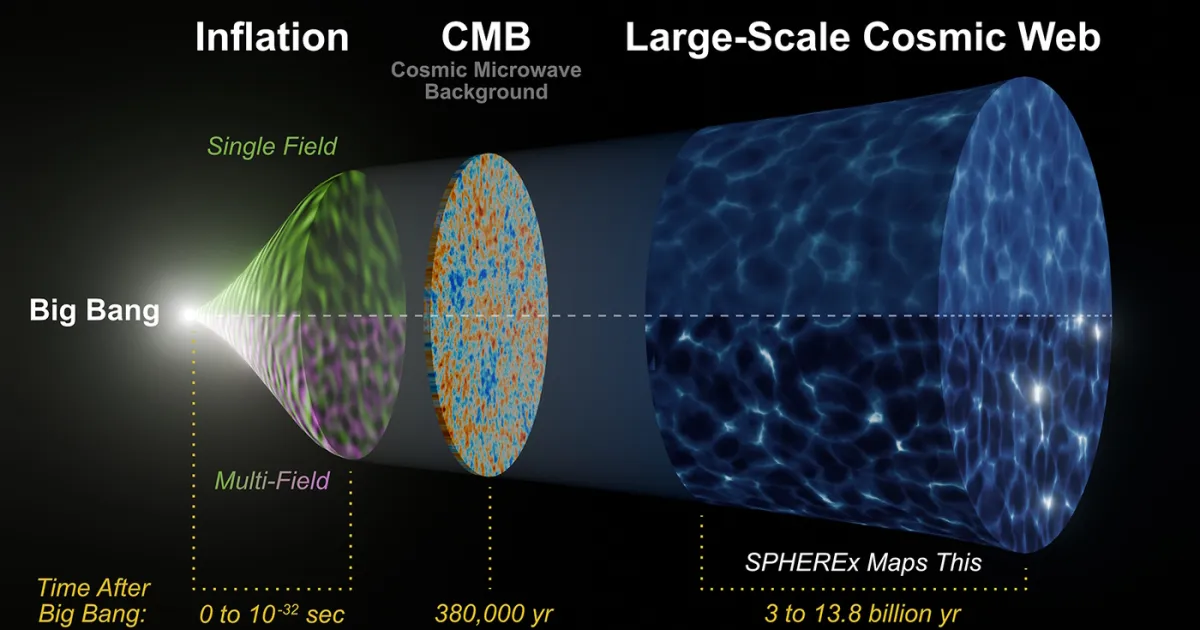
The article discusses the uncertainties surrounding the maximum temperature of the early universe during the Big Bang, highlighting how cosmic inflation and observational data from the cosmic microwave background help constrain this temperature, which is estimated to be between 10^24 and 10^28 Kelvin, well below the Planck scale.

Debunking the 5 Biggest Myths About the Big Bang
science11 months ago

Debunking the 5 Biggest Myths About the Big Bang

The article debunks five common misconceptions about the Big Bang, clarifying that it was not an explosion from a single point, that there is no center of the universe, and that the universe did not necessarily begin from a singularity, emphasizing instead the role of cosmic expansion, inflation, and the limitations of current understanding about the universe's origins.

Debunking Common Myths About the Big Bang Theory
science1 year ago

Debunking Common Myths About the Big Bang Theory

The Big Bang Theory, often misunderstood as an explosive event, actually describes the rapid expansion of the universe from a hot, dense state. It didn't occur at a specific point in space but happened everywhere simultaneously. The theory explains the visible universe's expansion but not the conditions before or the cause of the expansion. Cosmic inflation, a brief period of rapid expansion, is a key part of this narrative. Despite some discrepancies in the expansion rate, known as the Hubble tension, the Big Bang Theory remains a cornerstone of cosmology.

New Test Proposed for the Anthropic Principle in Cosmology
science1 year ago

New Test Proposed for the Anthropic Principle in Cosmology

A new study by physicists Nemanja Kaloper and Alexander Westphal proposes a method to test the Anthropic Principle, which suggests the universe is fine-tuned for life. The researchers aim to validate this principle by examining cosmic inflation, dark matter, and axions. They suggest that if future observations, such as those from the LiteBIRD satellite or black hole studies, confirm the presence of ultralight axions as dark matter, it would support the Anthropic Principle. Conversely, if axions are not found to be dark matter, it could challenge the principle's validity.

Pre-Big Bang 'Freeze-In' Event Linked to Dark Matter Formation
science1 year ago

Pre-Big Bang 'Freeze-In' Event Linked to Dark Matter Formation

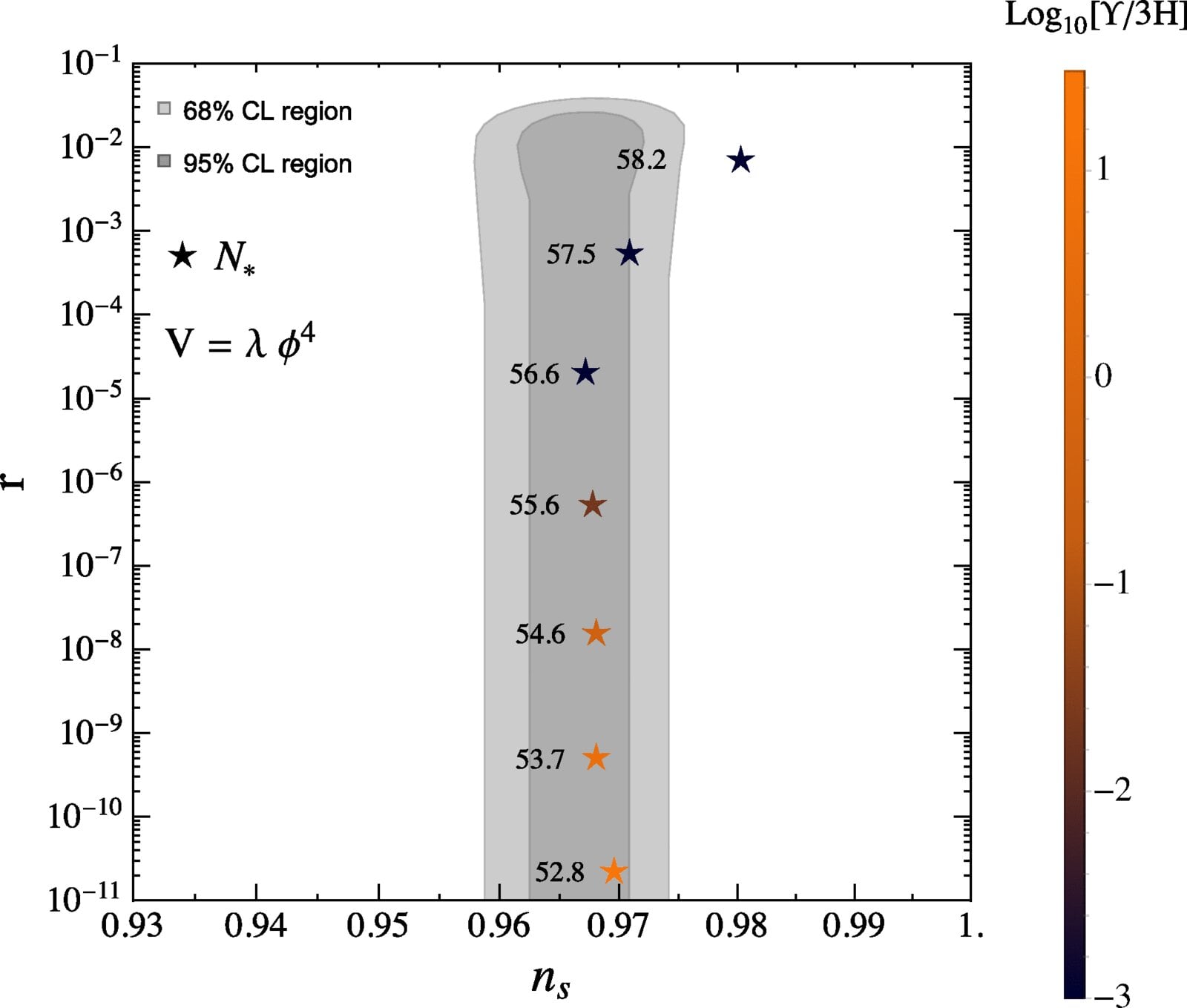
Researchers from the University of Texas at Austin have proposed a new model suggesting that dark matter originated during a 'freeze-in' event before the Big Bang, during a period of cosmic inflation. This model, called warm inflation via ultraviolet freeze-in (WIFI), posits that dark matter was produced from high-energy interactions in a thermal bath, rather than being in thermal equilibrium with regular matter. This theory challenges existing views by suggesting dark matter formation occurred pre-Big Bang, potentially influencing future research on the universe's origins.