Tag

Cosmic History

All articles tagged with #cosmic history

Astronomers Identify Dun Aonghasa, a Quasar Forming 630 Million Years After the Big Bang
science3 days ago

Astronomers Identify Dun Aonghasa, a Quasar Forming 630 Million Years After the Big Bang

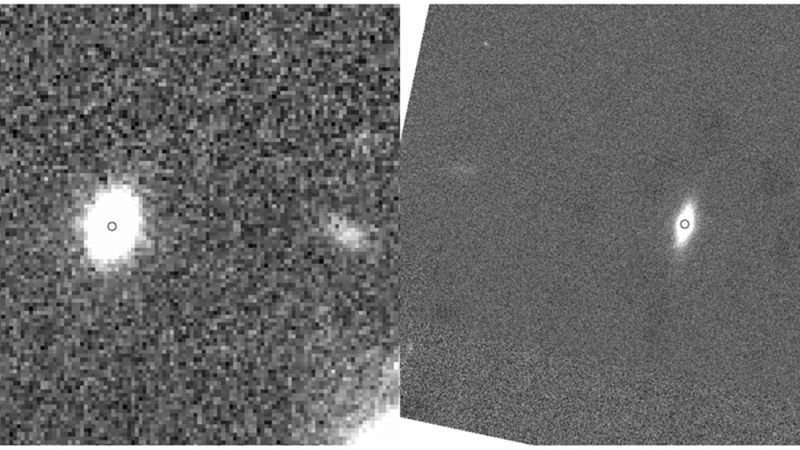
A German-led team has identified the most distant and oldest quasar yet discovered, nicknamed Dun Aonghasa. Formed just 630 million years after the Big Bang, this object features a black hole with a mass equivalent to 360 million suns. The discovery, made using the European Space Agency's Euclid telescope, shatters previous records by nearly 40 million years and challenges current theories regarding how such massive black holes could grow so rapidly in the early universe.
Record-Breaking Radio Burst Detected from Galaxy Formed in Early Universe
science1 month ago

Record-Breaking Radio Burst Detected from Galaxy Formed in Early Universe

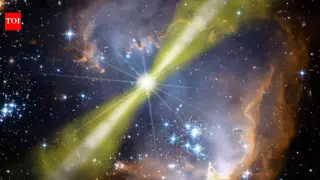
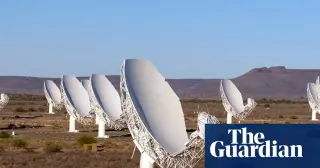
Astronomers have identified the most distant fast radio burst (FRB) ever recorded, originating from a galaxy that existed when the universe was only 3 billion years old. Detected via the MeerKAT telescope in South Africa and confirmed by the James Webb Space Telescope, this burst traveled for over 10 billion years, covering approximately 80% of cosmic history. The source is a young, metal-poor galaxy with rapid star formation, challenging existing theories about FRB origins. This discovery suggests FRBs were common in the early universe and provides a new method for mapping unseen matter across vast cosmic distances.

ALMA confirms oxygen in Webb galaxy JADES-GS-z14-0, revealing rapid stellar evolution in the infant universe
science2 months ago

ALMA confirms oxygen in Webb galaxy JADES-GS-z14-0, revealing rapid stellar evolution in the infant universe

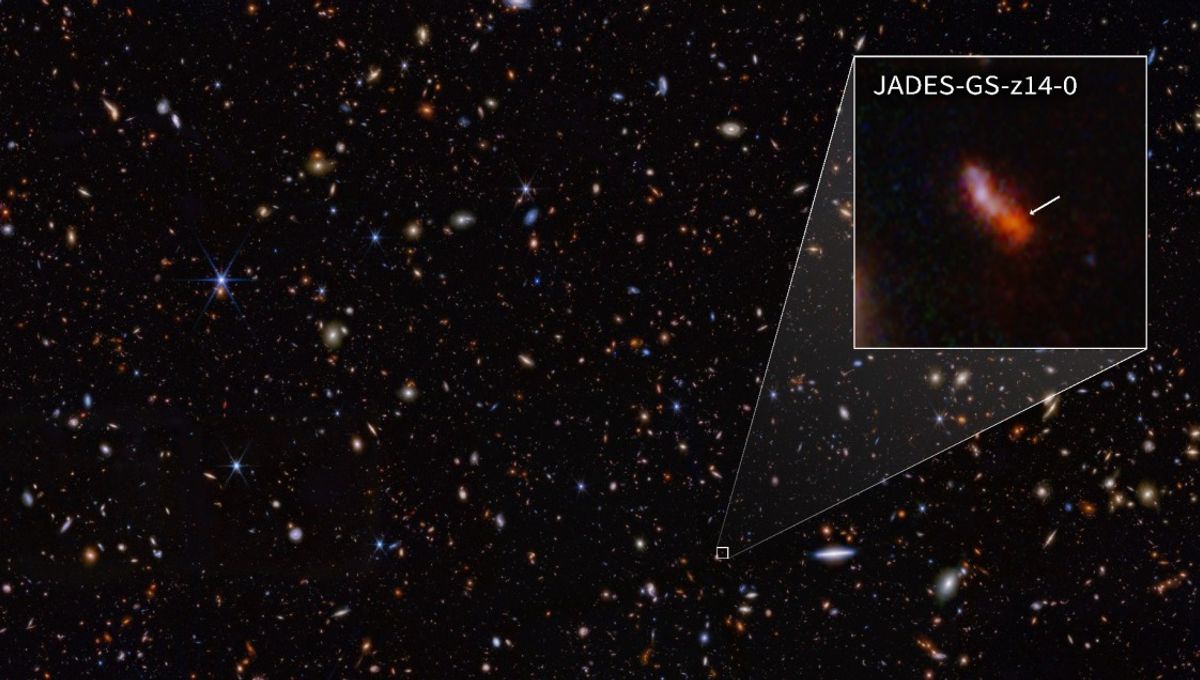
ALMA has confirmed the presence of ionized oxygen in the distant galaxy JADES-GS-z14-0, which existed less than 300 million years after the Big Bang. This finding, supported by James Webb Space Telescope data, indicates that massive stars formed, died, and enriched the surrounding gas with heavy elements much faster than previously assumed. The discovery provides a precise redshift of 14.1793 and suggests that chemical enrichment occurred rapidly in the early universe, though the exact number of stellar generations remains a modeling challenge.

Two Centuries of Cosmic Discovery: From Stellar Parallax to Little Red Dots
science4 months ago

Two Centuries of Cosmic Discovery: From Stellar Parallax to Little Red Dots

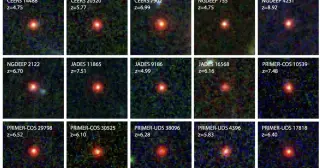
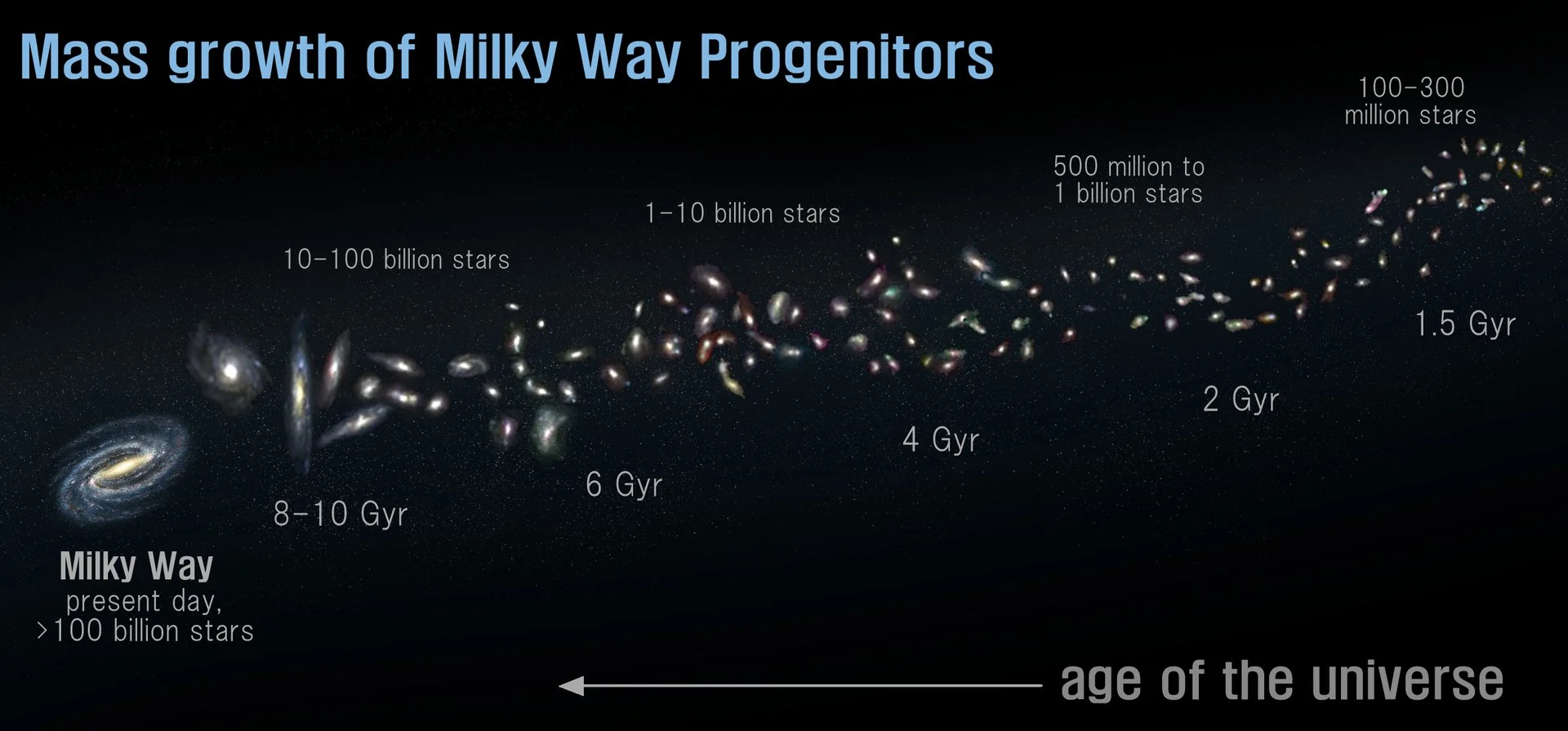
A retrospective review highlights twenty major milestones in astrophysics over the last 200 years, tracing humanity’s journey from measuring stellar distances to detecting gravitational waves and analyzing early-universe anomalies. The timeline begins with Friedrich Bessel’s 1838 parallax measurement of 61 Cygni, confirming Earth’s orbit, and progresses through the 1846 discovery of Neptune via gravitational anomalies. Key developments include the 1868 detection of helium in the Sun, the 1919 confirmation of general relativity, and the 1923 realization that Andromeda is an external galaxy. The 1960s discovery of the Cosmic Microwave Background provided definitive evidence for the Big Bang, while the 1990s revealed the accelerating expansion of the universe driven by dark energy. Recent decades have seen the birth of gravitational wave astronomy and the 2020s discovery of 'Little Red Dot' galaxies by the James Webb Space Telescope, challenging existing models of galaxy formation.

Understanding the Universe's First Stars
science1 year ago

Understanding the Universe's First Stars

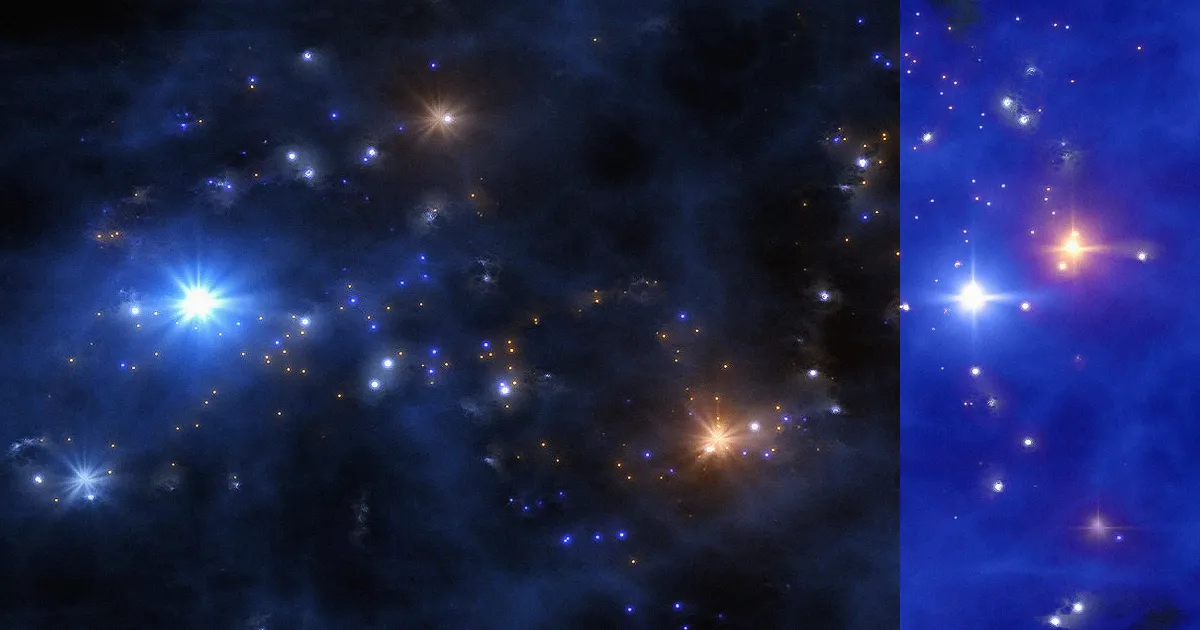
The article explains that the 'first stars' in the universe, known as Population III stars, formed from pristine hydrogen and helium shortly after the Big Bang, around 50-100 million years later, and were much larger and shorter-lived than stars today. Despite advanced telescopes like JWST, these first stars have not yet been observed directly, but their formation is predicted by simulations based on cosmic evolution models.

New Telescope to Discover the Universe's First Stars
science1 year ago

New Telescope to Discover the Universe's First Stars

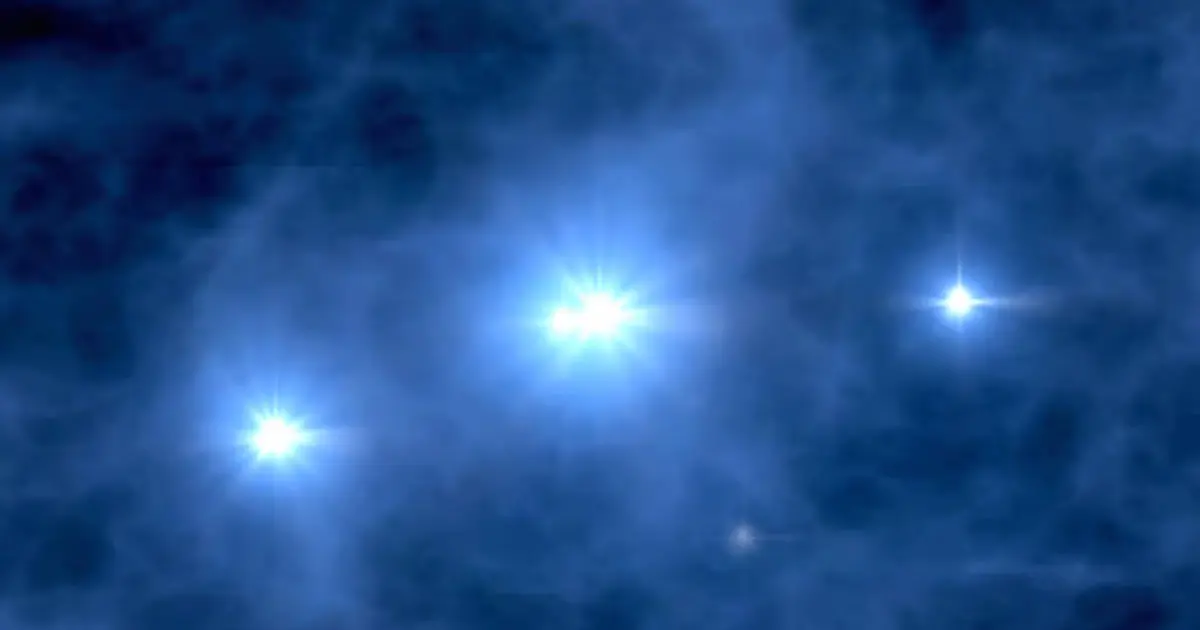
The James Webb Space Telescope has advanced our understanding of distant galaxies but is unlikely to detect the very first stars due to cosmic extinction. Future telescopes focusing on longer wavelengths, such as far-infrared or radio observations from the Moon's far side, hold promise for uncovering the universe's earliest stellar populations, potentially revealing the first stars formed after the Big Bang.

"James Webb Telescope Discovers Most Distant and Earliest Known Galaxy"
space-and-physics2 years ago

"James Webb Telescope Discovers Most Distant and Earliest Known Galaxy"

An international team of astronomers using the James Webb Space Telescope (JWST) has discovered two of the earliest and most distant galaxies, dating back to just 300 million years after the Big Bang. These galaxies, located near the Hubble Ultra Deep Field, were observed through JWST's advanced infrared capabilities, revealing significant star formation and chemical elements. The findings, part of the JWST Advanced Deep Extragalactic Survey (JADES), suggest that even more ancient galaxies could soon be discovered. The research papers are currently awaiting peer review.