Tag

Data Sharing

All articles tagged with #data sharing

Google Policy Update Links Gmail and Photos Data to AI-Driven Ad Targeting
technology1 month ago

Google Policy Update Links Gmail and Photos Data to AI-Driven Ad Targeting

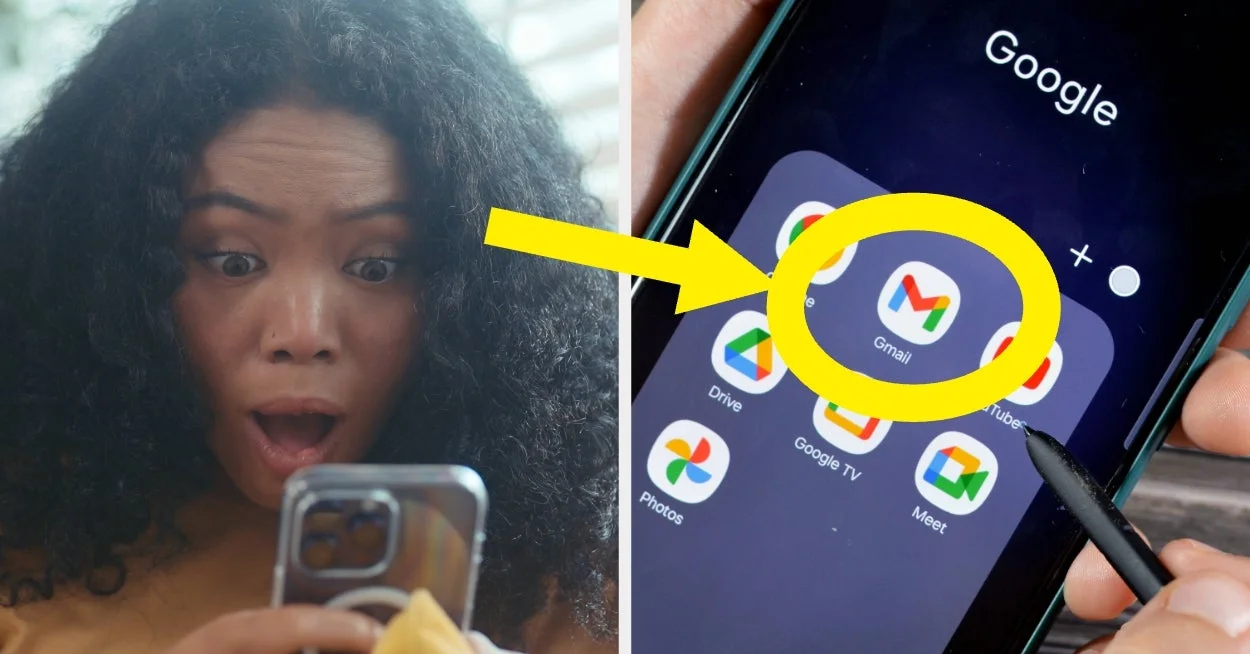
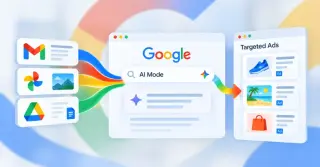
Google updated its privacy policy on October 16, 2026, clarifying that enabling the 'Personal Intelligence' feature allows data from Gmail, Drive, and Google Photos to be used for personalized ads in Search and Gemini. While Google maintains that such data is not used for ad targeting by default, opting into AI features creates an exception where connected content can serve as a signal for ad personalization. Users can opt out by disconnecting specific apps or disabling personalized recommendations. This move follows OpenAI's expansion of advertising to 89 countries, where the company asserts that ads do not influence chatbot responses or sell user data.


Google Privacy Policy Update Links Gmail Data to Ad Targeting via AI Features
technology1 month ago

Google Privacy Policy Update Links Gmail Data to Ad Targeting via AI Features

Google updated its privacy policy on October 16, 2026, allowing data from Gmail, Drive, and Photos to influence personalized ads if users enable the 'Personal Intelligence' feature. This change creates an exception to previous guarantees that such data would not be used for ad targeting, specifically when connected to AI services like Gemini or AI Mode search.

Period trackers under the privacy microscope: who guards your data
technology4 months ago

Period trackers under the privacy microscope: who guards your data

Mozilla’s investigation of six popular period-tracking apps finds a spectrum of privacy practices: some apps keep data on-device with minimal sharing (notably Euki), while others send health details to third parties (Stardust to RudderStack; Planned Parenthood’s Spot On via AB Tasty; Flo/Clue to ad networks). Many apps also transmit basic user IDs to analytics and advertising platforms, creating avenues for surveillance and potential legal requests in abortion-crimes-sensitive contexts. The report highlights that this isn’t just about legality but transparency and user control, and it underscores the lack of a broad US privacy law, calling for stricter regulation. Some apps have improved privacy, but others still collect substantial data and store it in the cloud, raising ongoing privacy concerns.

Seven Decades of Dives Yet Leaves Most Deep Seafloor Unseen
science4 months ago

Seven Decades of Dives Yet Leaves Most Deep Seafloor Unseen

A Science Advances study compiling 43,681 submersible dives since 1958 finds humans have visually observed less than 0.001% of the deep seafloor, roughly the size of Rhode Island, with observations heavily concentrated near the US, Japan and New Zealand and most regions largely unsampled. The research emphasizes that close visual records complement maps but are uneven and sparse, highlighting the need for cheaper vehicles, shared archives, more open industrial imagery, and broader international participation to establish robust ecological baselines for biodiversity, climate, and resource decisions in the deep ocean.

Workplace monitoring tools spill worker data to third parties, study finds
policy6 months ago

Workplace monitoring tools spill worker data to third parties, study finds

A Columbia Law–led study of nine bossware (workplace-monitoring) tools found all of them share worker data with third parties, including major ad platforms like Facebook, Google, and Microsoft, expanding data flows beyond employers and raising privacy and potential discrimination concerns. Researchers call for a bright-line ban on sharing, limits on collecting sensitive data, and stronger state/federal privacy enforcement to curb this ongoing surveillance.”

Chatting With AI Can Break Attorney-Client Privilege, Court Rules
law7 months ago

Chatting With AI Can Break Attorney-Client Privilege, Court Rules

A New York federal judge ruled that attorney-client privilege does not apply to communications with AI chatbots like Claude, meaning Claude-generated materials in the Heppner case must be handed over; the ruling says there is no attorney-client relationship with an AI and notes Claude’s disclaimer that it cannot give formal legal advice, highlighting the risk that sharing privileged material with third-party AI could waive protections and prompting firms to update policies.

FTC Slams OkCupid and Match Group for Unauthorized Data Sharing
business7 months ago

FTC Slams OkCupid and Match Group for Unauthorized Data Sharing

The FTC filed a complaint against OkCupid and Match Group Americas, alleging they deceived users by sharing personal data (including photos and location) with a third party without proper disclosure or opt-outs, in violation of their privacy promises. The proposed settlement permanently bans misrepresenting privacy practices and data handling; the investigation, conducted under a Civil Investigative Demand, led to a case in the Northern District of Texas and centers on nearly three million user photos and related data.

Replication casts doubt on topological quantum breakthrough claims
science7 months ago

Replication casts doubt on topological quantum breakthrough claims

Replication studies of nanoscale topological quantum devices found that dramatic signals previously claimed as breakthroughs could be explained by simpler effects, highlighting publication hurdles for replication work and urging more data sharing and open discussion of interpretations; the consolidated findings were published in Science after an unusually long two-year review.

Fraud crackdown: Trump launches cross‑agency effort to save taxpayer dollars
politics8 months ago

Fraud crackdown: Trump launches cross‑agency effort to save taxpayer dollars

Trump issued an executive order creating a cross‑agency task force spanning nearly a dozen federal agencies to identify and prevent fraud in federal benefit programs, with 30‑day reviews, possible proactive funding pauses, and expanded data sharing to boost enforcement. The effort aims to recover funds, potentially alleviate the deficit, and is led by VP J.D. Vance (chair) with FTC chief Andrew Ferguson (vice chair); Minnesota Medicare payments have already been paused as a real‑world example.

Zambia-US health aid deal sparks data-sharing and mining concerns
world9 months ago

Zambia-US health aid deal sparks data-sharing and mining concerns

A leaked five-year US health-financing plan offers about $1.012 billion for Zambia in exchange for 40,000 new health workers, $400 million in health services, and extensive health-data sharing (including 25-year pathogen data) linked to mining concessions; civil-society groups warn the terms are worse than similar deals, risk undermining Zambia’s health programs, and could give Washington outsized leverage, prompting potential legal challenges.

School surveillance feeds linked to federal immigration enforcement, sparking privacy concerns
technology9 months ago

School surveillance feeds linked to federal immigration enforcement, sparking privacy concerns

A 74 investigation finds hundreds of thousands of audit logs show police querying school district Flock Safety license plate reader feeds into a national database to aid federal immigration enforcement, linking local cameras to DHS/ICE inquiries and 287(g) activities. Districts say data sharing is customer-controlled and intended for safety, but privacy advocates warn about expansive cross-jurisdictional access and the broader reach of campus surveillance, with pilots and programs related to immigration enforcement reportedly paused.

TikTok widens geolocation data use and cross-site ads in US policy update
technology10 months ago

TikTok widens geolocation data use and cross-site ads in US policy update

TikTok updated its US terms to broaden data sharing with its global operations, enabling more precise or approximate geolocation collection and cross-platform targeted advertising across TikTok and third-party sites. The policy frames an interoperable system that syncs feeds, accounts, and moderation, and adds an AI content labeling section signaling future watermarking/detection of generative content. The change follows a US entity restructuring under a federal agreement aimed at addressing security concerns.