Tag

Perception

All articles tagged with #perception

Chimps Favor Crystals, Hinting at Ancient Cognitive Bias
science24 days ago

Chimps Favor Crystals, Hinting at Ancient Cognitive Bias

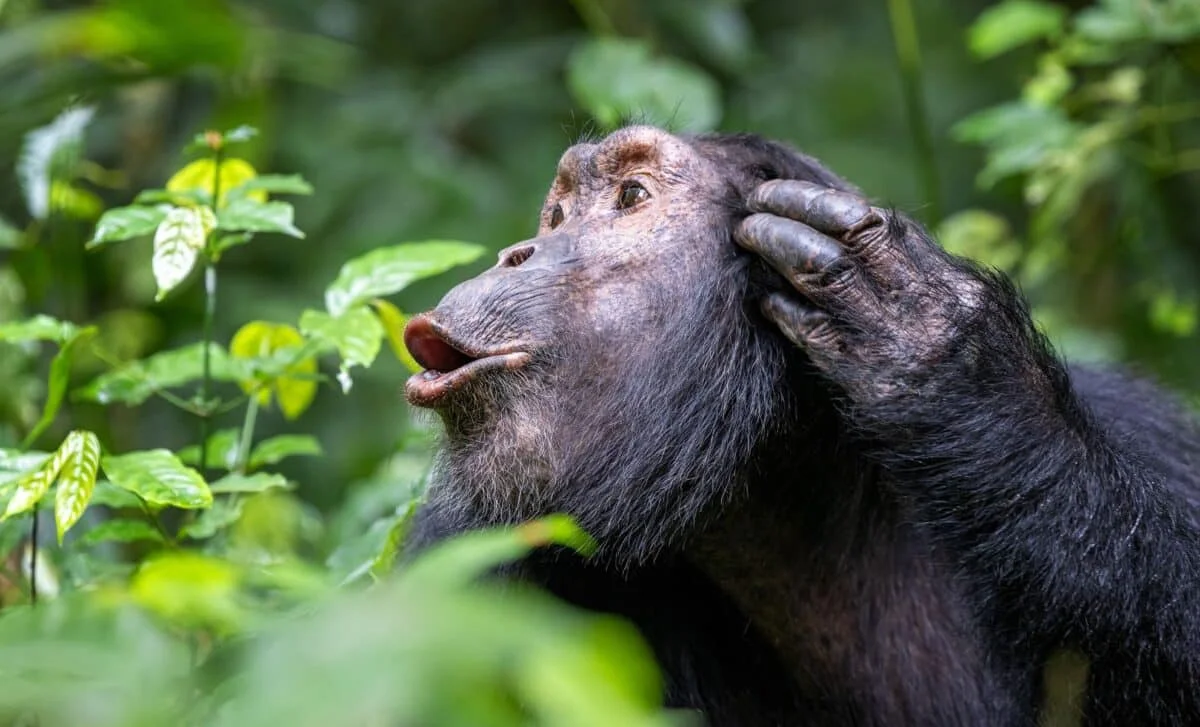
Enculturated chimpanzees at a Madrid sanctuary repeatedly preferred crystals over ordinary rocks, inspecting their transparency and shape, and even sorting them into groups. The behavior mirrors perceptual biases that may have guided early human cognition toward recognizing symmetry and Euclidean form, potentially influencing the development of symbolic thought—though the study is small and requires replication in wild apes.

Gait cues reveal mood: study links limb swing to anger and sadness
science24 days ago

Gait cues reveal mood: study links limb swing to anger and sadness

New research shows that how a person walks—especially arm and leg swing amplitude—can signal their emotional state. In experiments, observers correctly guessed emotions from point-light gait videos, with bigger swings associated with anger and smaller swings with sadness or fear; altering swing amplitude made these emotions easier to infer, suggesting gait is a key nonverbal cue with potential applications in CCTV screening and mood-monitoring wearables, though ethical considerations remain.

Moon on the Horizon Appears Bigger: The Brain's Size Trick
science2 months ago

Moon on the Horizon Appears Bigger: The Brain's Size Trick

The Moon looks larger near the horizon due to the Moon Illusion, a brain-based effect in which our perception of distance and size is distorted by contextual cues (like trees, buildings, or a flat horizon). Refraction actually makes the Moon look squished, not bigger, so the size increase is not atmospheric. The leading explanation involves Emmert's Law: the retina records the Moon’s size, but we judge its distance and thus its apparent size based on context, a two-step process that makes horizon objects appear larger even though nothing about the Moon’s actual distance changes.

Penis size and build signal status in mate choices, study finds
science2 months ago

Penis size and build signal status in mate choices, study finds

A University of Western Australia study used computer-generated male figures varying in height, body shape and penis size; women tended to rate larger penises and more pronounced physiques as more attractive, while men perceived such traits as more threatening, suggesting penis size acts as a status cue in sexual competition with evolutionary underpinnings, across diverse samples in heterosexual cis contexts.

Humans May Have 22–33 Senses, Not Just Five
scienceneuroscience2 months ago

Humans May Have 22–33 Senses, Not Just Five

New research and expert discourse suggest that human perception rests on 22–33 senses, far beyond the classic five. Proprioception, interoception, vestibular balance, sense of agency, and sense of ownership are part of a distributed, multisensory system that blends touch, taste, smell, and sight to create flavor, texture, and self-awareness. Everyday experiences—such as odors altering taste or sounds changing perceived texture—reflect this interconnectedness. Work at the Centre for the Study of the Senses and Crossmodal Laboratory in Oxford, alongside exhibitions like Senses Unwrapped, illustrate how our senses continually negotiate a single, coherent reality.

Scientists Suggest Humans Have Over 30 Senses
science3 months ago

Scientists Suggest Humans Have Over 30 Senses

Recent research suggests humans may have over 30 senses, including traditional ones like sight and hearing, as well as others like proprioception and interoception, all working together to create a unified experience of the world. Our perception is multisensory and influenced by various factors, with ongoing studies exploring the complexity of human sensory systems.

Scientists Confirm Humans Possess a 'Seventh Sense' for Remote Touch
science5 months ago

Scientists Confirm Humans Possess a 'Seventh Sense' for Remote Touch

Scientists have confirmed that humans possess a 'seventh sense' of remote touch, allowing them to detect objects buried in loose materials like sand with about 70% accuracy, outperforming robots in subtlety. This ability, akin to certain shorebirds' prey detection, suggests that humans can perceive faint pressure ripples in granular media, opening new possibilities for applications in archaeology, forensics, and planetary science. Future research aims to explore different materials, improve robotic sensing, and understand the underlying neural mechanisms.