Tag

Einstein Crater

All articles tagged with #einstein crater

SpaceX upper stage leaves 60-foot crater on the Moon, spied by NASA's LRO
space6 days ago

SpaceX upper stage leaves 60-foot crater on the Moon, spied by NASA's LRO

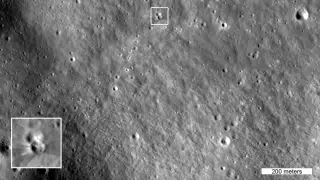
SpaceX’s Falcon 9 upper stage slammed into the Moon on Aug. 5, 2026, carving a roughly 60-foot-wide crater near Einstein Crater at about 5,400 mph; NASA’s Lunar Reconnaissance Orbiter captured imagery on Aug. 11–12 showing bright and dark ejecta and a crater depth under 10 feet. The stage had been drifting for over 18 months and had previously carried two lunar lander attempts—Blue Ghost and ispace’s Resilience—before the crash.
Danuri’s Moon photos reveal fresh crater from SpaceX debris
space-exploration18 days ago

Danuri’s Moon photos reveal fresh crater from SpaceX debris

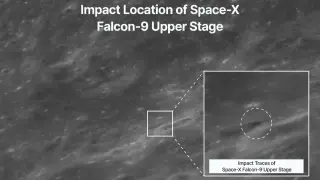
Images from South Korea’s Danuri lunar orbiter show a new blackened crater near Einstein crater after a SpaceX Falcon 9 upper stage slammed into the Moon at about 5,400 mph (8,700 km/h) on Aug. 5, 2026. The 4.4-ton piece likely carved a crater roughly 90 feet (27 meters) wide and up to 16 feet (5 meters) deep, with a debris plume detected by ESO’s Very Large Telescope but not visible from Earth. The stage had orbited the Earth–Moon system for about a year since a 2025 mission carrying Firefly’s Blue Ghost and ispace’s Hakuto-R; NASA’s Lunar Reconnaissance Orbiter and other observatories will study the site to understand lunar geology and assess hazards for future missions.

SpaceX rocket stage slams into the Moon after drifting for a year
science-and-technology20 days ago

SpaceX rocket stage slams into the Moon after drifting for a year

A four-ton second stage from a SpaceX Falcon 9 mission launched in January 2025 drifted through space for about a year and is expected to crash into the Moon (likely Einstein Crater on the western limb) around 2:35 a.m. ET, traveling ~5,400 mph. The impact will be hard to observe from Earth, and NASA/SpaceX note the crash was unintentional. The event highlights ongoing concerns about space debris and disposal, as scientists await confirmation via telescope imagery and discussions continue on preventing future lunar impacts as Artemis-era plans progress.

SpaceX upper stage set for Moon impact, NASA observers plan to watch
science-space21 days ago

SpaceX upper stage set for Moon impact, NASA observers plan to watch

A SpaceX Falcon 9 upper stage carrying two lunar landers is on a collision course with the Moon, expected to strike near Einstein Crater around 2:35 a.m. ET. NASA and independent astronomers confirm the trajectory; there is no danger to Earth. The impact should create a crater about 65–90 feet (20–30 meters) in diameter and may be visible only through telescopes, with the Korean Pathfinder Lunar Orbiter and NASA’s Lunar Reconnaissance Orbiter aiming to image the site afterward. Scientists hope to gain insights into the lunar surface and debris behavior, informing future Artemis-era missions and lunar-debris mitigation strategies.

SpaceX upper stage to crash into the Moon, creating a small crater
space25 days ago

SpaceX upper stage to crash into the Moon, creating a small crater

A drifting SpaceX upper-stage from a lunar lander mission is on course to impact the Moon’s near side near Einstein Crater at about 8,700 km/h (5,400 mph). The impact could carve a crater about 27 meters across and 5 meters deep and create a brief dust plume observable by telescopes; NASA’s LRO and Korea’s Danuri will image the site. If it occurs, it would be the second known instance of a rocket stage hitting the Moon, after a 2022 Chinese rocket fragment, and it highlights growing debris concerns in space.

Moonbound Space Junk to Crash Into the Moon at 5,400 mph, Groundbreaking Lunar Data Expected
science29 days ago

Moonbound Space Junk to Crash Into the Moon at 5,400 mph, Groundbreaking Lunar Data Expected

A spent Falcon 9 upper-stage from SpaceX’s Blue Ghost Mission 2 will slam into the Moon near Einstein crater on Aug. 5, 2026, at about 5,400 mph after a year of free-floating in a complex Earth–Moon–Sun gravity dance. Scientists expect the impact to provide real data on the Moon’s subsurface structure and crater formation. Observing the event from Earth will require professional telescopes and sensors, and there’s no danger to Earth or ongoing lunar operations.

Moonbound Debris: Falcon 9 Upper Stage Predicted to Hit Einstein Crater in 2026
space3 months ago

Moonbound Debris: Falcon 9 Upper Stage Predicted to Hit Einstein Crater in 2026

Astronomer Bill Gray predicts the Falcon 9 upper stage from SpaceX's January 15, 2025 Moon mission will crash into the Moon near Einstein crater on August 5, 2026 at about 8,700 km/h. The impact would occur on the near side’s edge and is unlikely to be visible with amateur equipment, but it highlights growing space junk concerns and the potential for cascading debris (Kessler syndrome) in Earth orbit.

Falcon 9 Debris Predicted to Impact Moon Near Einstein Crater This August
science3 months ago

Falcon 9 Debris Predicted to Impact Moon Near Einstein Crater This August

An independent astronomer predicts a 45-foot upper stage from SpaceX’s January 2025 Falcon 9 mission (object 2025-010D) will crash into the Moon on August 5, 2026, near the Einstein crater on the Moon’s western limb at about 5,400 mph. The impact won’t be visible from Earth, but scientists may study the resulting crater with lunar orbiters like the Lunar Reconnaissance Orbiter. The object has been in a long looping Earth orbit, with solar radiation pressure complicating precise plotting. This would be one of several artificial impacts on the Moon’s surface dating back to the Apollo era.

Mach-7 Moon Crash: Falcon 9 Upper Stage Heads for Einstein Crater
space3 months ago

Mach-7 Moon Crash: Falcon 9 Upper Stage Heads for Einstein Crater

Astronomer Bill Gray predicts SpaceX’s Falcon 9 upper stage, stranded in a highly elliptical Earth orbit since January 2025, will crash into the Moon near the Einstein crater on August 5 at about 5,400 mph (Mach 7). The impact would be a brief event leaving a small crater, poses no danger to Earth, and highlights space-debris disposal as SpaceX focuses on Starship and Artemis IV—potential imaging by the Lunar Reconnaissance Orbiter may capture the crater.